
Reviewed · LAMA TEMPLE & GUOZIJIAN WALKS
Beijing: Yonghe Lama Temple Tickets with guide (optional)
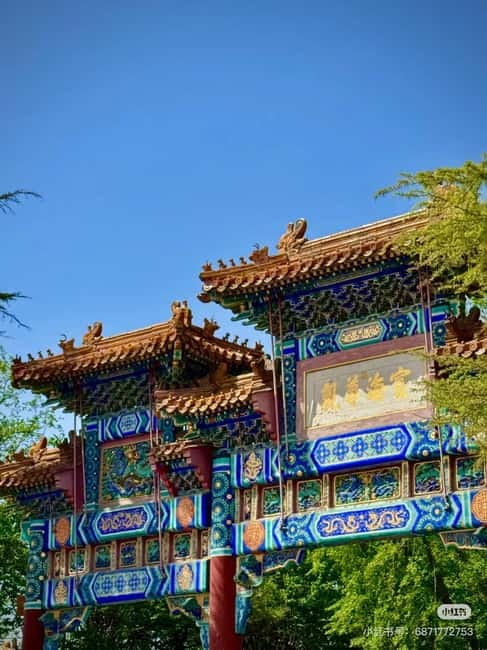
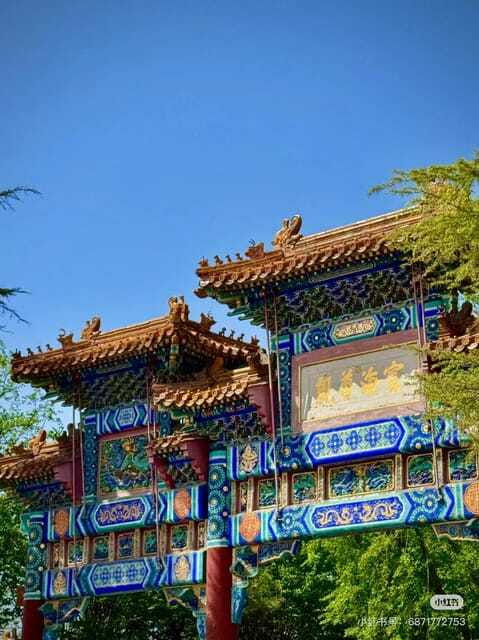
Yonghegong Temple rewards you for showing up prepared. With a pre-booked ticket, you can skip the ticket-on-the-spot hassle and spend more time walking the courtyards. I also like the temple’s visual logic, the way three archways and five main halls line up as you move deeper into the complex.
One thing to watch: your time window matters. Entry stops around 16:00, and last admission depends on the season, so plan your arrival early enough that you do not feel rushed.
Key things that make this ticket-and-guide visit work
- Pre-booked access to Beijing’s most famous lama temple, so you do not burn time at the ticket desk.
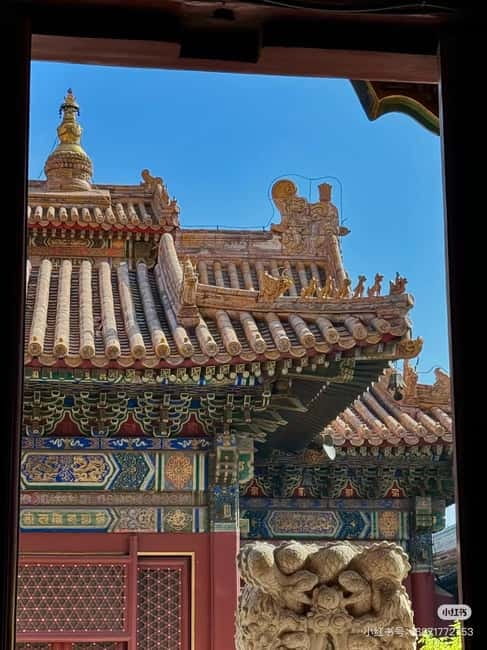
- A Tibetan-Buddhist meets Qing-architecture design, built in 1694 and shaped by multiple ethnic traditions.
- Three archways, five main halls, and over 1,000 rooms, enough space to actually explore instead of sprinting.
- A south-to-north courtyard rhythm, with courtyards narrowing and hall heights rising as you go.
- An optional English guide in a small group, helpful when you want names and meanings tied to what you see.
Yonghegong Lama Temple, where to go and how to arrive
Yonghegong Lama Temple sits in Beijing’s Dongcheng District, at No. 12 Yonghegong Street. For transit, use Metro Line 5, then get off at Yonghe Lama Temple station. From there, you are close enough to walk and get oriented without turning your day into a logistics puzzle.
This temple is in the northeastern part of Beijing, which also means it is not one of those “just pop in” stops. It is a full-on, walled complex with a real flow. The ticket with an English guide option is smart if you want your visit to make sense fast, especially because the architecture blends Tibetan Buddhist ideas with traditional Chinese structures.
If you only come for photos, you will still have a good time. But if you come with a plan, you get more. Think of this as a walking route where each gate and hall adds a new layer.
A few more Beijing tours and experiences worth a look
The temple’s layout feels like a route map in stone
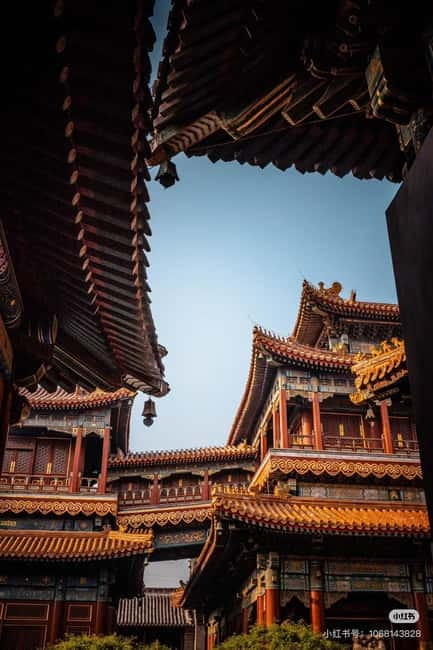
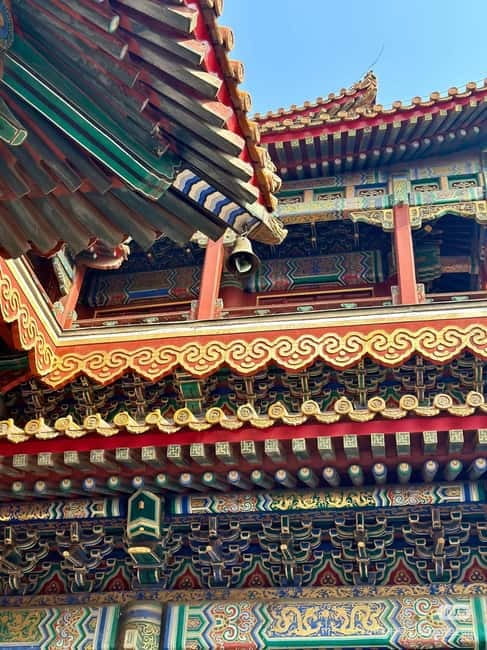
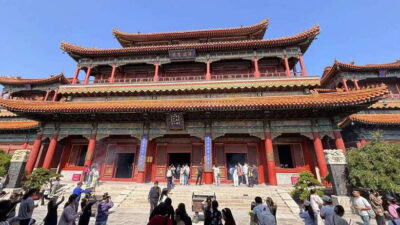
What I really like about Yonghegong is that it guides your eyes without saying a word. The courtyards gradually narrow from south to north, and the halls increase in height in sequence. That means you are not wandering randomly. Your body moves forward, and the space changes around you, so the whole place feels like it has a story.
This is also why the complex has so many key structures. Even though it is made up of gates, towers, halls, and special pavilions, it does not feel like random landmarks. It feels staged.
When you enter, you will be thinking about three things at once:
- Where you are in the south-to-north progression
- How the gates act like chapters (not just decoration)
- How the hall sizes and heights build a sense of scale as you go
And yes, it is big. The grounds cover 66,400 square meters, and the complex contains over a thousand rooms. You do not need to see every single room. You just need to catch the main points in the right order, and the rest fills in naturally as you move.
Archways and gates: where the vibe changes from street to sacred
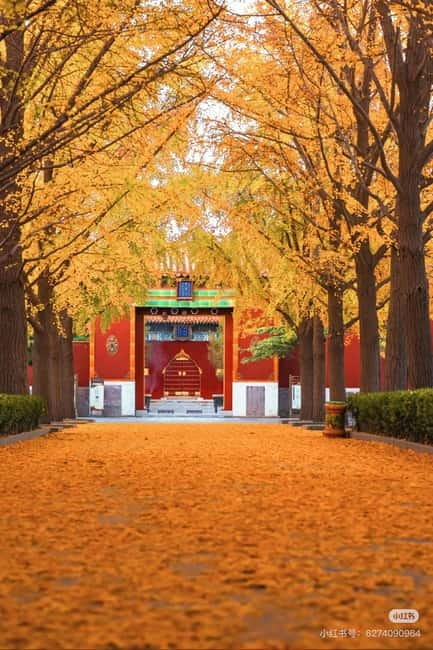
The temple complex is built around three exquisite archways and five main halls, plus towers and side structures. As you move through the gates, you will notice the shift from city noise to the more ceremonial rhythm of the compound.
Here are the specific early landmarks to look for as you start your walk:
Zhaotai Gate
This is one of the major entrances you will pass in the main approach. Gates like this matter because they set expectations. They are designed to make you slow down and notice symmetry, scale, and the formal feel of the place.
Bell Tower and Drum Tower
If your visit includes these towers (they are listed as key structures in the complex), pay attention to how they frame the main spaces. Even if you are not chasing sound, the idea is clear: time, rhythm, and ritual are part of the experience.
You can also read our reviews of more guided tours in Beijing
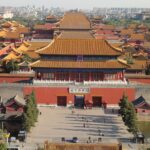
Yonghe Gate and the progression inward
Gates keep the route clear. Instead of feeling like a maze, the complex channels you toward the central halls. This is a big deal when you have limited time, because you get to make forward progress without guessing too much.
If you are visiting on your own, you might still follow the physical flow. But with an English guide option, you get help connecting what you see to the names of the structures, which saves time and makes the architecture feel less like a blur.
The main halls you should not skip
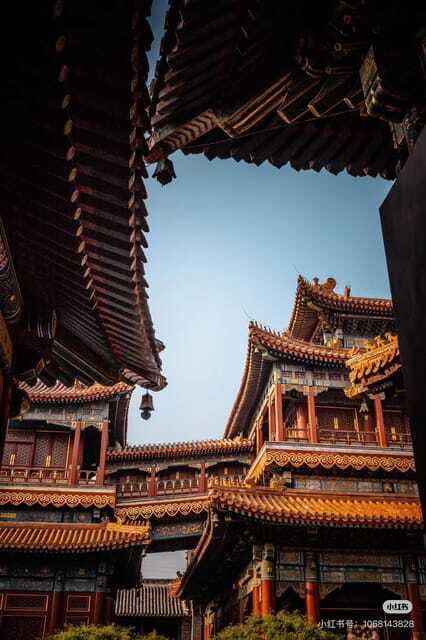
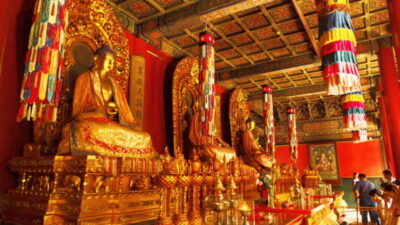
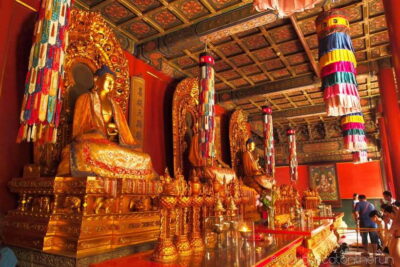
Yonghegong’s fame is tied to its main halls. The compound includes several that stand out on any route: the Hall of Great Buddha, the Hall of the Wheel of the Dharma, and the Pavilion of Ten Thousand Blessings, among others. You also get the Yongyou Hall and key courtyard spaces linked to the overall layout.
Here is how I’d think about these stops so you do not treat them like checkboxes.
Hall of Great Buddha
This is often the emotional center of the visit. You will likely feel the space open up compared to the gates and courtyards. The name alone tells you what to expect, and the scale of the hall helps you understand why Yonghegong became so important in its era.
You are also seeing a blend: Tibetan Buddhist influences expressed through Qing-era Chinese architectural design. That mix is exactly what makes this temple more than a routine religious site.
Hall of the Wheel of the Dharma
If you want a quieter moment during your walk, this is a strong candidate. The term Wheel of the Dharma points to teachings and cycles. In a place like this, you do not just look at decoration. You start noticing how space supports worship and contemplation.
Pavilion of Ten Thousand Blessings
This is the kind of name that sounds poetic, but it also points to the function of the space. Expect to slow down here. The pavilion setting and the way people move around it tend to encourage a more respectful, less rushed visit pace.
Yongyou Hall and how halls work as a sequence
Yongyou Hall is part of the key five main halls list. The way the complex climbs inward, with hall heights increasing in sequence, makes these halls feel like stations. If you catch a few in the middle and then a few near the end, you see how the compound builds momentum.
Why Yonghegong’s story is bigger than a building
Yonghegong was built during the Qing Dynasty. Construction began in the 33rd year of Emperor Kangxi’s reign, which dates it to 1694. It later became the highest-ranking Buddhist temple in the late Qing Dynasty. That matters because the temple is not just “old.” It is politically and culturally significant.
The architecture also reflects multiple traditions. You will see the blend of Tibetan Buddhism with traditional Chinese architecture, shaped by cultural influences linked to Han, Manchu, Mongolian, and Tibetan ethnic groups. That blend is not a vague concept here. You can feel it in the forms, the style choices, and the way the complex presents itself.
If you have ever wondered why Beijing can feel both imperial and spiritual in the same block, this is a great example. It is a reminder that religion traveled, mixed, and adapted. This temple is one of the best places in the city to see that in physical form.
The guide option in English: when it adds real value
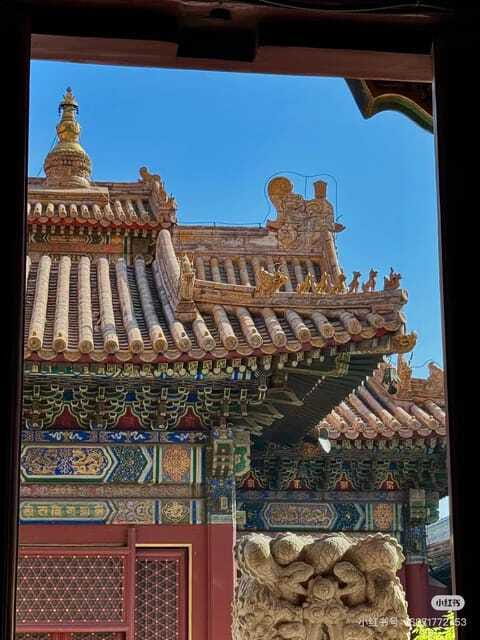
This tour offers a live tour guide in English and works as a small group. An English guide is not just for translations. It helps you attach names to what you are seeing, and that changes the visit.
Even if you know the big picture, a good guide helps you notice details you might miss when you are moving quickly:
- where you are in the south-to-north flow
- why certain gates or halls feel like “set pieces”
- how the Tibetan Buddhist and Qing architectural blend shows up in the spaces
Since the complex covers a lot of ground, small group pacing also matters. You spend less time negotiating where to meet and more time actually seeing.
If you prefer going at your own speed, you might still enjoy the visit. But if you want your first trip to Yonghegong to feel organized, this is one of those times where the guide option makes the day easier.
Timing: opening hours, last entry, and avoiding a rushed finish
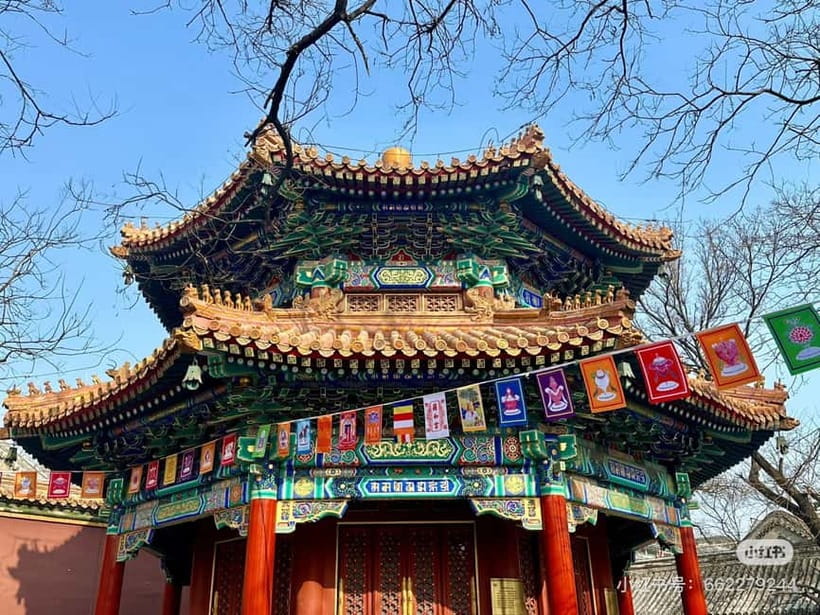
This is the part I would take seriously. Yonghegong has seasonal hours, and entry rules can cut your time.
- Summer and autumn (April 1 to October 31): 9:00 AM to 5:00 PM
Last admission at 4:30 PM, and entry ends as the grounds are cleared by 5:00 PM.
- Winter season (November 1 to March 31): 9:00 AM to 4:30 PM
Last admission at 4:00 PM, and entry ends as the grounds are cleared by 4:30 PM.
- Note: Stop entering at 16:00.
So, what should you do with this? Plan to arrive with a buffer. If you get there late, you might still see the outside approach, but you could lose the chance to comfortably take in all the major halls. For a complex this large, arriving early buys you calm.
If you hate feeling rushed, pick the earliest time you can manage. Your feet will thank you, and the temple will feel less like a sprint.
Price and value: $12 for a ticket-focused temple visit
The price is listed at $12 per person for a 1-day experience, with your ticket included and an information service fee. That is a straightforward structure: you are paying for admission and support, not for a long multi-stop day packed with transfers.
Value comes down to two things:
- You get entry without the ticket scramble.
- You have the option of an English guide in a small group, which helps you turn a big complex into a coherent route.
Also, you get flexibility features like free cancellation up to 24 hours in advance and reserve now, pay later, with a 1-day validity window tied to starting times. That matters if you are juggling Beijing weather or adjusting your schedule once you know your real travel pace.
All told, for a famous site that can eat up hours, this price feels like a practical deal.
What to bring, and the rules that actually affect your day
You only need one hard item listed: bring your passport.
Then there are the “don’t do this” rules that can affect the flow of the visit:
- No alcohol and drugs
- No making fire
And there is one important accessibility note: wheelchair users are not suitable. If you rely on a wheelchair, you will want to plan an alternative.
As for clothing and comfort, the listing does not spell out dress code details. But you are visiting a large temple complex, so wear shoes you can walk in. You will likely cover more ground than you expect when you see the size of the compound and the number of halls.
Who this fits best, and who should reconsider
This tour style works best for you if:
- You want a clean, organized visit to a major Beijing attraction
- You prefer skipping the stress of buying tickets on the spot
- You like architecture and religious design, especially the Tibetan-Buddhist and Qing blend
- You want an English explanation without spending all day on a huge itinerary
It might not be ideal if:
- You need wheelchair accessibility
- You dislike walking through structured sites with time limits
- You are arriving late and hoping to squeeze everything in after 4:00 PM
If you are flexible on timing and you arrive earlier rather than later, you will get the most from the complex.
Should you book this Yonghegong Lama Temple ticket with guide?
Yes, I would book it if you want a reliable, low-stress way to see Yonghegong. The biggest win is simple: pre-booked tickets plus the option of an English guide for a site that is large enough to overwhelm you if you go in blind.
Skip the guide only if you already feel comfortable with temple terminology and you enjoy self-paced walking. Otherwise, the guide can help you turn the big complex into a series of understandable stops, especially when you are moving between archways, towers, courtyards, and the main halls.
Just do not let the day run long. With last admission and the stop-entering cutoff at 16:00, timing is the difference between a satisfying visit and a rushed one.
FAQ
FAQ
Where is Yonghegong Lama Temple located?
It is at No. 12 Yonghegong Street, Dongcheng District, Beijing.
How do I get there by metro?
Take Metro Line 5 and get off at Yonghe Lama Temple station.
How long is the experience?
The ticket covers a 1-day visit.
What is included in the price?
You get Yonghegong Lama Temple tickets plus an information service fee.
Is there an English guide?
Yes, the experience includes a live tour guide in English with small group options available.
What are the opening hours in summer and autumn?
From 9:00 AM to 5:00 PM (April 1 to October 31), with last admission at 4:30 PM and entry ending as the grounds are cleared by 5:00 PM.
What are the opening hours in winter and spring?
From 9:00 AM to 4:30 PM (November 1 to March 31), with last admission at 4:00 PM and entry ending as the grounds are cleared by 4:30 PM.
When does entry stop?
The listing notes that entry stops at 16:00.
What should I bring with me?
Bring your passport.
Is Yonghegong Lama Temple wheelchair accessible?
No. The experience is listed as not suitable for wheelchair users.
More Guided Tours in Beijing
More Tickets in Beijing
More Tour Reviews in Beijing
Not for you? Here's more nearby things to do in Beijing we have reviewed


Lama Temple & Guozijian Walks, compared.
 ★ 5.0Temple Heaven, Lama Temple, Summer Palace & Peking Duck Bus TourFrom $56377 reviews
 ★ 4.7Temple Heaven, Summer Palace, Lama Temple, Hutong Bus TourFrom $58319 reviews
 ★ 5.0Temple of Heaven, Summer Palace, Lama Temple, Hutong ToursFrom $99311 reviews
 ★ 4.8Lama Temple (Yonghe Temple) Admission TicketFrom $10297 reviews
 ★ 4.0Beijing Historical Tour II including Summer Palace, Lama Temple & Panda GardenFrom $93187 reviews
 ★ 4.5Yonghe Lama Temple Entry TicketFrom $9147 reviews
 ★ 3.7Beijing Lama temple ticket; #1 efficacious; limited DiscountFrom $10116 reviews
 ★ 4.4Confucius Temple and the Impercial College E-ticketFrom $792 reviews
Browse the lists this tour appears in