
Reviewed · LAMA TEMPLE & GUOZIJIAN WALKS
Beijing: Lama Temple (Yonghe Temple) Admission Ticket
A quiet courtyard in Beijing changes your pace. This Lama Temple ticket gets you straight into a working Tibetan Buddhist complex, where you can watch real prayer routines and take in the mix of architectural styles that Beijing rarely shows this clearly. I love the 18-meter sandalwood Buddha and the calm, incense-filled atmosphere that hits you as soon as you pass through the gates. One consideration: fast-track helps, but it still involves security checks, and the site can be very crowded on major dates.
The other thing I really like is the choice to explore at your own speed. You can move from the Yonghe Gate into the main halls, then pick your way through the Four Learning Halls and exhibition rooms without being pulled along on a rigid schedule.
If you want a guided history lesson, this ticket is not that. You will be on your own, with no audio guide, so it helps to read a little beforehand or use a map on your phone.
Key things to know before you go
- Tibetan Buddhist temple in the middle of Beijing: A real religious site, not just a monument.
- 18-meter sandalwood Buddha: A record-holding highlight you should plan your route around.
- Four Learning Halls layout: Medicine Buddha, Mathematics, Tantric, and Lecture halls in one connected walk.
- Fast-track entry is not security-free: Plan time for checks at the entrance.
- Real-name passport ticketing is mandatory: Your passport info has to match what you book.
- Incense and prayer scenes are part of the show: Especially on crowded prayer days.
Lama Temple in 1 day: what makes Yonghe Temple worth your time
Lama Temple, also called Yonghe Temple, is one of those places that feels quietly serious. It is a Tibetan Buddhist temple in Beijing, and it still functions as a place where people come to pray. That matters, because the experience is not staged. You are walking through spaces built for worship, and you can see how locals use the temple in everyday ritual.
Historically, it started as an imperial residence. The complex was built in 1694 during Emperor Kangxi’s reign, became Emperor Yongzheng’s residence before he ascended the throne, turned into an imperial palace in 1725, then was converted into a Tibetan Buddhist temple in 1744 during Emperor Qianlong’s reign. Even if you only absorb a little of that context, the site makes sense. The buildings feel grand, but the purpose is devotional.
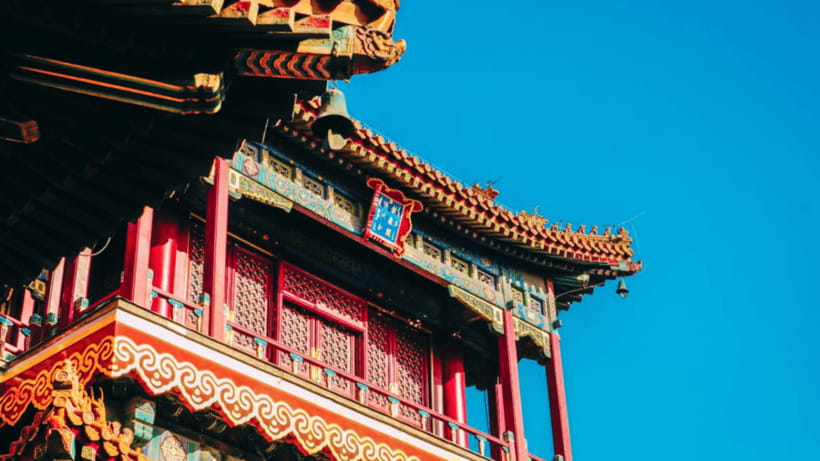
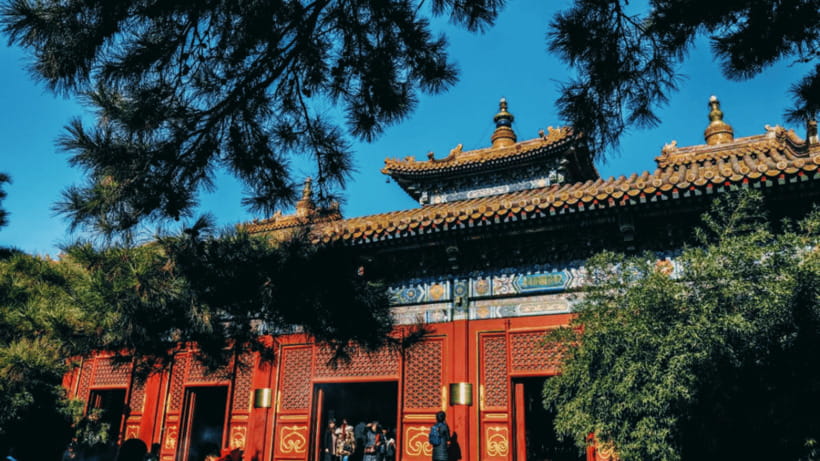
If you like religious architecture and enjoy noticing details, you will have a good time. The halls show a blend of Han, Manchu, Tibetan, and Mongolian influences, so it never feels like one uniform style. Instead, you notice textures, colors, and symbolic design choices that feel purposeful.
A few more Beijing tours and experiences worth a look


What the fast-track ticket really gives you (and what it does not)
This is a ticket for self-guided entry. You get fast-track entry to the Lama Temple grounds and access to the main buildings and cultural exhibitions. But it does not include a guided tour, audio guide, or a security-skip line.
That distinction is important for time planning. Your “speed” mainly comes from ticket processing, not from disappearing the security queue. When you arrive, you will show your ticket at the designated entrance channel and then go through security checks before entering the complex.
It is also wheelchair accessible, which is a genuine plus if you need step-free routes. You are still navigating courtyards and indoor halls, but the site is designed to be usable for visitors who cannot manage lots of stairs.
Entering smoothly: real-name passport rules and time limits
The biggest practical thing to get right is the ticket name. Real-name ticket booking is mandatory, and only genuine ID information is accepted at the ticket gate. That means you should book with the full name exactly as it appears on your passport, and the correct passport number.
If you book through PANDA144, you will be asked to send your details for confirmation. If the information is not received on time, the booking can be canceled with a cancellation fee. Also, the GetYourGuide QR code is not treated as a valid ticket by itself, so you will need to follow the provider’s confirmation process through WhatsApp communication or the confirmation email.
Time rules also matter. Final entry is one hour before closing, and you must exit 30 minutes before closing. So even if you love lingering in the halls, you should plan to move at a steady pace rather than treating the last hour like bonus time.
Practical tip: aim to arrive earlier than you think you need to. It reduces stress, and it also helps you get better photos and less crowding when you move deeper into the courtyards.
The first walk: Yonghe Gate and the temple’s visual storyline
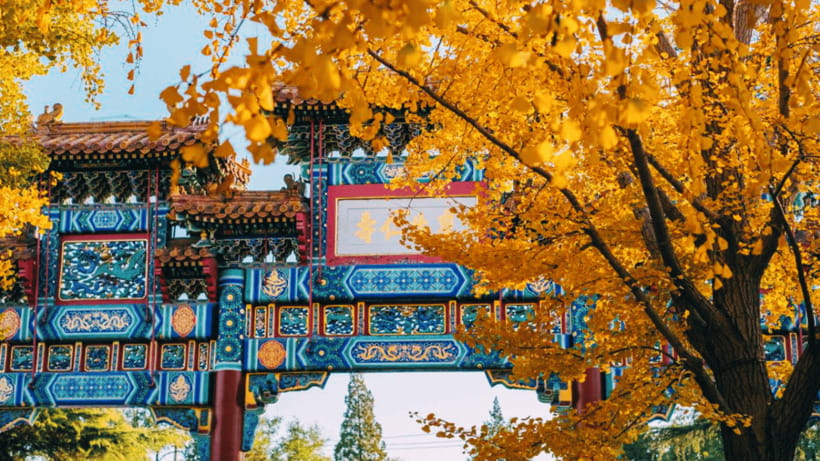
Your visit has a natural flow once you enter. You move from archway to archway and courtyard to hall, and each threshold raises the sense of ceremony.
Three archways structure your approach:
- Yonghe Gate
- Yonghe Palace Hall
- The series of surrounding halls that lead you into the learning and worship spaces
As you walk, watch the architecture closely. The temple’s style is a blend, so you might see elements that look distinct from one another even within the same complex. That can be fun if you treat it like a design scavenger hunt.
Also pay attention to scale. Lama Temple does not rely on sheer size alone. It leans on layered spaces and decorative detail. Courtyards create a pause in your mind, and then the next hall pulls you forward.
If you are visiting during busy prayer times, you will notice worship becomes part of your route. People come for devotion, not tourism, so your pace may slow without meaning to.
Yonghe Palace Hall and the main worship spaces
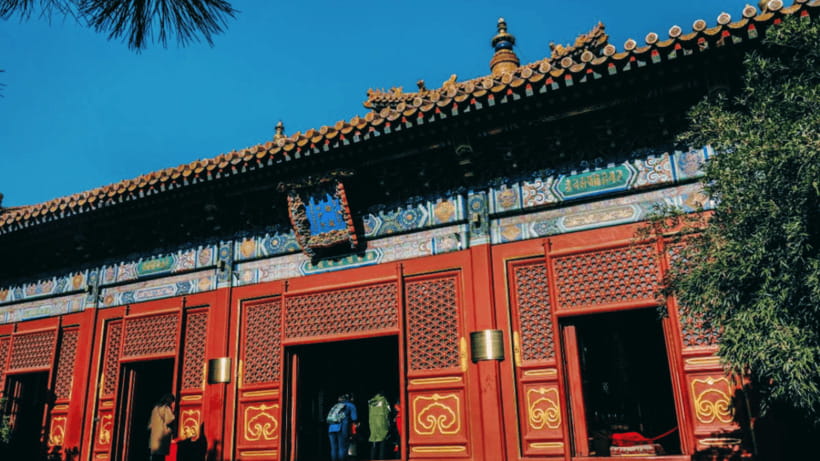
The main halls are where the temple feels most “alive.” Inside, you will find Buddha statues, sacred religious objects, and precious artifacts. The design aims for reverence, and the atmosphere supports that. Even if you are not religious, you will probably find yourself speaking a little more quietly after you enter.
Expect to see displays that connect Tibetan Buddhist visual culture to daily practice. Thangkas are mentioned as part of what visitors can find inside, and you may also see the kind of carefully curated religious objects that make this more than just an architectural stop.
A drawback to keep in mind: inside halls can feel crowded because they are the core spaces. So if you like elbow room, you may need to visit a bit earlier in the day or be comfortable waiting for people to shift.

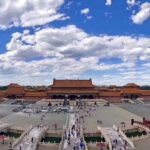

The Four Learning Halls: Medicine Buddha, Mathematics, Tantric, Lecture
One of the most memorable parts of Lama Temple is the idea that religion here is also education. The Four Learning Halls are specifically named:
- Hall of Medicine Buddha
- Mathematics Hall
- Tantric Hall
- Lecture Hall
You can treat these as four different “rooms of meaning.” Even if you do not read every label, the names point you toward different aspects of Tibetan Buddhist thought and ritual.
The Hall of Medicine Buddha is where you may expect a focus on healing symbolism. The Mathematics Hall sounds unusual, but it tells you something about how knowledge and religious practice can be intertwined. The Tantric Hall signals a space tied to more complex esoteric practices. And the Lecture Hall suggests formal teaching and learning.
In practice, what you will experience is a series of rooms that all feel related but distinct. Different halls can also create different crowd patterns. If one room is packed, you can step to the next one without losing your momentum.
Plan a route that includes all four. If you skip one, the overall theme becomes less satisfying.
Exhibition rooms: using breaks to reset your eyes
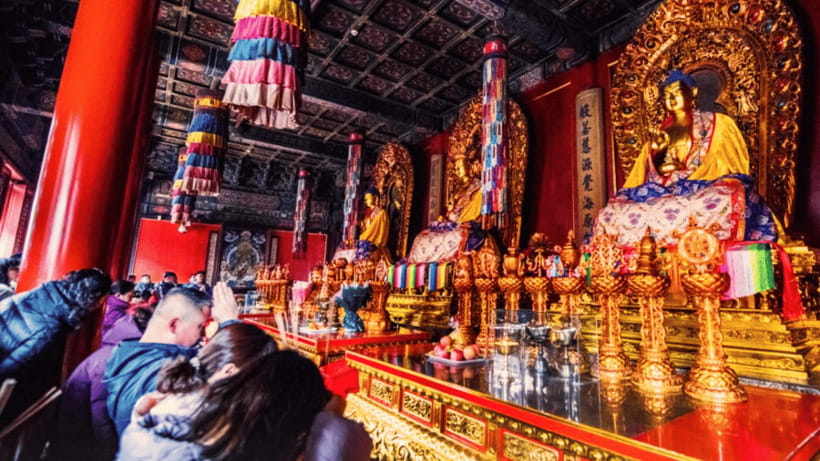
Beyond the major halls, the complex also includes three exhibition rooms. These are useful because they give your eyes a chance to rest from constant looking at statues and ornate interiors.
They also help you connect what you saw in the prayer spaces to broader cultural context. If you are the type who likes to understand what you are seeing, this portion can add value without taking over your whole day.
Keep in mind that exhibitions can be quieter than the main halls, so you may find it easier to see details and take photos when people move through.
The 18-meter sandalwood Buddha, and why it lands so hard
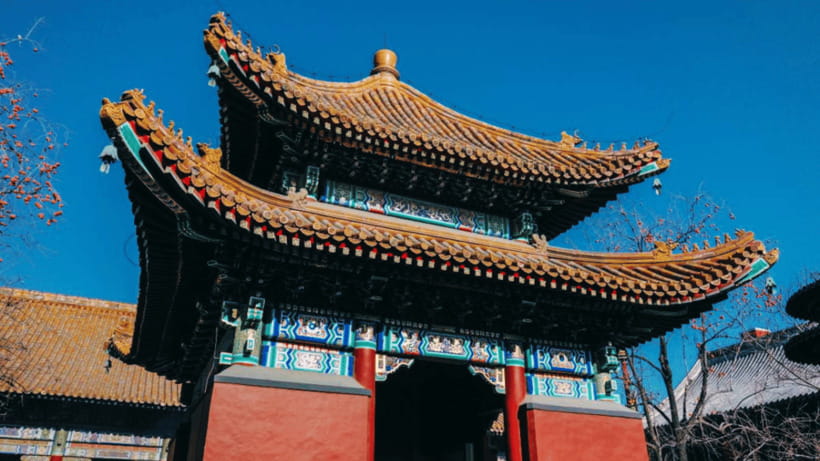
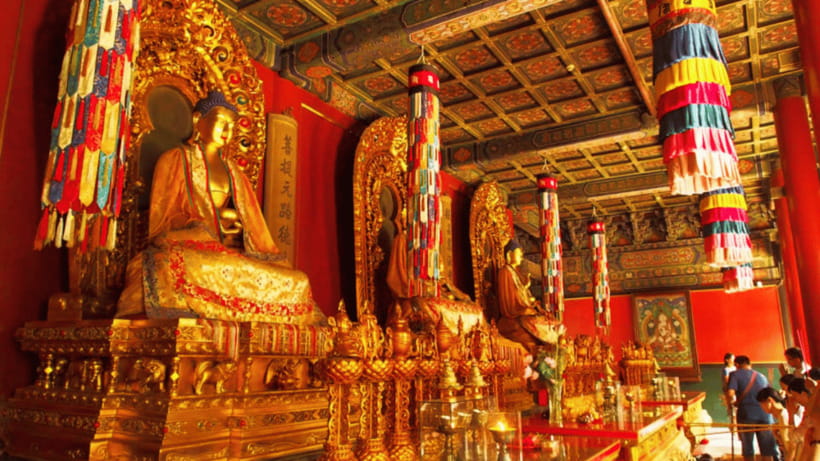
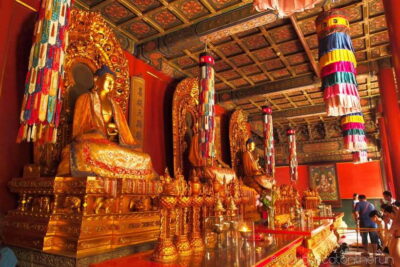
The headline highlight is the 18-meter-tall sandalwood Buddha, known as Maitreya. It is recognized in the Guinness World Records since 1990, and you will feel the scale of it even before you fully process what you are looking at.
This is not just a big statue. It is a visual anchor for the whole visit. When you plan your walking, treat it as your north star. Spend a bit of time here. Let your eyes adjust. Notice the contrast between the statue’s grandeur and the intimate devotional behavior around it.
Many people come to worship and also end up staring for a while. That is normal. It is the kind of site where you get a physical sense of presence, even if you are just observing.
Incense, prayer, and the real rhythm of the temple
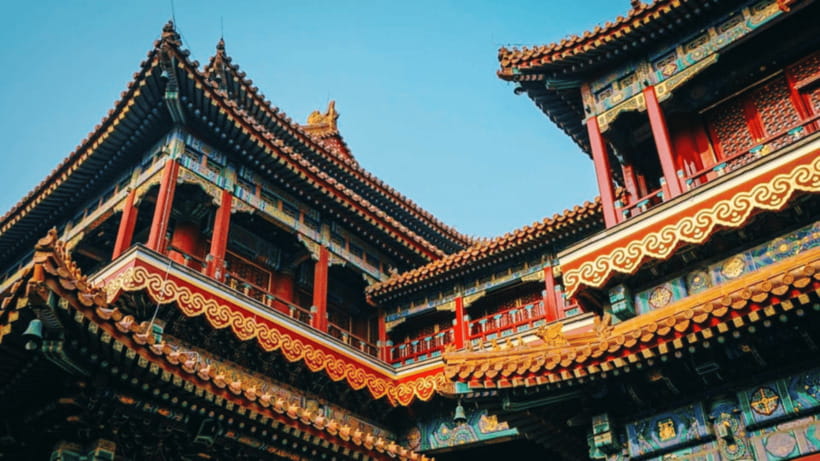
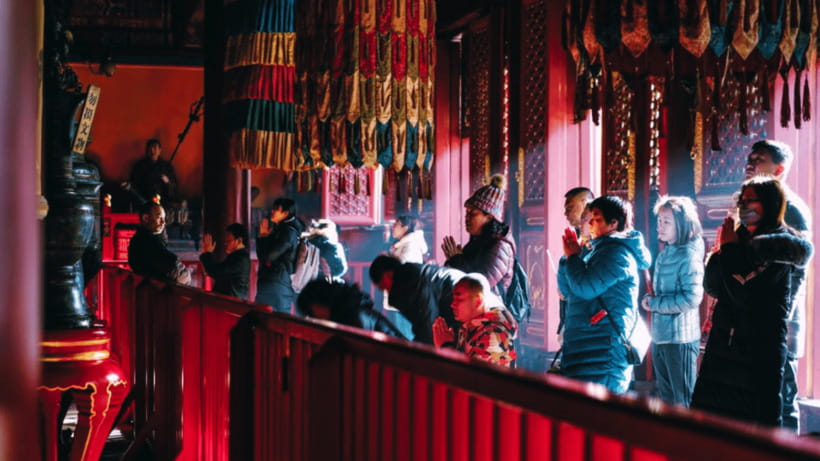
A lot of my favorite moments in religious sites are the small behaviors that look repetitive because they are meaningful. At Lama Temple, you can expect to see locals praying. On especially busy dates, you can also expect a stronger crowd presence.
One of the reviews notes that during a very crowded day, people came to pray and you could burn incense. That matches the vibe you should prepare for. When incense is in the air, you will see smoke drifting and lantern-like light effects in some areas. It is atmospheric in a way photos cannot fully capture.
Also remember etiquette. You are walking through someone’s worship space. Look, but don’t interrupt. Move with care, especially near active prayer areas.
Crowds and timing: how to have a calmer visit
This temple can get busy, and it is not just because it is famous. It is busy because it is meaningful, and people come to pray. A review from New Year’s Day describes heavy crowds and lots of people arriving for prayer.
So, I suggest you be strategic:
- Choose an earlier entry time when possible, since you only have until final entry one hour before closing.
- Keep your plan flexible. If a hall is packed, pivot to another one and return later.
- Visit on a less crowded day if your schedule allows.
Even if you are not trying to “beat crowds,” going early makes the temple feel more spacious and more spiritual. You get time to look without feeling rushed.
Ticket value: does a $10 admission ticket make sense?
At around $10 per person, this is good value, especially because you are buying three things at once: entry access, fast-track ticket handling, and access to the major buildings and exhibition rooms.
If you were to try this on your own without real-name passport booking, you might run into friction. Here, the provider handles the ticket workflow, and you receive clear instructions through WhatsApp or email confirmation. That reduces stress on arrival day.
Also, because this is self-guided, you are not paying for a guide to spend your money on narration. You pay for access, and then you decide how long to stay in each hall.
The main “value cost” is that you should bring some patience. You still do security checks. You also need to follow the passport and name matching rules, or you could risk losing your booking.
Practical tips for a smooth, respectful self-guided visit
Here is how I would use this ticket day, step-by-step, in a way that makes the temple feel satisfying.
First, get your documents ready. Bring your passport, since it is the key ID required for real-name ticketing. Then, keep your ticket confirmation details accessible. The QR code alone is not treated as the ticket in this case, so rely on the confirmation process sent by WhatsApp or email.
Second, plan for a “walk and pause” style day. Lama Temple is not one straight line. You will move through courtyards, then enter major halls, then switch to learning halls. Give yourself permission to pause in transitions, especially near the archways.
Third, expect religious activity to shape your experience. Incense and prayer can add atmosphere, and busy areas can feel more crowded. Treat that as part of the authenticity, not a problem to solve.
Finally, if you want a bit of guidance without a formal guide, look for the short visit info the provider shares. Reviews describe that the team sends a small guide and information ahead of time, which helps first-timers figure out where to start.
Who this ticket is best for
This Lama Temple ticket is a strong fit if you:
- Want a self-guided day in a major Beijing temple
- Like religious architecture and symbolic rooms
- Enjoy seeing how locals actually use a site for worship
- Prefer keeping your own pace rather than following a group
It is also a good choice for budget-minded visitors, since it is a low-cost admission ticket with fast-track entry handling included.
It might be less ideal if you need a full narrative tour to understand what you are seeing. Since there is no guided tour or audio guide, you will get the best experience if you bring curiosity and spend time in front of the key sights.
Should you book this Lama Temple ticket?
Yes, I would book it if you value smooth entry and hate last-minute ticket headaches in Beijing. The low price combined with fast-track entry, access to the major buildings, and a provider that sends clear WhatsApp or email instructions makes it a practical way to see a meaningful site.
Book it with care if you are forgetful about details. The real-name passport matching rule is strict, and you have clear time limits for entry and exit. If you can follow instructions, you will get a calm, self-paced day in one of Beijing’s most distinctive religious complexes.
If you want a serene, culturally rich temple visit that feels more lived-in than performative, this is one of the best bets on your itinerary.
More Tickets in Beijing


More Tour Reviews in Beijing

Not for you? Here's more nearby things to do in Beijing we have reviewed

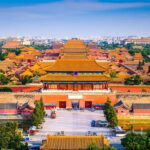

Lama Temple & Guozijian Walks, compared.
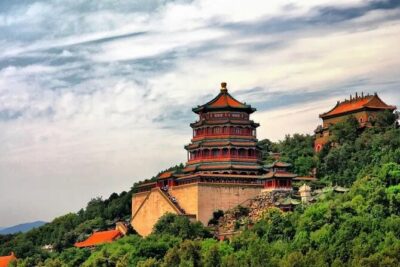 ★ 5.0Temple Heaven, Lama Temple, Summer Palace & Peking Duck Bus TourFrom $56377 reviews
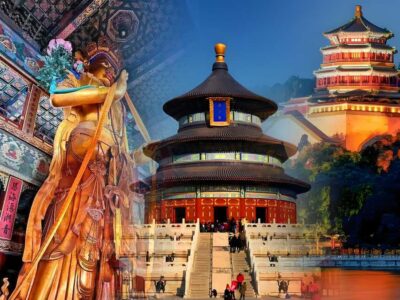 ★ 4.7Temple Heaven, Summer Palace, Lama Temple, Hutong Bus TourFrom $58319 reviews
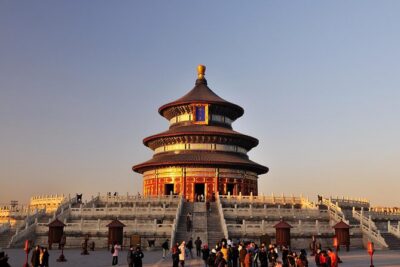 ★ 5.0Temple of Heaven, Summer Palace, Lama Temple, Hutong ToursFrom $99311 reviews
 ★ 4.0Beijing Historical Tour II including Summer Palace, Lama Temple & Panda GardenFrom $93187 reviews
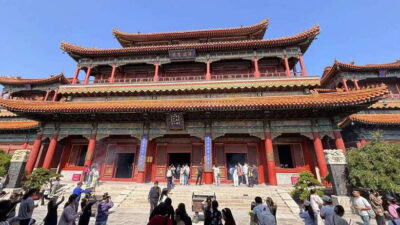 ★ 4.5Yonghe Lama Temple Entry TicketFrom $9147 reviews
 ★ 3.7Beijing Lama temple ticket; #1 efficacious; limited DiscountFrom $10116 reviews
 ★ 4.4Confucius Temple and the Impercial College E-ticketFrom $792 reviews
 ★ 5.0Panda House, Temple of Heaven, Lama Temple, Summer Palace & LunchFrom $14877 reviews
Browse the lists this tour appears in