
Reviewed · LAMA TEMPLE & GUOZIJIAN WALKS
Beijing: Yonghe Lama Temple Entry Ticket
Step inside Beijing’s most important lama temple.
This Yonghe Lamasery ticket makes entry straightforward, and the payoff is big: it is the principal and largest Buddhist temple in Beijing. I love how you can use a QR code plus your passport at the gate, so you spend less time sorting paperwork and more time looking around.
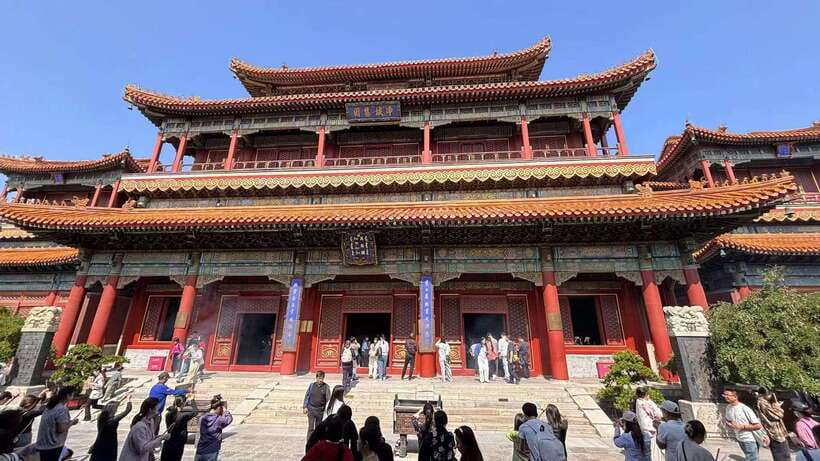
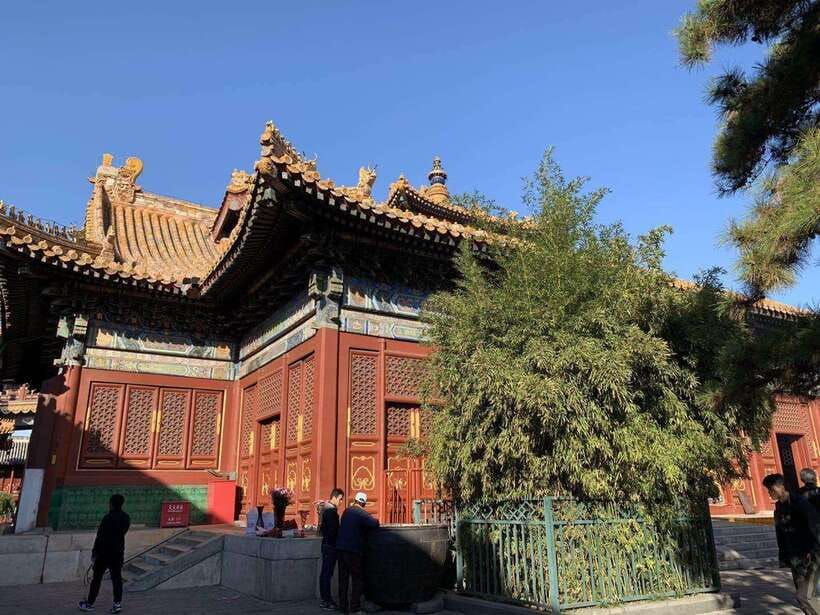
The other reason I like this experience is the setting itself. Built in 1694 and later shaped into a temple and monastery with Tibetan monks, it’s often described as the largest and most perfectly preserved lamasery in present-day China, outside Tibet. A small consideration is that you must use the correct QR, because the wrong one will not work at entry.
Key Highlights Worth Your Time
- QR code plus passport entry means less friction at the gate
- Yonghe Lamasery is Beijing’s principal and largest Buddhist temple
- Built in 1694, later transformed into a monastery with Tibetan monks
- Skip the ticket line so your 2-hour visit starts smoothly
- Wheelchair accessible, making it easier for more visitors
Yonghe Lamasery: why this temple is a big deal in Beijing
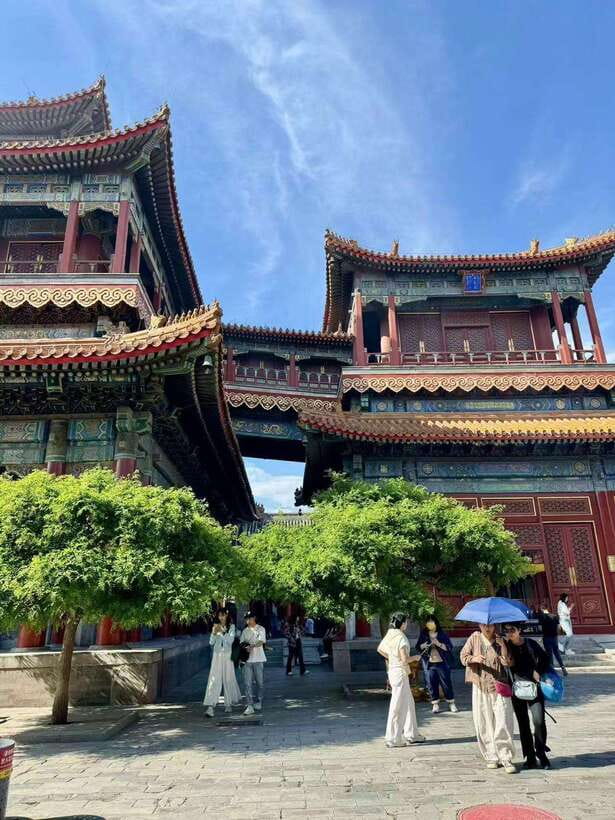
Yonghe Lamasery, also called the Yonghe Lama Temple, is one of those places where the scale and purpose show up fast. Even before you get lost in details, you can feel that this was meant to be a major center of Buddhism, not just a heritage stop. It is described as the principal and largest Buddhist temple in Beijing, and that matters when you are trying to decide what to spend your limited time on.
What makes it especially interesting to visit is that it did not start life as a temple. It was built in 1694 as part of the city wall for Emperor Yongzheng, before he became emperor in 1722. That earlier military and defensive purpose is a weird twist that adds context when you see the compound today. It helps you understand why the whole place feels sturdy and self-contained, like a world unto itself.
I also like that the temple’s importance is not just local trivia. The dwelling later served as a temple and monastery and is considered one of the greatest centers of Buddhism outside of Tibet. That framing helps you look past the tourist basics and treat your visit like a real cultural landmark.
A few more Beijing tours and experiences worth a look

A simple history you can carry through the visit
If you want the story in plain terms, here it is. The site was constructed in 1694 for Emperor Yongzheng as part of the city wall system. After he rose to the throne in 1722, the future of the place changed.
Then comes the part that turns the building from imperial site into Buddhist hub. In 1744, Emperor Qianlong sent for 300 Tibetan monks and also brought in 200 Chinese students. The group was housed in the palace, and over time, the dwelling became a temple and monastery. This is why the place matters across cultures, not just because it is old.
When you read that, you can start noticing what the temple is communicating visually and spiritually: it is not only about architecture, it is about being a meeting point for religious life. For you, the practical value of this context is that it makes your 2-hour visit feel more purposeful. You are not just walking through a pretty courtyard, you are moving through a site that was designed to host a serious religious community.
Using your QR code and passport at entry, the part that matters most
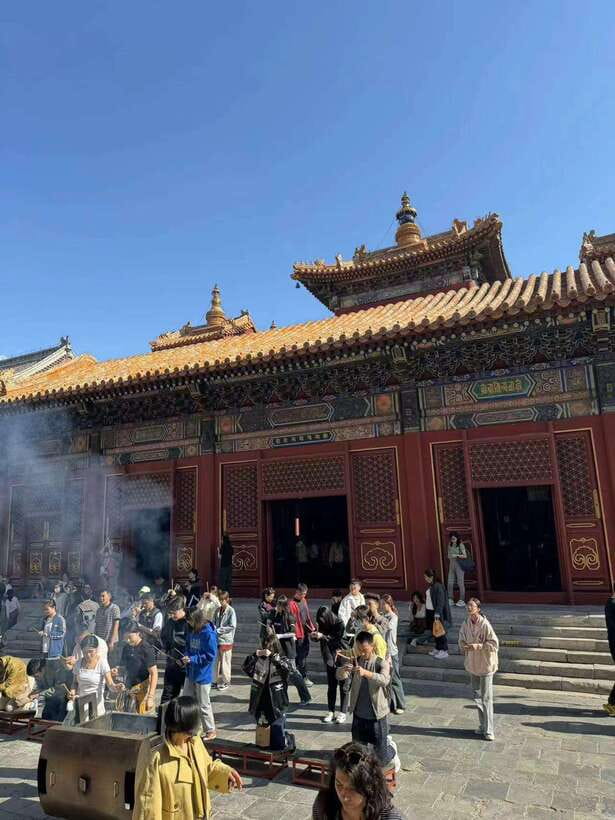
This is the most practical part of the whole experience, and it is also where people can get stuck. The good news is simple: use the QR code and your passport and you can enter the park.
Here is the catch. The Get your guide QR is not valid. Instead, you have to check your email or WhatsApp for the right QR. If you show up with the wrong code, you may have to scramble on the spot, and that is the opposite of what you want when you only have a couple of hours.
The ticket also includes skip the ticket line. That sounds small, but it adds up fast. At major sites in Beijing, waiting in the wrong queue can eat your energy and time. With this setup, your job is mostly: arrive, scan correctly, show your passport, and go.
My best advice is to double-check your phone screen before you leave for the metro or bus. Save a screenshot if that is possible for you, and keep your passport easy to grab. This is one of those travel wins where doing the boring check once saves you stress later.
Getting there like a local: Subway Line 2 or 5 to Yonghegong
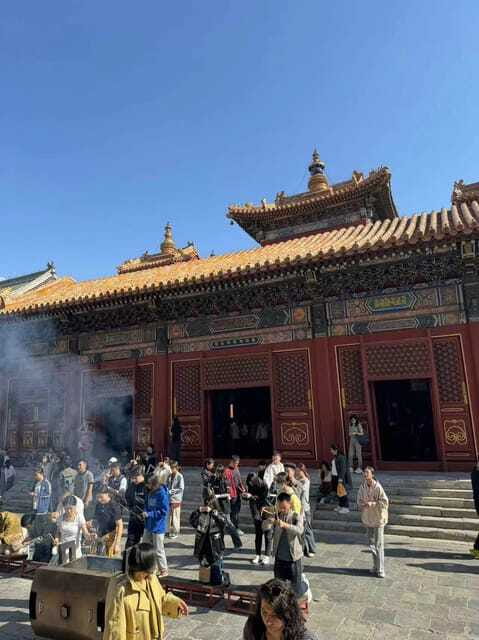
Getting to Yonghe Lamasery is easy if you use the metro and follow the exit instructions. By subway, take Subway Line 2 or Line 5 to Yonghegong (Yonghe Temple) Station. Get out of the station from Exit F and walk south for a few meters, then turn east. The walk is about two minutes.
I like this because it is direct. You are not guessing your way through a maze of street crossings, and you are not forced to depend on a taxi if traffic slows you down. Two minutes is a real advantage when you are already holding a time window for your visit.
If you prefer bus, you have options too. The information lists bus routes 13, 116, 117, or 684, and you get off at Yonghegong Station. Another option is buses 13, 18, 44, 75, 116, 684, Te 2, or Te 12, and get off at Yonghegong Qiao Dong Station. You can also take bus 117 or 125 and get off at Yonghegong Qiao Bei Station.
In other words, you can choose your comfort level. Metro for speed, bus for flexibility.
What a 2-hour ticket really buys you on site
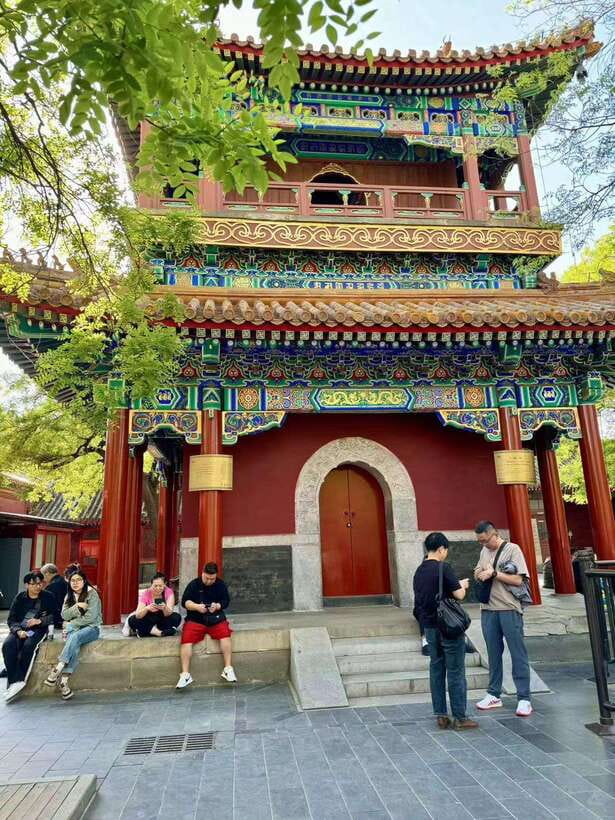
The duration listed is 2 hours. That is enough time to get oriented, see the main areas of the compound, and take in the overall atmosphere without feeling rushed. You will want to use that time well because the temple is large, and “two hours” can feel short if you start stopping for photos every ten steps.
Instead, I suggest you think in terms of goals. Your goal can be broad: understand how Yonghe Lamasery functions as a major Buddhist center, notice how the compound is organized, and get a feel for what makes it described as the largest and most perfectly preserved lamasery in present-day China.
Because the ticket is built around efficient entry, your time is protected from the worst bottleneck. Skip the ticket line is there for a reason. Once you are inside, you can spend less mental energy on logistics and more on actually looking.
You might also enjoy the history angle while you walk. Remember: it started as part of a city wall build, then shifted into a palace residence, then became a monastery with Tibetan monks and Chinese students. Even if you do not read every sign, your brain will file what you see into a bigger story.


Why this lamasery is described as the best preserved in China
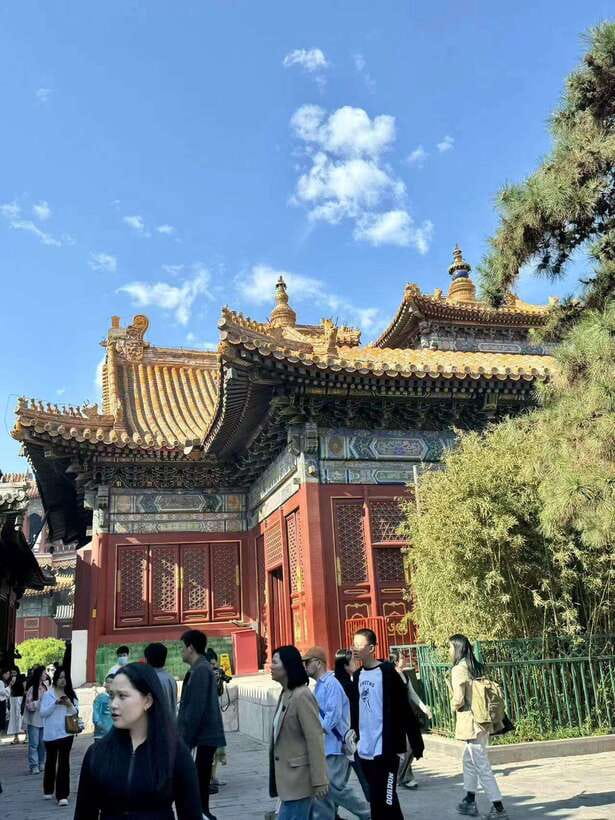
The experience highlights the claim that Yonghe Lamasery is the largest and most perfectly preserved lamasery in present-day China. That matters because “largest” is one thing, but “preserved” is what changes the visitor experience. A place can be huge and still feel altered or incomplete, but a well-preserved complex helps you visualize what a site looked like as an active religious community.
Here is what that means for you in real terms. When a historic complex has been maintained well, details become more meaningful. You can see the design choices and the sense of order in the grounds and structures. You can also slow down and let the atmosphere do its job, instead of feeling like you are piecing together an unfinished puzzle.
And the religious significance is not just marketing. The temple is described as a major center of Buddhism outside Tibet. That gives your visit an extra layer. You are standing in a site that helped connect Tibetan monastic traditions with local Chinese religious life, especially after the 1744 arrival of Tibetan monks and Chinese students.
Ticket value and what you get for the money
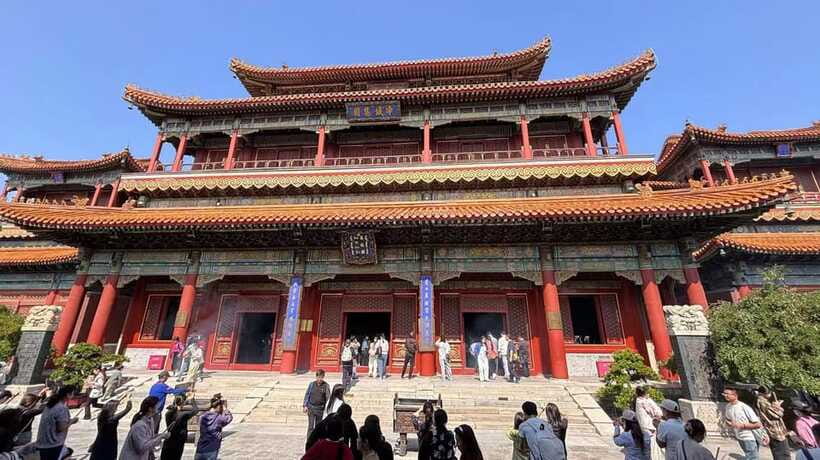
The price is listed as $9 per person. That is low for a ticket to one of Beijing’s most prominent religious sites, especially when the offer includes the actual Yonghe Lamasery ticket plus the booking services charge.
I think the best value here is not only the ticket price, it is the time savings. Skip the ticket line can be worth more than the difference between a low-cost ticket and a higher-cost one, because you are protecting your limited visit duration. A two-hour experience is only enjoyable if you do not burn 30 to 45 minutes waiting in a queue.
So the deal works best if you like practical travel. If you enjoy planning ahead, keeping your phone organized, and then going straight into the experience, you will probably feel like this ticket was made for you. If you want very guided, storytelling-heavy interpretation, this entry ticket may feel lighter than a full guided tour, since what you get is access and efficiency rather than structured commentary.
Wheelchair accessible, and why that is worth checking early
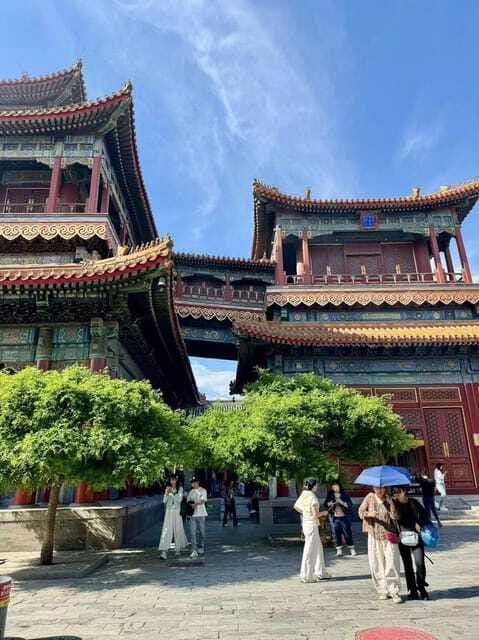
This activity is listed as wheelchair accessible. That is a big deal for planning because it signals that the route and entry process are designed with at least basic accessibility in mind.
In practice, it helps you plan your pace. When you know access is supported, you can focus on navigation and comfort rather than worrying about whether you will hit a hard barrier at entry. Also, because entry is controlled by QR code and passport, the arrival process should be straightforward once you have the correct code.
If accessibility matters for you, make sure your group can manage the short walk from the metro exit. The directions say the walk from Exit F is about two minutes, which is usually manageable for many visitors, but it is still worth planning around your mobility needs.
Who should book this Yonghe Lamasery entry ticket
This ticket fits best if you want a high-impact Beijing classic with minimal friction. You do not need to spend time on ticket counters, and you can spend your effort on the on-site experience.
You might love this if:
- You are on a tight schedule and want a 2-hour visit to feel full
- You like big historic sites with clear cultural importance
- You value simple entry that uses QR code scanning and your passport
- You want to reduce the chance of queue delays by using skip the ticket line
It may be less ideal if you are looking for deep guided interpretation. Based on the details provided here, this is an entry-focused ticket, not a full, narration-led tour.
Should you book this Beijing Yonghe Lama Temple entry ticket?
If you want a straightforward, efficient way to visit Yonghe Lamasery, I would book it. The biggest win is the practical entry method, QR code plus passport, and the promise to skip the ticket line. At $9 per person, the value is strong, especially when you are trying to make the most of a 2-hour window.
The only real reason to hesitate is the QR issue. Since the Get your guide QR is not valid, you need to make sure you have the correct QR from your email or WhatsApp before you go. If you can handle that one step, this is an easy yes.
One more tip for your decision: if you are excited by history that connects emperors, Tibetan monks, and Chinese students in the 1700s, this temple is right up your alley. The architecture and setting will make more sense when you remember what happened in 1694 and 1744.
FAQ
How do I enter Yonghe Lamasery with this ticket?
You can enter the park by using the QR code and your passport.
Is the Get your guide QR code valid for entry?
No. The Get your guide QR is not valid. Check your email or WhatsApp for the correct QR code.
How long does the ticket allow me to spend at the temple?
The duration listed is 2 hours.
Does this ticket let me skip the ticket line?
Yes, the experience includes skip the ticket line.
Where should I exit the subway to get to Yonghe Lamasery?
Take Subway Line 2 or Line 5 to Yonghegong (Yonghe Temple) Station, then exit from Exit F. Walk south a few meters and turn east, and you arrive after about two minutes.
Is Yonghe Lamasery wheelchair accessible?
Yes, the activity is wheelchair accessible.
More Tickets in Beijing

More Tour Reviews in Beijing
Not for you? Here's more nearby things to do in Beijing we have reviewed


Lama Temple & Guozijian Walks, compared.
 ★ 5.0Temple Heaven, Lama Temple, Summer Palace & Peking Duck Bus TourFrom $56377 reviews
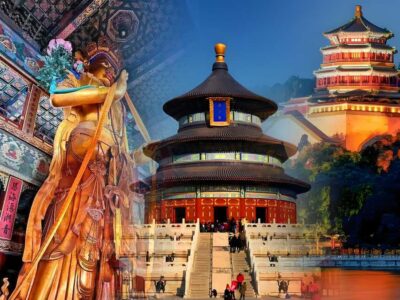 ★ 4.7Temple Heaven, Summer Palace, Lama Temple, Hutong Bus TourFrom $58319 reviews
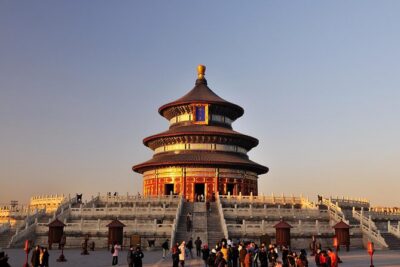 ★ 5.0Temple of Heaven, Summer Palace, Lama Temple, Hutong ToursFrom $99311 reviews
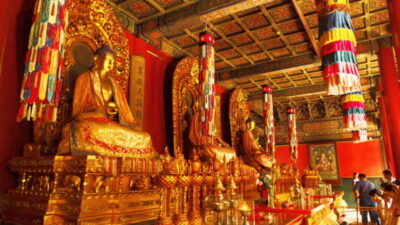 ★ 4.8Lama Temple (Yonghe Temple) Admission TicketFrom $10297 reviews
 ★ 4.0Beijing Historical Tour II including Summer Palace, Lama Temple & Panda GardenFrom $93187 reviews
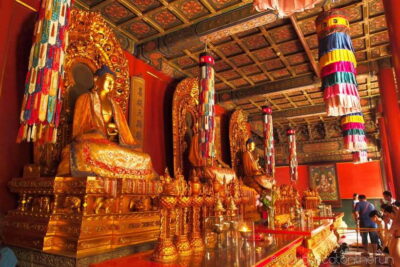 ★ 3.7Beijing Lama temple ticket; #1 efficacious; limited DiscountFrom $10116 reviews
 ★ 4.4Confucius Temple and the Impercial College E-ticketFrom $792 reviews
 ★ 5.0Panda House, Temple of Heaven, Lama Temple, Summer Palace & LunchFrom $14877 reviews
Browse the lists this tour appears in