
Reviewed · LAMA TEMPLE & GUOZIJIAN WALKS
Beijing: Confucius Temple and the Impercial College E-ticket
Confucius Temple and the Imperial College is one of those Beijing stops that feels both academic and strangely moving at the same time. I love how the Yuan dynasty layout turns learning into architecture, and I love the stone tablets tied to the imperial examinations that give you a real sense of how people chased a scholarship dream for centuries. One thing to consider: it is not a hands-on, modern museum. You are mostly reading, looking, and walking through courtyards, so build in time for slower absorption.
You can enter with an e-ticket QR code and your passport, then spend the day following a natural route from the temple complex to Guozijian. If you like history that you can physically trace, this is a great low-cost day.
Key highlights worth planning for
- Yuan dynasty foundations from the 1300s, including Confucius Temple and Guozijian
- Imperial examination exhibitions tied to how the civil service system worked
- 198 stone tablets and carvings totaling 51,624 Jinshi names, birthplaces, and ranks
- A clear campus-style walk across courtyards on a main north-south axis
- Three courtyards at the Confucius Temple and three courtyards at Guozijian
- Simple entry using QR code and passport, plus wheelchair access
Confucius Temple and Guozijian in one easy day
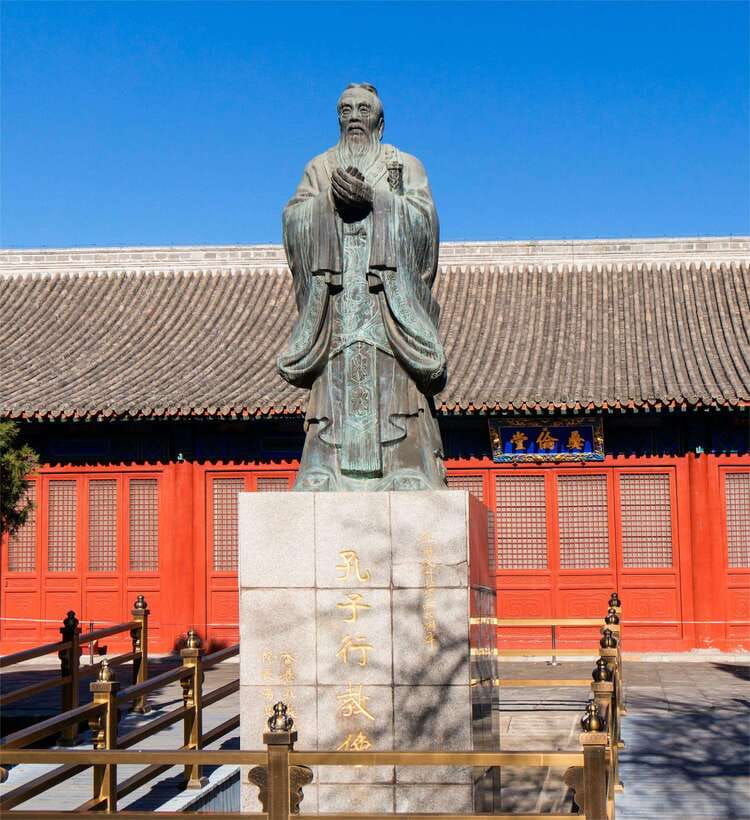
This is a one-day visit built around two linked sites that tell the same long story from two angles. Confucius Temple focuses on honoring Confucius, especially through ceremonial space and monumental carvings. Guozijian, the Imperial College, turns the theme of education into an official school campus run by the state.
What I like most is that you get both the spiritual and the academic sides without needing to hop between far-flung neighborhoods. You walk a north-south sequence through gates, halls, and courtyards, and the design helps you understand why these places were taken so seriously.
Also, with the e-ticket setup, you can keep the stress low. At a price like about $7 per person, you are paying for entry and time in the sites, not for a complicated production.
A few more Beijing tours and experiences worth a look



Entering with QR code and passport, then getting oriented fast
The practical win here is straightforward entry. You use your QR code and your original passport or ID card, and you go in with the electronic ticket. The key practical move is simple: have your passport ready, not buried in your bag.
Once inside, your best strategy is to start by reading the signs at the entrance areas and then committing to the axis route. These complexes are laid out in an ordered way, so if you move with the plan instead of against it, you naturally catch the major points without doubling back.
If you want extra help, you might find an audio guide option available at the temple entrance. It is not required, but it can add context when you are staring at halls and artifacts without a guide narrating the details.
Confucius Temple: Yuan dynasty architecture and why the layout matters
Beijing Confucius Temple was built in 1306 during the Yuan Dade decade. That is early for this kind of surviving ceremonial complex, and it shows in the way the grounds are composed. The temple covers over 22,000 square meters, with three courtyards and a construction area of about 7,400 square meters.
The most useful detail for your visit is the main central axis running south to north. As you walk, you encounter major structures in sequence: Teacher Gate, Dacheng Gate, Dacheng Hall, and Chong Sheng Temple. This axis is not just a design choice. It is a way of telling you where significance is placed.
Here is what that means for you on the ground. When you are in a courtyard, pause and look toward what is next on the axis. You will get a clearer sense of scale and intention. Courtyards can feel similar when you are rushing. Slowing down for a few seconds to connect the view to the next gate or hall makes the whole place read like a designed route.
The three exhibitions at Confucius Temple, and how to get value from them
Right now, the Confucius Temple includes three exhibitions. You do not need to spend hours in each room, but you do want a quick strategy so you walk away feeling like you actually learned something.
1) Exhibition of the Restored Dacheng Hall
This helps you understand what Dacheng Hall represents and why restoration matters. Even if you are not a restoration nerd, it gives the setting for the ceremonial space.
2) Exhibition of the Great Confucius
This one is where you connect the name on the buildings to the ideas behind them. If Confucius is a vague school subject for you, this is a chance to give that figure a more concrete role in the temple complex.
3) Exhibition of the History of Beijing Confucius Temple
This is the history thread that keeps your visit from feeling like a pretty courtyard stroll. It anchors the buildings to time, so you can see how the temple has kept its importance through successive dynasties.
My practical advice: pick one exhibition to treat like your main focus, and skim the other two. If you try to do everything at the same intensity, you risk losing the bigger picture to information overload. With a one-day visit, you want a clear takeaway.
Stone tablets and the imperial examination system you can actually see
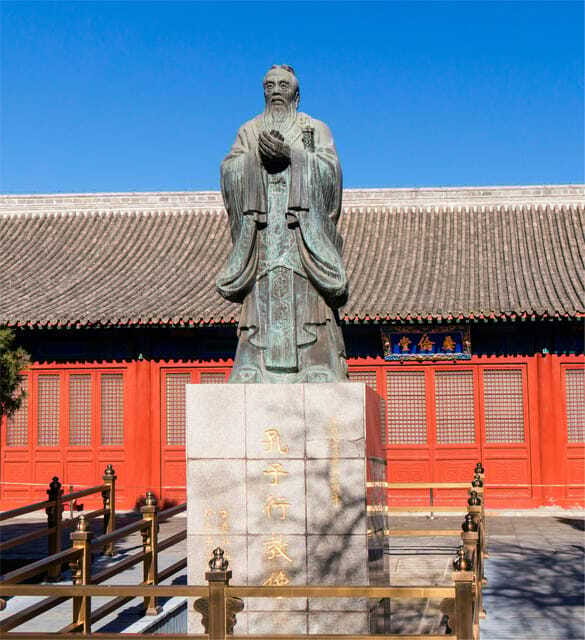
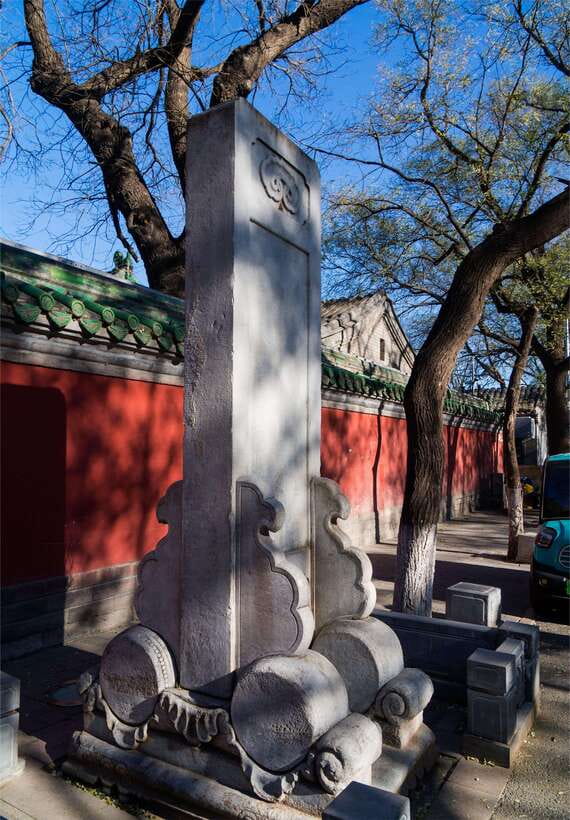
The Confucius Temple is famous for its stone carvings, and this is one of the strongest reasons to prioritize the site. There are 198 stone tablets arranged into four groups, positioned on either side of the front courtyard.
The carvings total 51,624 names, including Jinshi results, birthplaces, and ranks. That is not trivia. It is direct evidence of how the imperial examination system created an official record of who achieved elite scholarly status.
What to do with this as a visitor is simple but powerful. When you see the tablets, do not rush past them like wall art. Pick one tablet group and spend a few minutes reading the structure of the information. Even if you cannot read every character fluently, you can still grasp the system: name, place, rank, and status are all organized in a way that shows how records mattered.
This is the difference between seeing history as a story and seeing it as paperwork on stone.




From ritual to education: how Guozijian shifts the mood
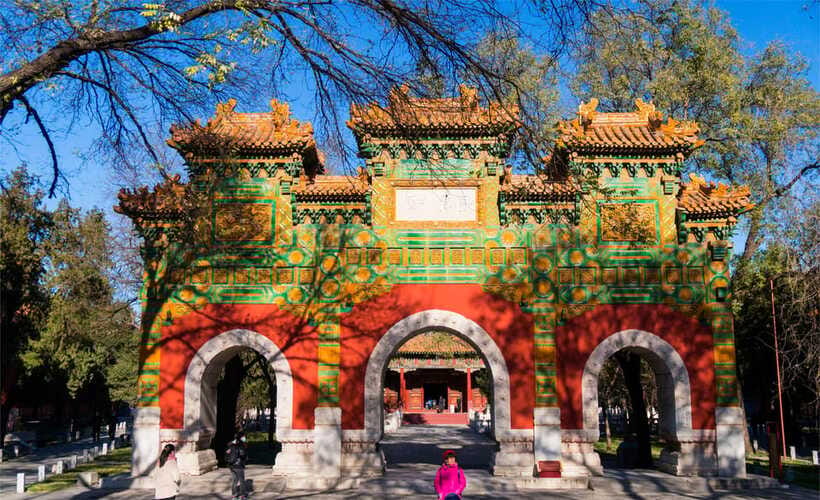
After Confucius Temple, Guozijian, also known as the Imperial College, changes the feeling of the visit. Instead of ceremonial honoring, you move into an educational, administrative space built by the state.
Guozijian was built in 1308, in the Yuan Zhida reign, and it was the highest educational institution and administration organ of education during the Yuan, Ming, and Qing dynasties.
The grounds cover about 28,000 square meters with three courtyards. Like the temple, it uses a central axis approach, so you get continuity in your experience even as the theme changes.
If you like architecture for storytelling, this is your payoff. It is not just two separate attractions. It is the same worldview expressed twice: first in the reverence of Confucius, then in the formal structure of state education.
The main axis of Guozijian: what to look for as you walk
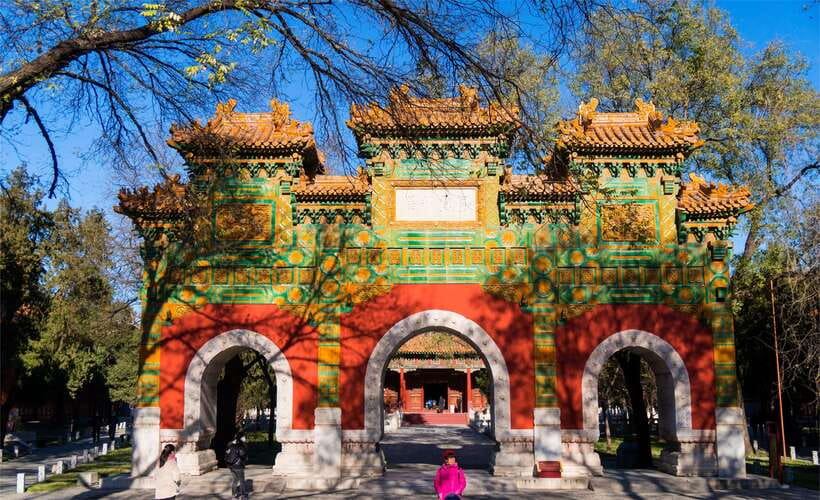
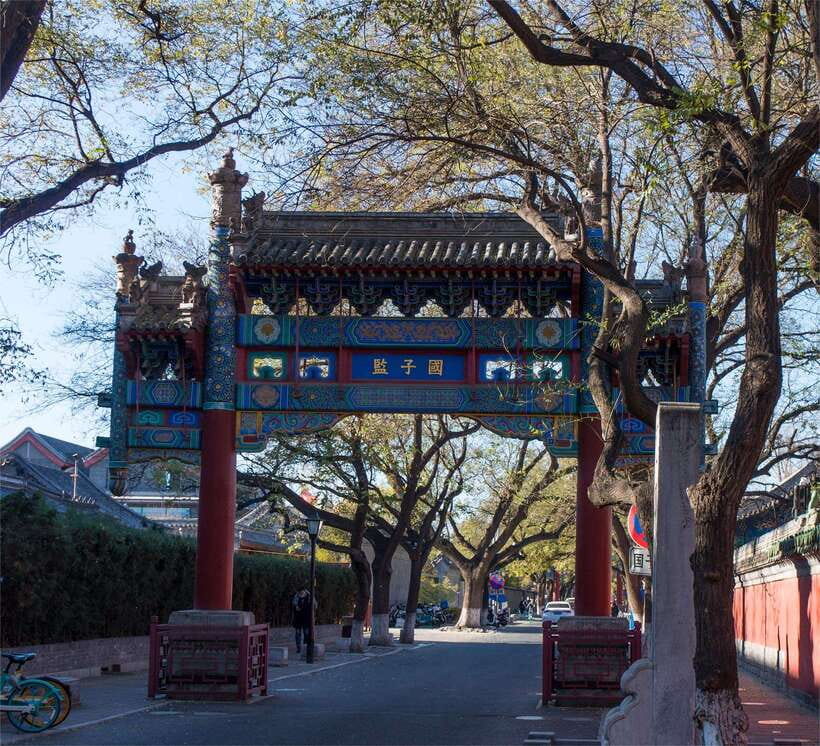
Guozijian’s central axis includes several key named points. As you move along the route, look for these structures in order: Jixian Gate, Taixue (Imperial College) Gate, Glazed memorial Arch, Biyong Hall, Yilun Hall, and Jingyi Hall.
On top of that, there are also Imperial tablet Pavilion and Bell and Drum Pavilion, arranged traditionally and symmetrically along the sides of the central sequence.
Why these names matter for you is that they give you a way to avoid getting lost in a courtyard maze. Even if you forget the exact meaning of each building, you can still use the axis as your mental map. Look straight down the route, find the next named hall or pavilion, then continue.
Also, symmetry here is not decorative. It is part of how a state institution signaled order. When you notice the alignment, the architecture starts teaching even before you read any signage.
Exhibitions tied to learning, not just display cases
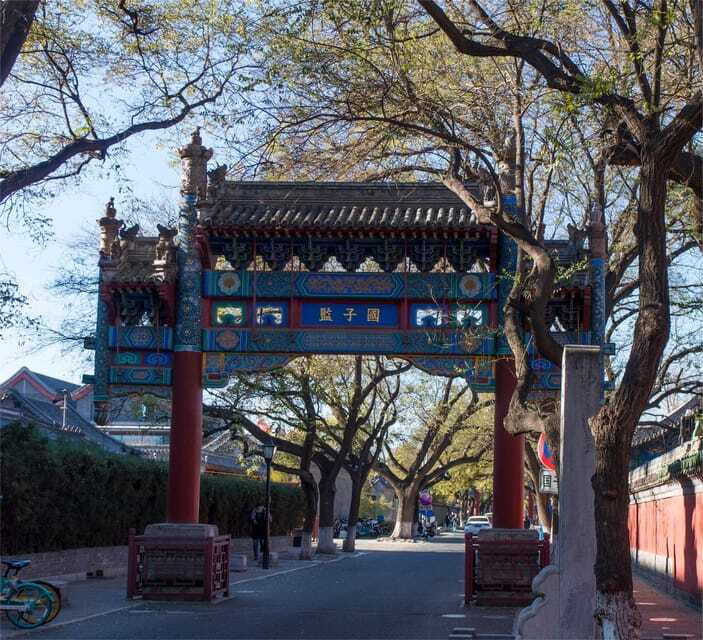
The experience also includes an exhibition connected to the Chinese imperial examination. This is where your two-site visit clicks together.
Confucius Temple shows the reverence side. Guozijian shows the institutional side. The examination exhibit ties those themes to the system that turned knowledge into official rank and opportunity.
If you are not sure what you should be looking for in an exhibition like this, use a simple question as you walk: What problem is the system solving, and what does it record or reward? When you frame it that way, the exhibits stop being random and start being explanatory.
And if you want to slow down even more, linger near the places that show records, ranks, and examination outcomes. That is where you get the clearest sense of how people understood success.
Practical tips for making a smooth one-day visit
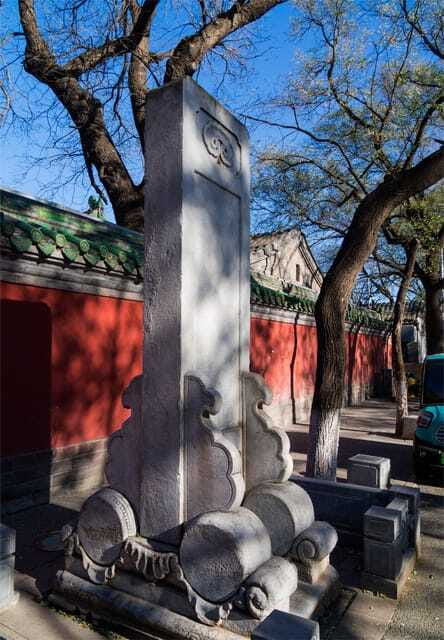
This visit is short on paper, one day, so your goal should be quality over racing. Here is how I would plan it so you get the most from the walking and the indoor displays.
- Start early if you can, since courtyards and halls feel better when you are not constantly threading through crowds.
- Do a quick pass first, then a focused re-visit. Skim to get the route, then slow down where you care most about the imperial examination theme and the stone tablets.
- Bring your passport or ID card and your e-ticket ready. The entry rule matters because it is what keeps you from delays.
- Wear shoes you can stand in for a while. These complexes are walkable, but there is a lot of courtyard movement, axis walking, and stopping.
You also get a small practical advantage built into the format: it is designed to let you skip the ticket line, which means less time waiting and more time inside the sites.
Price and value: why about $7 makes sense here
At around $7 per person, this is a strong value if you care about real structures rather than just a quick photo stop.
You are not only paying for entry. You are buying access to:
- ceremonial architecture from the early Yuan period
- two connected academic and ritual complexes
- a set of exhibitions, including imperial examination themes
- the stone tablet area with tens of thousands of names carved into stone, tied to Jinshi results
The cost looks low because the sites are not priced like entertainment parks or high-end curated galleries. Instead, the value is in the scale and the physical documentation. For many travelers, that is exactly what feels worth it.
Who should book, and who might want a different option
This fits you best if:
- you like history you can walk through on a designed axis
- you enjoy imperial examination themes or Chinese education history
- you want a one-day visit that feels substantial without spending a fortune
- you prefer a straightforward entry with QR code and passport
It might not fit you as well if:
- you want a highly interactive, modern museum experience
- you hate reading and observing because most of the value is in the carvings, halls, and exhibitions
- you are expecting a tour guide-style performance, since this experience emphasizes entry and self-paced visiting within the sites
On the other hand, the visit is marked as private group, and that usually helps you move at your own pace and spend more time where you actually care. If you like control, that matters.
Should you book this Confucius Temple and Imperial College e-ticket?
Yes, if your goal for Beijing is to understand how education, ritual, and status shaped real lives. This is a cost-effective way to see Yuan dynasty architecture, stand near the stone tablets tied to Jinshi, and connect it to what the imperial examination system meant in practice.
Book it especially if you want a calm, structured day with an easy entry setup. You will get more from it if you slow down in the courtyards and let the axis guide your attention. If you want nonstop modern spectacle, look elsewhere.
If you want a Beijing day that feels like you are reading a human story written into stone and halls, this one is a smart bet.
FAQ
What is included in the Confucius Temple and Imperial College e-ticket?
The ticket to the tourist attractions is included.
How long does this experience last?
It is valid for 1 day.
How much does it cost?
The price is listed as $7 per person.
How do I enter the attraction?
You can enter using your QR code and your original passport (or ID card), plus your electronic ticket.
Do I need to bring a passport or ID?
Yes. Bring your passport or ID card, and use your original passport when entering.
What attractions are covered?
The experience covers Confucius Temple in Beijing and Guozijian, the Imperial College.
What can I see related to the imperial examination?
There is an exhibition related to the Chinese imperial examination, and Confucius Temple also includes stone tablets associated with Jinshi names, birthplaces, and ranks.
Is there a way to skip the ticket line?
Yes, skip the ticket line is included.
Is the experience wheelchair accessible?
Yes, it is listed as wheelchair accessible.
Can I get a refund if I cancel?
Free cancellation is available, with cancellation up to 24 hours in advance for a full refund.
Is this a private group?
Yes, it is listed as a private group.
More Tickets in Beijing


More Tour Reviews in Beijing


Not for you? Here's more nearby things to do in Beijing we have reviewed






Lama Temple & Guozijian Walks, compared.
 ★ 5.0Temple Heaven, Lama Temple, Summer Palace & Peking Duck Bus TourFrom $56377 reviews
 ★ 4.7Temple Heaven, Summer Palace, Lama Temple, Hutong Bus TourFrom $58319 reviews
 ★ 5.0Temple of Heaven, Summer Palace, Lama Temple, Hutong ToursFrom $99311 reviews
 ★ 4.8Lama Temple (Yonghe Temple) Admission TicketFrom $10297 reviews
 ★ 4.0Beijing Historical Tour II including Summer Palace, Lama Temple & Panda GardenFrom $93187 reviews
 ★ 4.5Yonghe Lama Temple Entry TicketFrom $9147 reviews
 ★ 3.7Beijing Lama temple ticket; #1 efficacious; limited DiscountFrom $10116 reviews
 ★ 5.0Panda House, Temple of Heaven, Lama Temple, Summer Palace & LunchFrom $14877 reviews
Browse the lists this tour appears in