
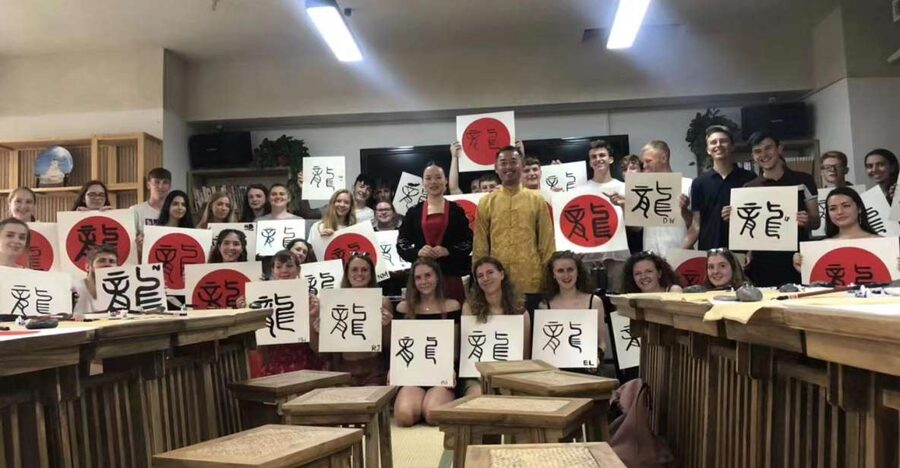
Reviewed · BEIJING CALLIGRAPHY WORKSHOPS
Beijing Calligraphy Class
A brush, a quiet mind, Beijing ink. I really like the clear English instruction on the major Chinese calligraphy scripts, and I like that you get meaning behind what you write, not just pretty strokes. One thing to think about: the session is short, so if you want a stronger final piece, choose the 1-hour option.
Right downtown near Wangfujing, the class is easy to fit into a busy day. You start at the Sun World Dynasty Hotel lobby, then go into a focused studio lesson with supplies included, and it works well for both adults and kids.
Key highlights you will actually care about
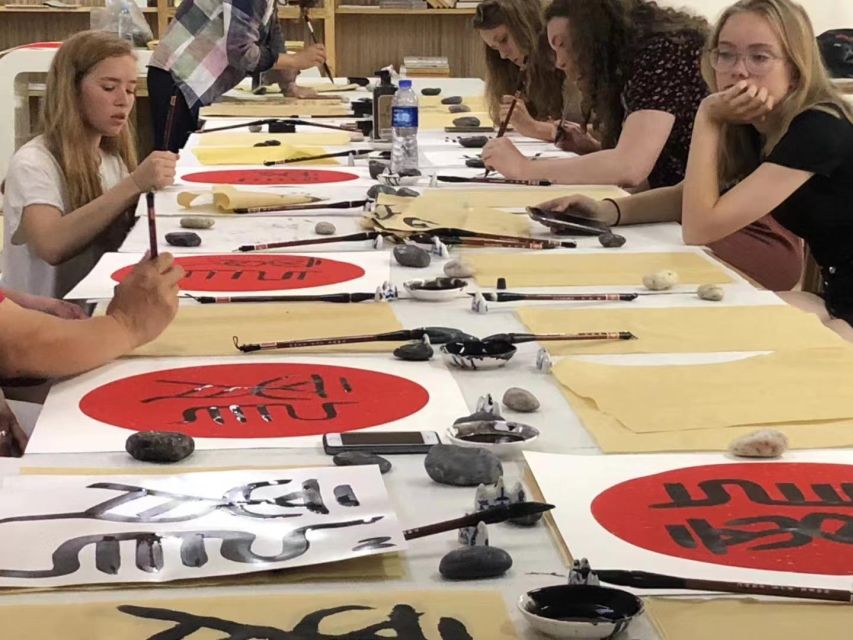
- Four script styles taught: regular, running, cursive, and seal script concepts
- Real calligraphy tools: brush, ink stone, and rice paper, with practical handling
- Mindfulness through technique: balance, rhythm, and harmony in every practice stroke
- Character meaning matters: culture context behind the characters you work on
- English-led, family-friendly pace: beginners keep up, kids stay engaged
Finding Hutong Calligraphy on Wangfujing Avenue
This class is set up for easy access in central Beijing. Your meeting point is the Sun World Dynasty Hotel lobby, No. 50 Wangfujing Avenue, Dong Cheng District.
If you are already around Wangfujing, you can likely walk. For the subway route, take Line 5 to Deng Shi Kou Station, get off at Exit A (灯市口出口A), then walk left for about 2 minutes. At the first traffic light, turn left and head west for about 5 minutes, for a total walk of around 8 minutes.
The location choice is a big deal for value. Beijing can be time-expensive in transit, so being downtown means you spend your energy on learning, not commuting.
A few more Beijing tours and experiences worth a look
The first 10 minutes, history and why calligraphy still matters
The class typically starts with an introduction to the role calligraphy has in Chinese culture. You learn why people still treat calligraphy like more than handwriting, and how it connects to discipline, focus, and identity.
Then the teacher frames what you will learn. You get a roadmap of the different script styles you will see in the lesson, including regular script, running script, cursive script, and seal script. Even if you never wrote a Chinese character before, this context helps your brain stop treating the symbols like random shapes.
One useful takeaway here is that technique is never separate from meaning. The teacher connects form and function, so you understand why a stroke order and rhythm are not just rules, they are the core of the art.
Four script styles, and how your eyes start to read them
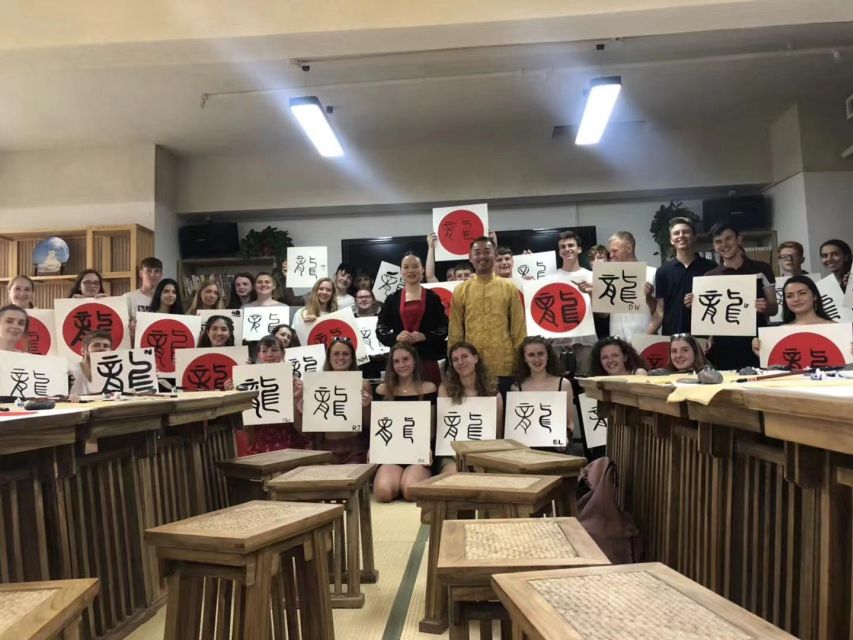
You will spend time on the main idea behind each script category. Regular script is the most structured and readable, so it helps your foundation. Running script loosens the pace, so your brush movement starts to feel more fluid.
Cursive script pushes speed and expressiveness further. This is where many beginners realize calligraphy is not only about control, it is also about confidence. Seal script is different again, with a more traditional feel and a style that often looks older and more carved.
A good part of this lesson plan is that the teacher does not throw everything at you at once. Instead, the lesson uses these scripts as a lens. After that, your practice becomes easier because you know what you are aiming for.
If you are the type who likes structure, you will feel comfortable. If you are the type who wants freedom, you will still get room, because the teacher explains what to relax and what to keep steady.
Brushes, ink stone, and rice paper, the tools that change everything
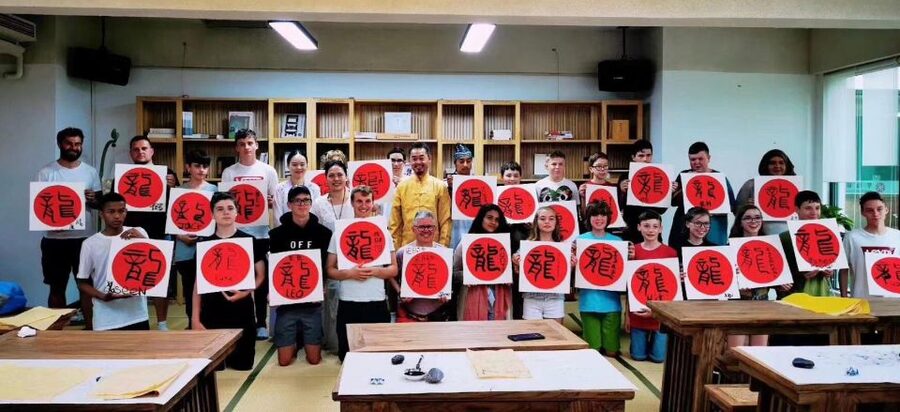
Calligraphy is one of those activities where tools quietly control the results. This class covers the core equipment you use in the studio: brush, ink stone, and rice paper.
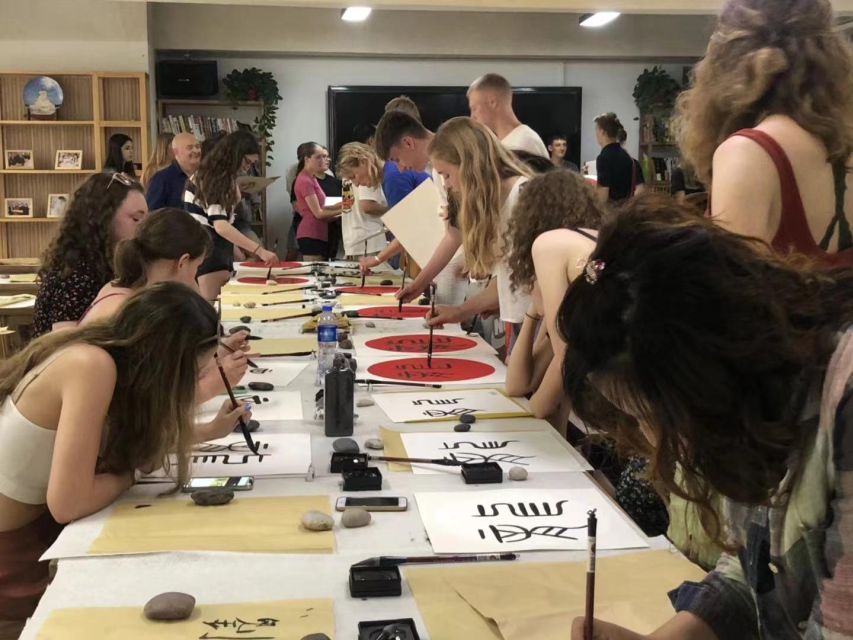
Learning the tools matters more than it sounds. Brushes behave differently depending on pressure and angle, ink flow affects how clean or messy your strokes look, and rice paper changes how the ink settles.
You will also get the start-to-finish logic of making a character. The teacher shows simple strokes first, then builds toward more complex compositions. That approach prevents the common beginner problem, where you jump to a full character before your hand knows what to do.
Also, the tone stays calm. Several instructors described the class as mentally light and relaxing, with tea and a patient pace. Even if you are not into art, you will probably enjoy the steady rhythm.
Learning stroke control, balance, rhythm, and harmony
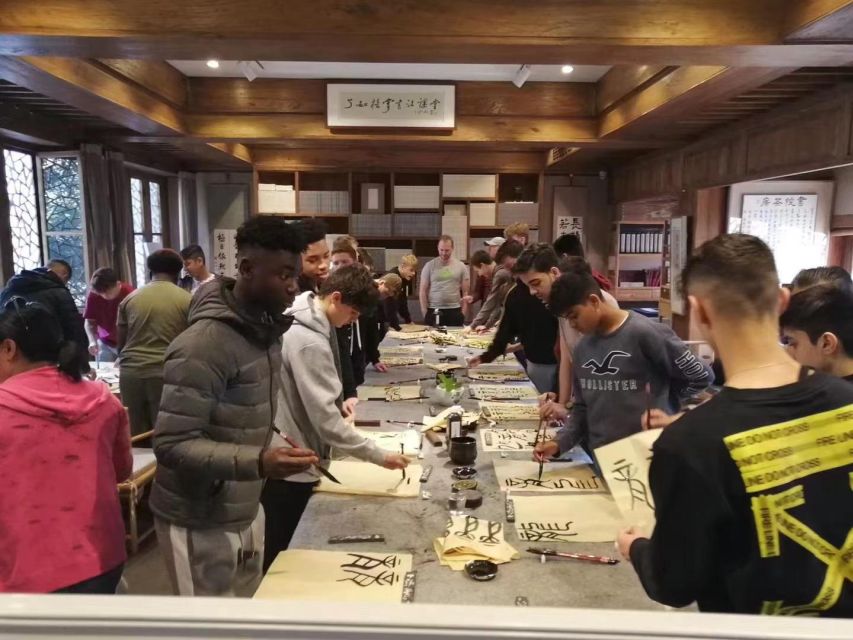
This is where the class earns its high rating. You practice in a way that focuses on the essentials: balance within a character, rhythm in how your strokes move, and harmony in how the whole piece holds together.
The teacher walks you through principles you can feel, not just memorize. For example, you may get tips on how to hold the brush, plus small hand-prep exercises to get your movement smooth before you write.
Then you apply those ideas to your own work. The teacher gives adjustments as you go, so you improve during the class rather than leaving with only theory.
One reason this works for kids is that the lesson keeps returning to small actions. Strokes become mini missions. For adults, it becomes a short practice in stillness, the kind that slows your brain down fast.
And yes, you will probably notice how much calm shows up when you repeat the same stroke a few times. It is not a noisy activity. It is quiet focus with visible progress.



Culture meaning in the character, not just pretty writing
A big part of your learning is what the characters represent. The lesson includes culture meanings behind certain Chinese characters, so your piece is not just decorative.
In several sessions, instructors share extra philosophy connected to calligraphy. One example that came up in past classes is a Confucius saying often expressed as One World One Heart. Even if you only catch the core idea, it adds a layer beyond technique.
You may also work on a meaningful character like fu (good fortune), which can turn into a wall decoration at home. That is a satisfying way to take the experience with you, because you keep the cultural context attached to the physical result.
If you care about understanding China beyond photos, this is the part that makes the time feel well spent. You leave with a character that has a reason to exist, not a random sample of brushwork.
30 minutes vs 1 hour, choose the length that fits your goals
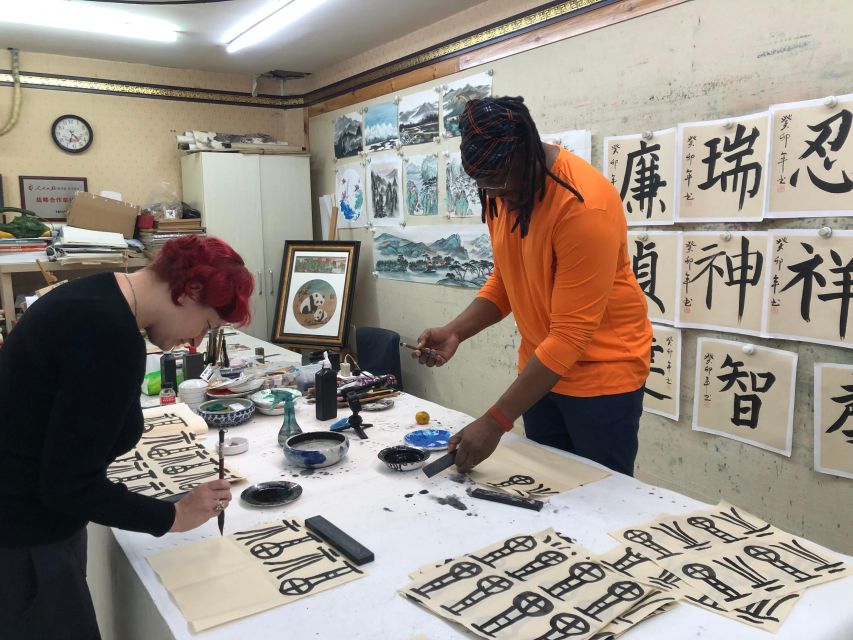
You can book either a 30-minute class or a 1-hour class. This is not a tiny difference. For beginners, 30 minutes often feels like learning the basics and making something you can be proud of. One hour is where you typically get more practice and more time to refine your final piece.
Here is a practical way to choose:
- Choose 30 minutes if you want a quick introduction and a short win.
- Choose 1 hour if you want stronger guidance, more repetition, and a more complete final character.
Also, your comfort matters. If you are nervous about making mistakes, the extra time helps. You can slow down and let the teacher coach your hand in real time.
Even in shorter sessions, the teacher tries to make the experience meaningful, not rushed. But with calligraphy, repetition is the teacher. One extra 30 minutes can change everything.
Who this class is best for, and who should skip it
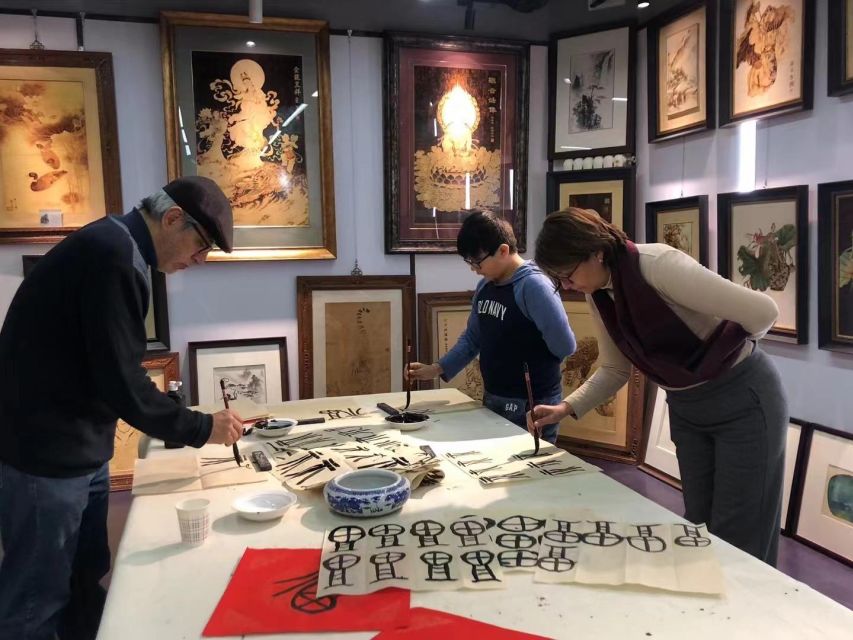
This is a family-friendly activity. It works for adults who want calm and culture, and it works for kids because the lesson is guided, friendly, and hands-on.
It is especially good for:
- First-time learners who want an easy on-ramp
- People who like mindful activities
- Families who want one experience that feels both fun and educational
- Anyone who wants to write a character with real meaning
Should you skip it? If you are only chasing a fast souvenir and do not care about learning technique, you might find it too focused. This is not a shopping stop. It is practice time.
But if you want something authentic and you like the idea of turning a few strokes into a piece with meaning, this fits well.
Price and value: $20 for tools, coaching, and a finished experience
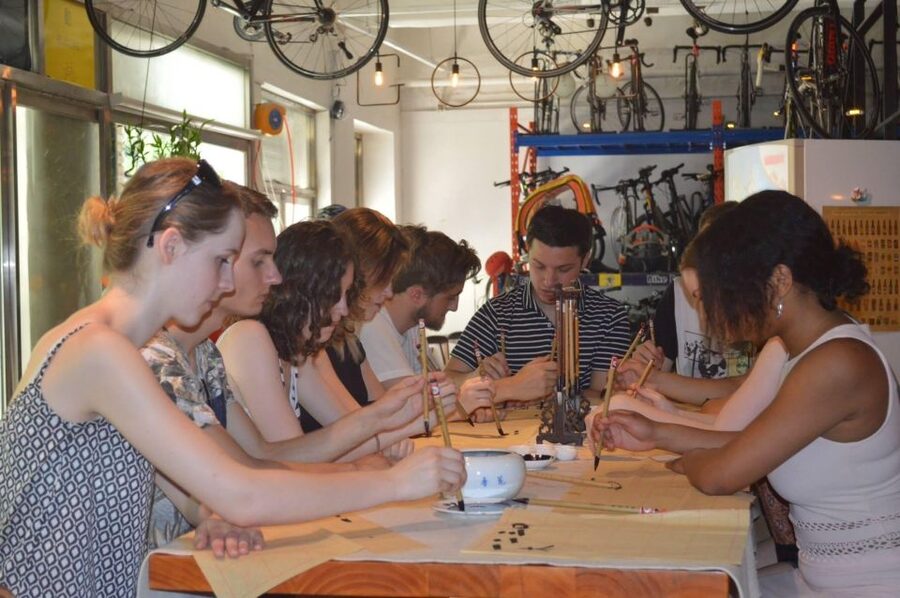
The price is listed at $20 per person. For that, you get the teacher, your class time (30 to 60 minutes based on your choice), and calligraphy supplies to use during the class.
The value comes from the combination:
- You are not just watching. You are practicing with coaching.
- Supplies are included, so you do not need to buy brush, ink stone, or paper beforehand.
- The lesson includes both technique and cultural context, so your time feels bigger than the clock.
Beijing can be expensive if you only do big paid attractions. This class is a low-cost, high-feel activity that you can slot into a day near major sights.
Also, because the meeting point is central, you do not need complicated transit planning. Just plan for taxi or subway fare since that is not included.
Practical tips before you go
Keep your expectations realistic. Calligraphy is not a one-stroke skill. You are learning how to move your hand in a way that creates shape, balance, and rhythm.
Arrive ready for a hands-on lesson. You will use brushes, ink stone, and rice paper, so it is better thought of as making art than taking notes.
Try to choose the right class length based on what you want to walk away with. If you want your character to feel like a real personal result, pick 1 hour. If you want a short taste that still leaves you with a meaningful output, 30 minutes can work.
Finally, lean into the calm. The class tone is often described as relaxing and meditative, with tea and a patient teaching approach. If you treat it like a stress reset, you will probably enjoy it more.
Should you book this Beijing calligraphy class?
If you want a calm, culture-linked activity that you can do without any artistic background, I think this is a strong booking. The downtown meeting point makes it easy, and the teaching focus is practical, guided, and suitable for kids.
Book it if:
- You like hands-on workshops
- You want to learn a few real calligraphy fundamentals
- You want something more meaningful than a typical souvenir
Skip it if:
- You only want quick entertainment and zero technique
- You are short on time and 30 minutes is not enough for you
Overall, at $20 with supplies and English instruction, it is an efficient way to add depth to a Beijing day, one brush stroke at a time.
FAQ
Where does the class meet?
Your teacher waits for you at the Sun World Dynasty Hotel lobby, No. 50 Wangfujing Avenue, Dongcheng District, Beijing.
How do I get there by subway?
Take Line 5 to Deng Shi Kou Station, Exit A (灯市口出口A). Walk about 2 minutes to the left, turn left at the first traffic light, then walk about 5 minutes west. Total walk time is about 8 minutes.
How long is the class?
You can choose a 30-minute calligraphy class or a 1-hour calligraphy class when booking.
Is the class taught in English?
Yes. The instructor is listed as English-speaking.
What is included in the price?
The class includes an excellent art teacher, your selected class duration, and calligraphy supplies to use during the class.
What is not included?
Taxi and subway fare, personal shopping expenses, and any other expenses not listed as included are not included.
Can I cancel, and can I book without paying yet?
Free cancellation is available up to 24 hours in advance for a full refund. There is also a reserve now & pay later option.
Is it suitable for kids?
Yes. It is described as a fun activity for both adults and kids, and the lesson is designed to be accessible for beginners.
More Workshops & Classes in Beijing

More Tour Reviews in Beijing



Not for you? Here's more nearby things to do in Beijing we have reviewed








Beijing Calligraphy Workshops, compared.
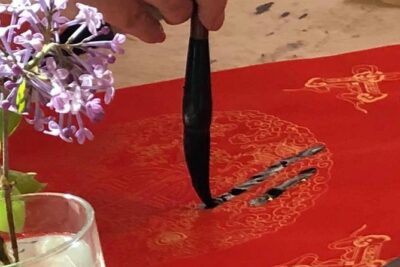 ★ 5.0Chinese Calligraphy Class for Small GroupFrom $20104 reviews
 ★ 5.0Beijing Historic City Guided Walking Tour + Calligraphy CreationFrom $559 reviews
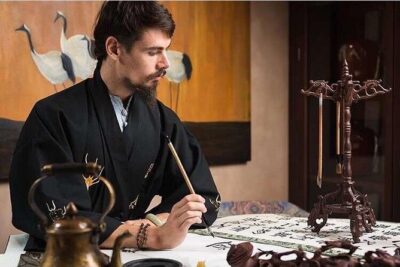 ★ 5.0Beijing Wangfujing Calligraphy Class by Forbidden CityFrom $2058 reviews
 ★ 5.0Beijing Culture: Tea Ceremony, Heritage Instrument & CalligraphyFrom $7857 reviews
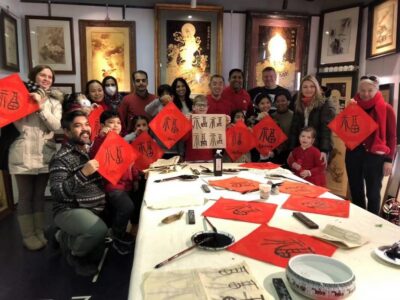 ★ 5.0Beijing Wangfujing Calligraphy Class Nearby Forbidden CityFrom $3556 reviews
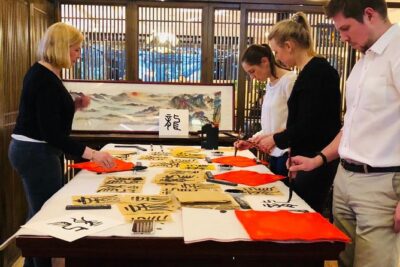 ★ 5.0Noon Calligraphy ClassFrom $2047 reviews
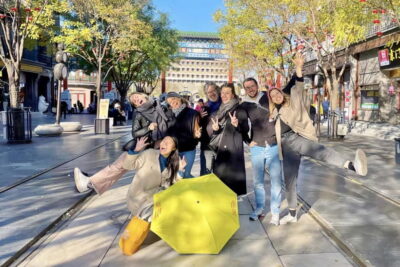 ★ 4.3Discover Old Beijing: Hutong Walking Tour & CalligraphyFrom $2524 reviews
 ★ 5.04-Hour Private Tour of Calligraphy Class, Hutong and DumplingsFrom $689 reviews
Browse the lists this tour appears in