
Reviewed · BEIJING CALLIGRAPHY WORKSHOPS
Noon Calligraphy Class
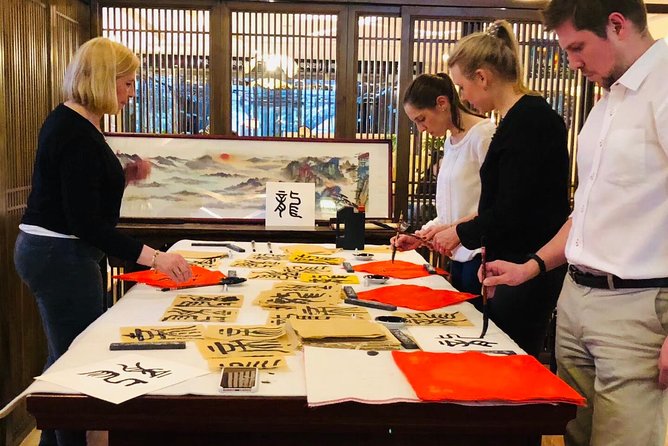
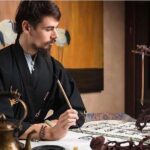
A brush, some ink, and a quiet hour in Beijing. This class turns Chinese calligraphy into something you can actually do, with an art teacher guiding your ink strokes and tools like rice paper and ink stones. My favorite part is how the session is structured so you practice before you finalize a piece, but the main thing to consider is time limits, even with a short workshop.
You’ll also get cultural context while you write, not just hand motions. For me, the payoff is that you leave with a finished result you can hold, and it feels a bit like a calm reset in a city that rarely slows down.
Key highlights you should care about
- Multiple daily start times so you can fit it into a sightseeing plan
- Small group size (maximum 15) for better attention during practice
- Art teacher-led instruction with time to ask questions
- Real calligraphy tools included (brushes, rice paper, ink stone) plus seal carving basics
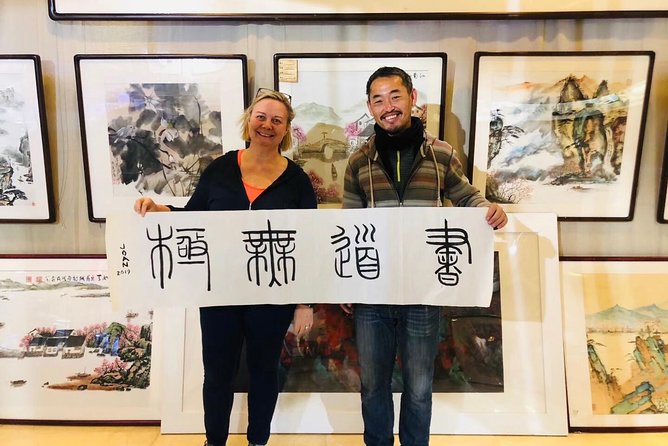
- A take-home final piece after learning and practicing strokes
Beijing Calligraphy at Noon, Why This One Fits a Tight Schedule
Beijing can feel like a pile of timed tickets, subway transfers, and sight-seeing checklists. A noon calligraphy class is different. It gives you a skill-based activity where the pace is set by your teacher, not your phone.
The format is simple: choose a time that works for you, show up, and practice the fundamentals. At around 1 hour (with options for shorter or longer sessions), it is long enough to make progress, but not so long that it eats your entire day.
A few more Beijing tours and experiences worth a look
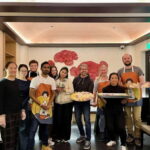
Where You Go: Wangfujing Dongjie and Your Hilton Start
You meet at the Hilton Beijing Wangfujing and return there at the end. That matters because it reduces guesswork. You are not trying to hunt down a classroom deep in backstreets with no clear reference point.
The class location is listed at No. 8 Wangfujing Dongjie, Dongcheng District, Beijing. It is in a central area, and the activity is described as being near public transportation, so you are not locked into one specific route.
If you are staying around Wangfujing, this is a practical add-on. If you are farther away, it still works as long as you plan your metro or ride with a little buffer.
The Class Flow: Ink, Strokes, Rice Paper, and Seal Carving
This is not a paint-by-numbers demo. It is built around learning how tools behave and how strokes form characters.
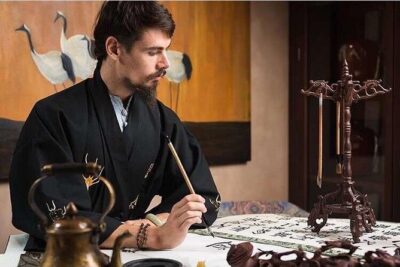
You will work with key materials:
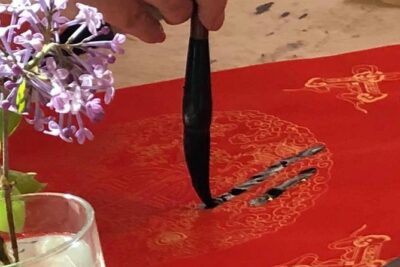
- Brushes (how you hold them and how pressure affects the line)
- Ink (how the ink looks as it dries and how that changes the stroke)
- Rice paper (how it accepts ink and why timing matters)
- Ink stones (what they are for and why calligraphers pay attention to the ink itself)
- Seal carving (introduced as part of the broader calligraphy tradition)
The teacher is there to connect the technical details to the meaning. In the best moments, you start to understand why Chinese calligraphy is treated as more than handwriting. It is a human-language art form you can see, feel, and study stroke by stroke.
What You Make and Take Home After Practice
The class includes a final piece you can take with you. That is a big reason this workshop feels worth it, even at a modest $20 per person.
In a lot of hands-on activities, the real learning happens but the result is not tangible. Here, you practice, then you produce something finished enough to keep. That makes your time useful on two levels: skill-building while you are there, and a physical memory when you are back in your hotel.
Also, because you get multiple practice rounds before the final piece, beginners are not thrown into the deep end. You get repetition, then a chance to apply what you practiced.
Teacher Style and Group Size: What Maximum 15 Really Means
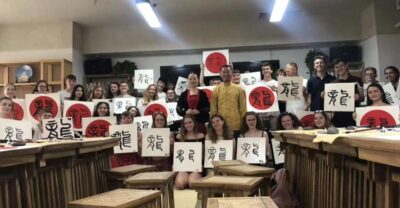
The tour is capped at 15 travelers, which is small for Beijing. In a group that size, you are more likely to notice corrections when something is off, like brush angle, pressure, or spacing.
This class is described as being led by an art teacher who encourages questions. That is important. Calligraphy can look easy in photos, but the technique is physical. If you hit a wall, being able to ask directly helps you move past frustration quickly.
The instruction tone in this class also seems to lean calm. A number of participants describe the class as relaxing, even close to a mindful moment. That does not mean you will be bored. It means the focus stays on your strokes, not on rushing.



Choosing Your Session Length: 30 Minutes to 1.5 Hours
You can select different class lengths when you book, including 30 minutes, 1 hour, and 1.5 hours. Even though the experience is often listed as about an hour, the option to go shorter or longer gives you control over your schedule.
Here is how I would choose:
- Pick 30 minutes if you want the basics, a quick introduction, and a take-home piece without committing too much time.
- Pick 1 hour if you want a comfortable pace to practice and finish something.
- Pick 1.5 hours if you want more practice time, more chances to ask questions, and more room to slow down.
If you are stacking multiple activities that day, the shorter option can be a smart reset. If you want a more thorough experience, the longer slot makes more sense.
Timing and Booking: Multiple Daily Times Plus a Noon-Friendly Plan
The class offers multiple daily class times, so you can align it with your other plans instead of forcing your day around one strict departure.
This flexibility is especially useful if your Beijing itinerary is already full. For example, if you are touring museums in the morning and doing evening shows or markets later, a noon workshop can be the calm “middle chapter” that keeps the day from feeling frantic.
You can also book with confidence because confirmation is handled at booking time. The activity uses a mobile ticket, which means less printing and fewer last-minute details.
A Calm Activity in a Busy City, Including Rainy-Day Logic
Beijing can swing from crowded to cold fast. When the weather gets messy, calligraphy is a great indoor plan because you do not need comfortable walking conditions.
Participants often describe the class as light on stress and close to meditative. That fits the nature of calligraphy practice, where you repeat strokes, watch the ink, and gradually control the brush.
If you like experiences that reward patience, this one fits well. If you want something where you are sprinting to see as much as possible, you might feel like you are not doing enough. For many people, though, that is exactly the point.
Value Check: Why $20 Can Be a Smart Spend in Beijing
At $20 per person, this workshop is priced like an accessible cultural activity, not a luxury art class. The key value is not only the price. It is what you get for it.
You typically receive:
- A guided calligraphy lesson with hands-on practice
- Included calligraphy supplies to use during the class
- A small-group setting that helps you correct mistakes
- A finished piece you can take home
- Cultural explanation tied to what you are writing
When you compare that to the cost of a longer paid tour where you do mostly watch-and-wait, this feels more directly educational. You are doing the work, repeating strokes, and receiving real instruction while you practice.
It also helps that the class is short enough to avoid travel-day fatigue. You are paying for an experience, not for a complicated logistics puzzle.
Who Should Book This Beijing Calligraphy Class (and Who Might Skip)
This class makes a lot of sense if you:
- Want a cultural activity that is hands-on, not just observational
- Like structured lessons with room for questions
- Enjoy learning by doing, with a clear result at the end
- Prefer small groups and calmer pacing
- Want something central and easy to plug into a day
It is also a solid choice if you are traveling with kids, but keep the requirement in mind: children must be accompanied by an adult. That is stated clearly, so plan one adult per child, and expect the adult to stay actively involved.
Who might skip it? If you are looking for a deep, multi-day art immersion or advanced instruction with professional-level feedback, a short group class may feel limited. Here, you are learning fundamentals and making a take-home piece, not training for months.
Practical Tips to Get More From Your Hour
A few small choices can improve your experience.
Wear something comfortable. Calligraphy involves posture and fine-motor movement, and you do not want to fight clothes that restrict your arms.
Go with curiosity, not expectations. Your first character may look rough, and that is normal. The class is designed around repetition, and the teacher guidance is meant to help you improve during the session.
Ask questions early. If you are unsure about brush angle or how the strokes should look, ask before you are halfway through your practice. You will adjust faster and feel less stuck.
Take your time during the final piece. The class time is limited, so give yourself permission to focus. The calming mood people describe comes from staying with the process rather than rushing to the finish.
Should You Book This Noon Calligraphy Class?
If you want a meaningful cultural activity in central Beijing that is affordable, hands-on, and calm, I would book it. The combination of included supplies, an art teacher who answers questions, and a take-home final piece makes the value feel real.
I especially recommend it if your schedule includes a busy stretch and you want a reset in the middle of the day. And if you are traveling with someone who loves practical learning or creative skills, this kind of class becomes a shared memory, not just another stop on a list.
FAQ
How long is the calligraphy class?
The experience is listed at about 1 hour, but you can choose different session lengths when booking, including 30 minutes, 1 hour, or 1.5 hours.
What does it cost?
The price is $20.00 per person.
Where does the class take place?
The class location is listed at No. 8 Wangfujing Dongjie, Dongcheng District, Beijing, China (北京东城区王府井东街8号).
Where do I meet for the activity?
You start at Hilton Beijing Wangfujing. The activity ends back at the meeting point.
Is the class small?
Yes. The activity has a maximum group size of 15 travelers.
Are calligraphy supplies included?
Yes. Calligraphy supplies to use during the class are included.
Can children join?
Children can participate, but they must be accompanied by an adult.
How do I receive my ticket?
The activity uses a mobile ticket.
Can I cancel if my plans change?
Yes. Free cancellation is offered, and you can cancel up to 24 hours in advance for a full refund.
More Workshops & Classes in Beijing

More Tour Reviews in Beijing


Not for you? Here's more nearby things to do in Beijing we have reviewed







Beijing Calligraphy Workshops, compared.
 ★ 4.9Beijing Calligraphy ClassFrom $20112 reviews
 ★ 5.0Chinese Calligraphy Class for Small GroupFrom $20104 reviews
 ★ 5.0Beijing Historic City Guided Walking Tour + Calligraphy CreationFrom $559 reviews
 ★ 5.0Beijing Wangfujing Calligraphy Class by Forbidden CityFrom $2058 reviews
 ★ 5.0Beijing Culture: Tea Ceremony, Heritage Instrument & CalligraphyFrom $7857 reviews
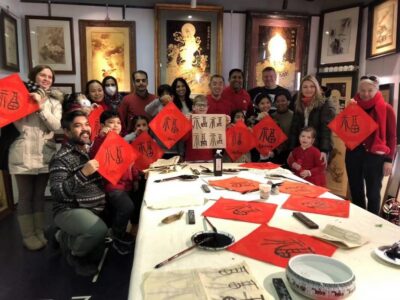 ★ 5.0Beijing Wangfujing Calligraphy Class Nearby Forbidden CityFrom $3556 reviews
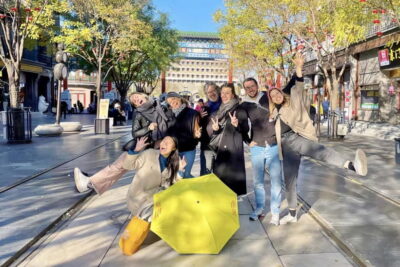 ★ 4.3Discover Old Beijing: Hutong Walking Tour & CalligraphyFrom $2524 reviews
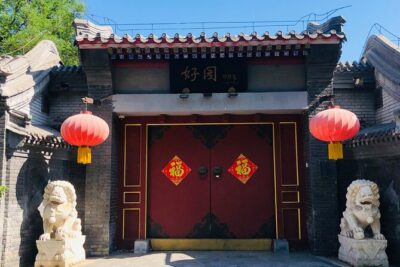 ★ 5.04-Hour Private Tour of Calligraphy Class, Hutong and DumplingsFrom $689 reviews
Browse the lists this tour appears in