
Reviewed · WALKING TOURS
Beijing: Peking University Campus Guided Walking Tour
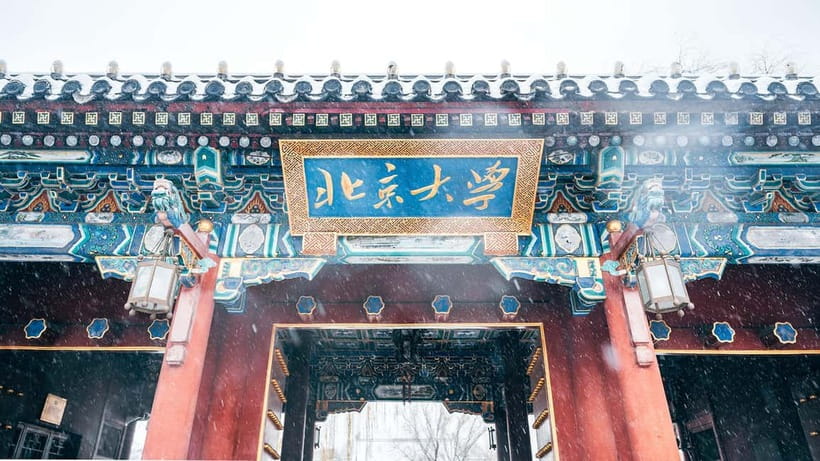
PKU is easier on foot. In a 2-hour, small-group English walk from the East Gate to the West Gate, you track the campus as a living map, with a current student explaining why places like Boya Pagoda and Weiming Lake matter. I love how Boya Pagoda turns into a history lesson, and I love the pause at Weiming Lake as the guide connects the scenery to how PKU thinks. The one catch is time, you cover a lot, so wear comfy shoes and don’t expect to linger for long.
The other part I loved is the Statue of Cai Yuanpei stop and the grand Peking University Library, where the campus mood shifts from pretty views to big ideas. A guide named Henry gets singled out for being friendly and clear, and for making it easy to ask questions, even with kids in the group.
Key things you should notice on this PKU campus walk
- Boya Pagoda’s century-old presence becomes more than a photo spot when you understand its cultural role
- Weiming Lake and traditional gardens get explained as intentional design, not just scenery
- Bell Pavilion, Hua Biao ornamental pillars, and Qilin statues add a symbolism layer to the whole walk
- Peking University Library plus Cai Yuanpei links scholarship with reform-minded history
- PKU’s evolution from Yenching University is tied to broader Beijing connections, including Yuanmingyuan and Heshen
East Gate to West Gate: a compact 2-hour plan that still feels complete
This is a 2-hour guided walking tour on the Peking University campus, led by a current student and done in English. The route runs from Beijing University’s East Gate to the West Gate, so you get a true sense of moving through PKU, not just circling one landmark.
What makes this format work is that it’s tight but not rushed in explanation. You’re not only ticking off famous buildings. You’re learning what the places meant, and why PKU’s layout and garden traditions matter to how people experience the campus.
The small group size, limited to 10, also changes the vibe. You can ask questions without shouting, and it’s easier for the guide to steer attention toward details like stonework, carvings, and layout choices.
You can also read our reviews of more walking tours in Beijing

Meeting at the East Gate, and why the starting point matters
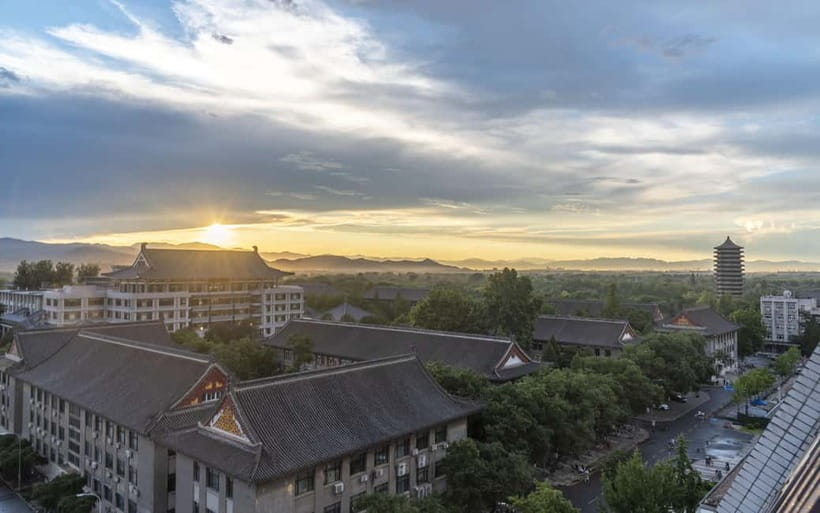
You’ll meet at Peking University East Gate, specifically the stone lion on the right side when you face the gate entrance. That kind of exact meeting spot sounds minor, but it’s genuinely helpful in a big campus area where landmarks can blend together.
Once you’re oriented, the walking tour has a clean rhythm. You move from icon to icon while the guide keeps tying each stop back to the same theme: PKU as an academic world built in harmony with its surroundings, traditions, and reform history.
Practical note: bring comfortable shoes. This is a walk tour, and the value comes from noticing what the guide points out while you’re on the move. A camera helps too, because there are plenty of architectural and garden views you’ll want to capture while the story is fresh.
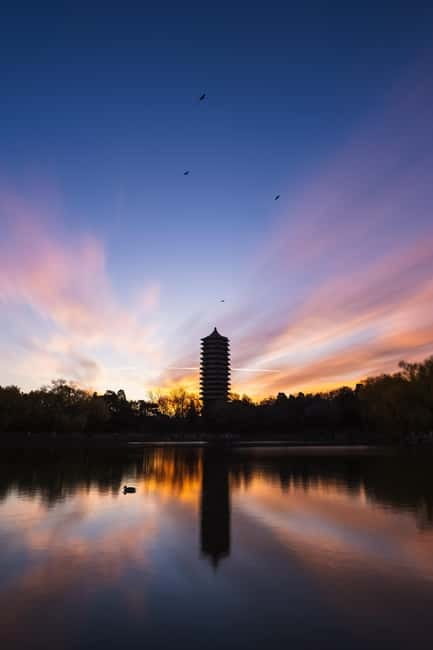
Boya Pagoda: where the campus story starts to feel real
Boya Pagoda is one of PKU’s oldest and most recognizable features, and it’s also a strong starting point for your understanding of the campus. On a typical campus visit, it’s easy to treat a pagoda as a scenic background. On this tour, it becomes a signpost for older cultural layers you might otherwise miss.
As you get the guide’s explanations, you’ll start reading how PKU uses traditional elements in a modern academic setting. That is the real shift: the pagoda is no longer just a landmark. It becomes a clue about how the campus carries meaning through time.
And since you’re early in the walk, it also sets your attention level. After Boya Pagoda, you’re primed to notice the next symbols with less guesswork and more understanding.
Weiming Lake and PKU gardens: learning to see the design behind the views
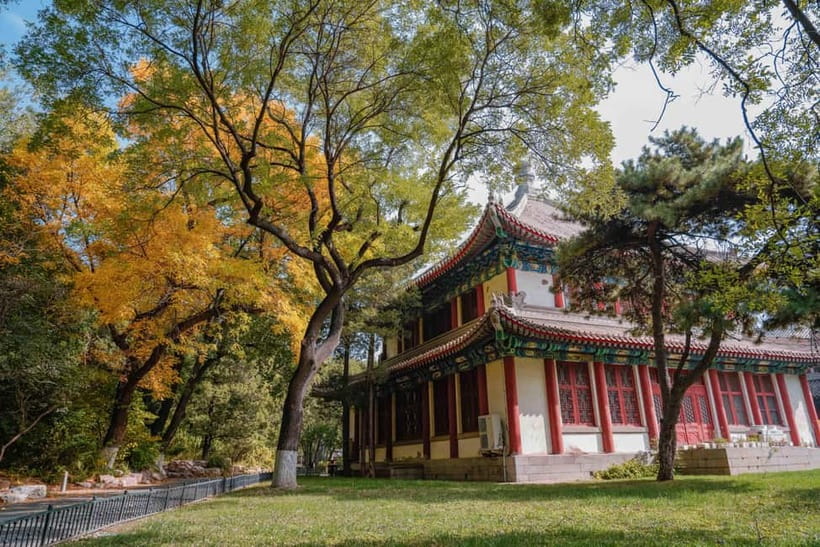
Weiming Lake is where the tour slows down emotionally, even if your feet are still moving. The guide’s job here is to help you understand the lake and nearby garden spaces as traditional design, where nature and scholarship are meant to work together.
This is one of the most rewarding parts of the tour because the campus greens and courtyards can look similar from a distance. When someone explains the hidden meanings behind the layout, pathways, and garden composition, the whole place clicks into focus.
You’ll also get a better sense of what kind of campus experience PKU offers. It’s not only lectures and libraries. It’s also daily rhythms of walking, studying-in-space, and using outdoor courtyards and garden views as part of academic life.
Bell Pavilion plus symbolic stonework: the meaning behind what you’d otherwise skip
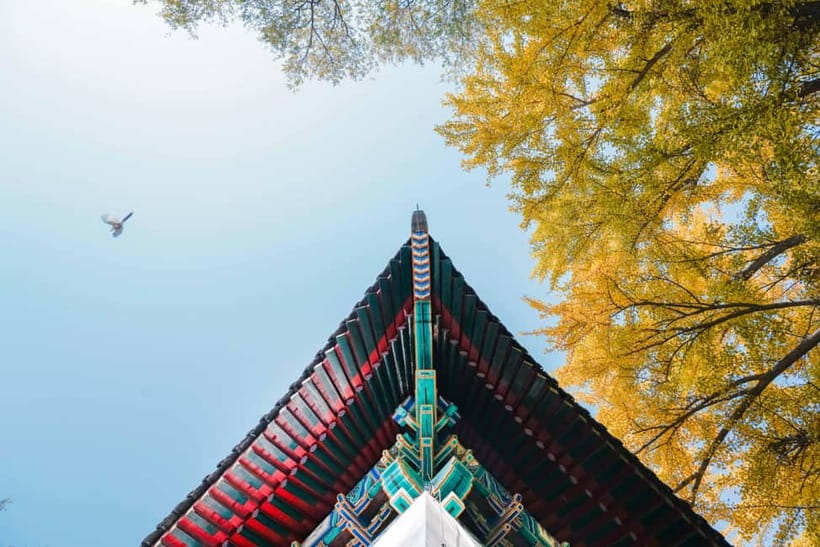
Next up is the Bell Pavilion. Even if you’ve seen traditional campus architecture before, a bell pavilion is one of those features people often pass without thinking. On this tour, it gets explained as part of a cultural system tied to learning and tradition.
Then comes a run of symbolic details that many visitors overlook. You’ll learn about Hua Biao ornamental pillars and Qilin statues, and why they matter to PKU’s visual language. These aren’t random decorations. They’re cues that connect architecture to cultural beliefs and institutional values.
Here’s the practical win for you: once you understand that these pieces are intentional, you’ll spot similar symbolism across the campus. You stop walking like you’re sightseeing and start walking like you’re reading a text.
You can also read our reviews of more guided tours in Beijing


The Peking University Library: the academic mood shift you’ll feel
The tour includes time at the grand Peking University Library. This is a different energy than the lakeside stops. It’s where the campus story gets more obviously academic.
The guide ties the library setting to PKU’s academic spirit, and you’ll hear how the institution’s identity took shape over time. Even if you don’t go inside every space, the outside perspective matters because the building size and position communicate what PKU values.
If you care about education as a cultural force, this is a strong stop. You’ll understand the campus as a place built to support knowledge, not just a pretty place to visit.
Cai Yuanpei’s statue: reform-minded history in plain sight
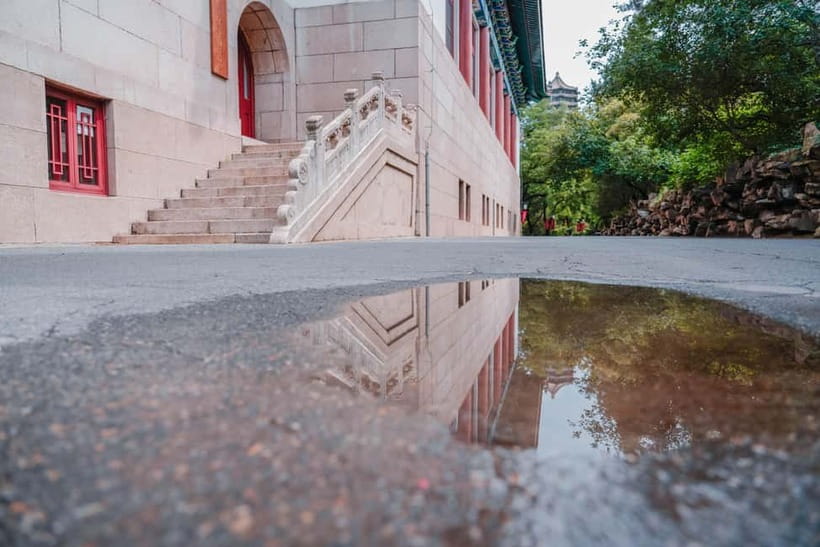
You’ll also pay respects at the Statue of Cai Yuanpei. Cai Yuanpei is the revolutionary former president of PKU, and the point of this stop is to connect campus landmarks with political and educational change.
This is where the tour becomes more than architecture talk. You start seeing PKU as a crossroads, shaped by reform-minded leaders and by the changing world around Beijing.
For your own visit planning, treat this stop as the emotional center of the walk. It’s a moment where the guide’s stories give you a lens for everything you’ve already seen: the gardens, the symbolism, and the institutional ambition all point toward this larger theme.
How PKU grew from Yenching University, and why Yuanmingyuan and Heshen matter
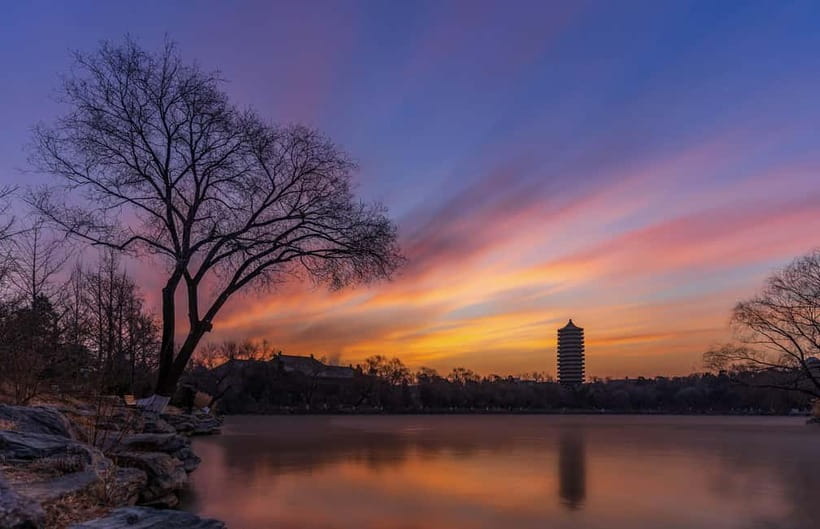
One of the most interesting threads on the walk is PKU’s evolution from its roots as Yenching University. The guide connects PKU’s identity to older educational foundations, so you understand why the campus has both tradition and reform energy.
You’ll also hear connections to Yuanmingyuan, the Old Summer Palace, and even a link to Heshen, the infamous Qing Dynasty official. Those references might sound heavy, but the tour uses them to explain the wider historical environment around PKU’s development.
This part is valuable because it helps you read Beijing in context. PKU isn’t floating in a bubble. It sits inside a long, complicated national story, and the campus landmarks carry echoes of that.
Student-life perspective: why the tour feels different when the guide is part of PKU
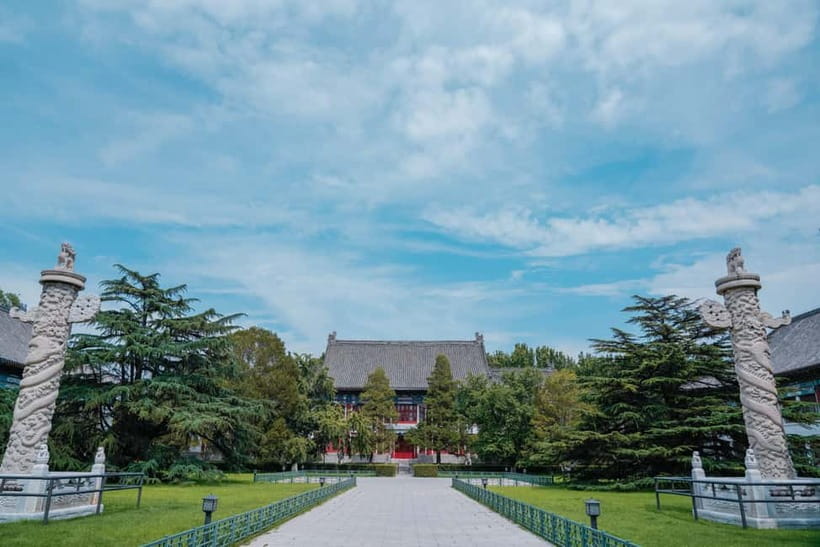
A current student guide is a big part of the appeal. You’re not only getting facts about buildings and institutions. You’re getting perspective on academic culture and student experience, including references that link famous alumni to modern campus life.
The feedback around the guide experience is also consistent: English explanations that are friendly, clear, and easy to follow. A guide named Henry gets noted specifically for how he communicates and for being patient, even with families that include kids.
There’s also a practical bonus. Some guides may encourage a stop at the school cafeteria if timing works out, which can give you a quick, real-world sense of everyday campus life. Meals and drinks are not included in the tour price, but the idea is simple: see how students live, not only where they study.
Price and value: what $39 buys you in this 2-hour format
At $39 per person for a 2-hour walking tour, the value comes from three things working together.
First, you get access to multiple landmarks in a short time, including Boya Pagoda, Weiming Lake, Bell Pavilion, Hua Biao ornamental pillars, Qilin statues, the Peking University Library, and the Statue of Cai Yuanpei. That’s a lot of stops for the time.
Second, you get the interpretation layer. Many visitors can take photos of these spots. Fewer people understand the reasons behind the garden design, the symbolism, and PKU’s historical evolution. That is where a guided format justifies the price.
Third, the group size stays small, limited to 10. In practical terms, that means more time for questions, and a better chance the guide can adjust pacing to the group.
Your main extra costs are straightforward: transportation to and from the university and food and drinks during or after the walk. If you handle those on your own, this feels like a strong deal for an English guided campus overview.
Tips so you get the most out of the walk
- Wear comfortable shoes you can walk in for 2 hours without thinking about it.
- Bring a camera, and keep it ready for the pagoda, lake views, and statue moments.
- If there’s something you care about, ask early. The student guide can connect your interest to the next stop, like garden layout meaning or institutional history.
- Pace matters. This tour is structured to keep moving, so avoid planning other long activities right before and after if you want a relaxed day.
Who should book this PKU walking tour
This tour fits best if you like turning places into stories. If you’re a history enthusiast, an architecture lover, or a future student trying to understand what life at PKU might feel like, you’ll likely enjoy how the guide connects campus design to academic culture.
It’s also a good choice for families, as long as everyone is comfortable walking. The guide experience is noted as patient with kids, which helps when attention spans are short and questions start early.
If you want a slow, self-paced wandering day with long photo pauses at every stop, you might find the 2-hour structure limiting. But if you want clarity and context fast, this format is built for you.
Should you book? My take on the call
Book it if you want a well-paced East Gate to West Gate tour that explains what you’re seeing, with strong stops like Boya Pagoda, Weiming Lake, the Bell Pavilion, the Peking University Library, and the Statue of Cai Yuanpei. The English guide, current-student perspective, and small group size make this feel like a guided conversation on the meaning of PKU, not just a checklist walk.
Skip it if you already know PKU history well and you mainly want time to roam solo. In that case, you may feel the time limit more than the benefits. But for most first-time visitors, this is one of the smarter ways to see the campus and actually understand it.
FAQ
How long is the Peking University campus guided walking tour?
The tour lasts 2 hours.
Where do I meet, and where does the tour end?
You meet at Peking University East Gate, at the stone lion on the right side when facing the gate entrance. The tour finishes at Peking University West Gate.
Is the tour offered in English?
Yes, the guided tour is conducted in English.
What is the group size?
It is a small group, limited to 10 participants.
What’s included in the tour price?
The price includes a 2-hour guided walking tour, visits to historical landmarks, exploration of cultural sites, engaging stories about PKU’s history, and insights into student life.
What is not included?
Food and drinks are not included, and transportation to and from the university is not included.
Can I pay later?
Yes. The option is reserve now & pay later.
Is there free cancellation?
Yes. You can cancel up to 24 hours in advance for a full refund.
More Walking Tours in Beijing


More Tours in Beijing



More Tour Reviews in Beijing
Not for you? Here's more nearby things to do in Beijing we have reviewed



Walking Tours, compared.
 ★ 5.0Beijing Hutong Walking Food and Beer Tour at Hidden RestaurantsFrom $801,132 reviews
 ★ 5.0Private Beijing Walking Tour of the Forbidden City with 7 OptionsFrom $75675 reviews
 ★ 5.0Forbidden City Private Walking Tour with Optional SightsFrom $90400 reviews
 ★ 5.0Beijing Private Hutong Food Walking TourFrom $82299 reviews
 ★ 5.0Hutong Culinary Walking Tour with 15+ TastingsFrom $76162 reviews
 ★ 5.0Beijing City Walk: Explore Hutongs Life and Old BeijingFrom $15146 reviews
 ★ 5.0Highlights of Forbidden City Private Walking TourFrom $67104 reviews
 ★ 5.0Beijing Walking Food Tour with a Local FriendFrom $6073 reviews
Browse the lists this tour appears in