
Reviewed · BEIJING HUTONG & COURTYARD WALKS
Beijing Hutongs Walking Tour
Beijing’s alleys can feel like a maze. This hutongs walking tour turns that confusion into simple wayfinding and human stories, from courtyard homes to life along Qianhai and Houhai. I especially like the relaxed pace and the small-group feel, so you can actually ask questions instead of getting swept along.
One thing to plan for: you need to be at the right meeting spot on time. The tour starts at South Luogu Lane near Nanluogixiang metro, and if you’re late, you may miss the group.
Key Points to Know Before You Go

- Small group, personal attention: Maximum of 15 travelers, so Roy can keep the pace easy and still talk with you.
- Easy start point near the metro: Meet by Nanluogixiang, Line 8 or Line 6, exit E (South Luogu Lane area).
- Courtyard homes and alley atmosphere: You’ll walk through traditional lanes and see the kind of architecture guidebooks usually skip.
- Photo stop tied to Puyi’s world: The former residence of Wanrong, Puyi’s empress, is a memorable stop.
- A gentle route that ends by water: You finish near Houhai and the Drum Tower area after a lakeside water-channel moment.
- English guide with interactive storytelling: Roy Li’s English and story style are a big reason people rate this tour so highly.
A Calm 90 Minute Walk Through Beijing’s Hutong Maze
If you’re doing Beijing for the first time, the big palaces can suck up your energy fast. Then you look at a map and realize the real city is in the lanes. That’s where this tour shines: it keeps things slow enough to notice details, but structured enough that you never feel lost.
I like that the experience is designed for a relaxed day. The route connects places that many visitors treat like stops, not a living neighborhood. You get the feel of everyday Beijing, plus facts that explain why these alleys exist and how people lived inside them.
You also get a practical benefit: someone guides you through the downtown “warren” so you can keep moving without turning it into a stress test. Hutongs can be narrow and confusing. Having a plan beats wandering with guesswork.
You can also read our reviews of more walking tours in Beijing



Finding the Group: Nanluogixiang Metro Exit E and South Luogu Lane
Meet at South Luogu Lane by Nanluogixiang in Dongcheng District. The tour starts at 10:00 am, and the directions are specific: use metro Line 8 or Line 6, get out at Nanluogixiang Station, exit E. You’ll also see it labeled as 南锣鼓巷南口 or 南锣鼓巷地铁站E出口.
This matters because the walking route depends on starting together. One review had a bad day when the guide was not able to locate late arrivals at the meeting point. So here’s my simple advice: arrive a few minutes early, double-check the exit, then wait where the group can easily spot you.
If you’re using a map app, it’s easy to drop a pin on the wrong side of a lane. Stick to the metro exit instructions, and you’ll save time and frustration.
Bell and Drum Towers Area: Starting With a Beijing Anchor
The tour is framed around the Bell and Drum Towers area, which gives your day a recognizable anchor before you slip into tighter streets. You begin near the metro connection and then move into the lanes that feel far from the major imperial sights.
That early “anchor” helps you mentally organize what comes next. Instead of only seeing old buildings, you understand where you are in the city’s shape and rhythm. And because the pace stays calm, you can absorb the look of the neighborhood instead of racing between photos.
Also, the tour is built for a short window: about 1 hour 30 minutes to 2 hours total. That length is ideal when you want hutong context, but you still want energy left for the rest of Beijing later.
Nanluogixiang Lane: From Street Scene to Yuan Dynasty Texture
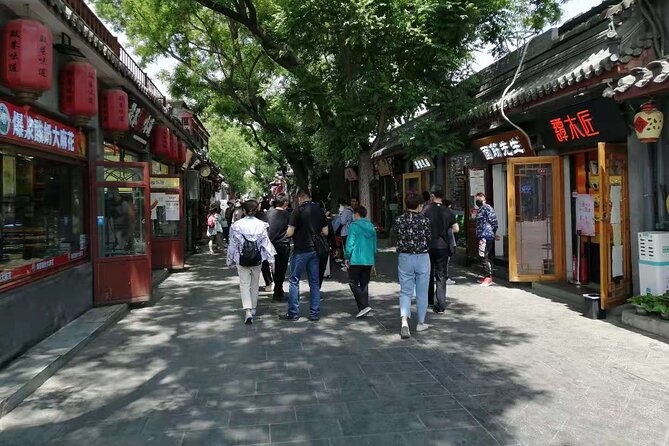
One of the first transitions you’ll notice is how the streets change character as you head into Nanluogixiang. The lane is described as taking you back to the Yuan Dynasty, and what you’re really looking for is the architecture and atmosphere the guide highlights.
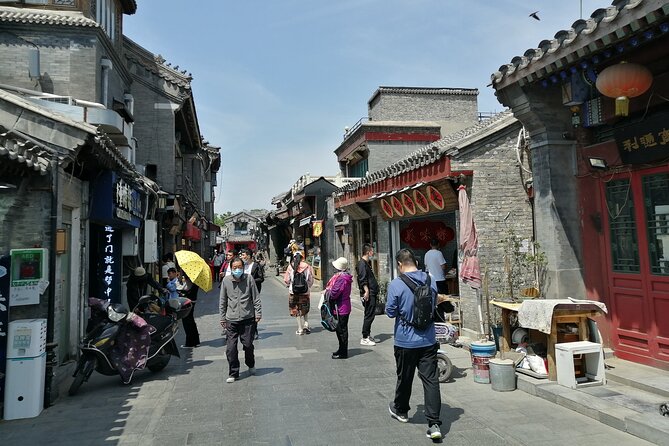
You’ll walk past vernacular courtyard houses with a grey look, along with old trees that make the streets feel older than the city around them. Even if you’re not an architecture nerd, these details help. They show you how courtyard living worked, and why these lanes feel different from broad modern avenues.
This is also the spot where the guide’s role matters. Roy Li is an English-speaking guide, and his style is not just facts on autopilot. People mention his English quality and the way he keeps things engaging, including quiz-style moments. That turns the walk into something you remember, not just something you pass through.
A small consideration: this portion is on foot through lanes. Wear shoes that can handle uneven pavement and narrow turns without complaint.
Mao’er Hutong: Courtyard Stories You Can Actually Picture
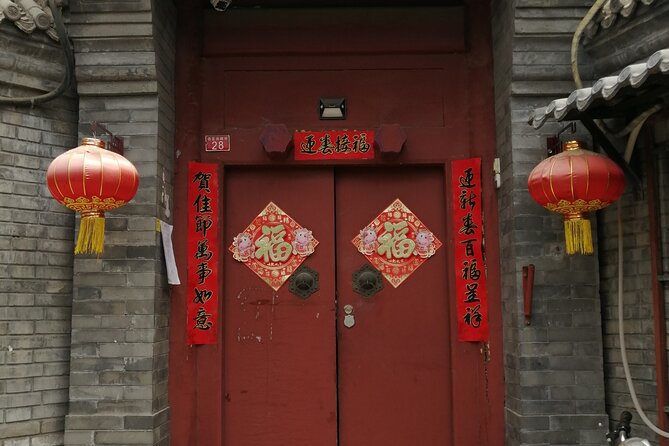
After Nanluogixiang, you continue along Mao’er Hutong, where the tone becomes even more “you are inside the neighborhood.” The guide points out that there are famous buildings and character stories here, and you’ll hear explanations that connect people from Chinese history to places you can stand in today.
What I like about this part is that it stays human. You’re not just being told that something is old. You’re learning how the lane system shaped daily life, from how people used space to why certain stories stick to particular stretches.
This is also where the small group helps. With a max of 15 travelers, you’re not just a body in motion. You have a better shot at understanding what the guide is pointing at and keeping up with the story beats.






The Wanrong Photo Stop: Puyi’s Empress, One Courtyard at a Time
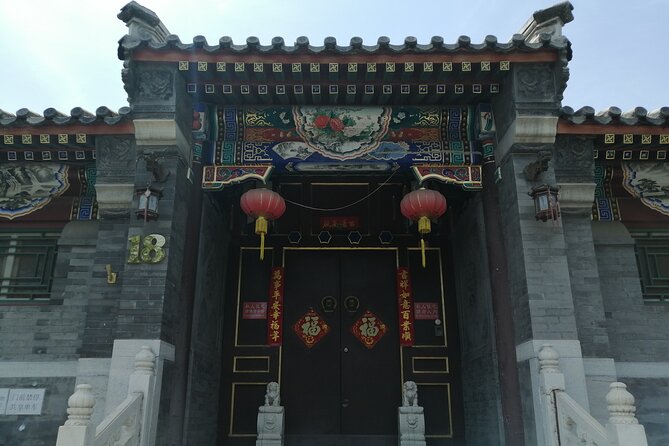
At a key point in the walk, you stop at what’s known as the Empress’s Mansion, described as the former residence of Puyi’s empress Wanrong. This is a high-impact stop because it’s tied to a specific person, not just a generic “historic building.”
It’s also a simple, practical moment. You get time for photos and a chance to orient yourself. Look closely at the courtyard feel, the scale, and how the space seems built for private life rather than public spectacle.
If you’re the type who likes tying big-name history to real locations, this stop will land well. It gives a face to the era you hear about in Beijing’s museums and books, but it does it in a place you can actually see.
One more reason this works: the tour doesn’t crowd the experience. Since the overall timing is short and relaxed, the “photo stop” doesn’t feel like a forced sprint. You can take pictures without feeling rushed.
A Narrow Channel Between Qianhai and Houhai
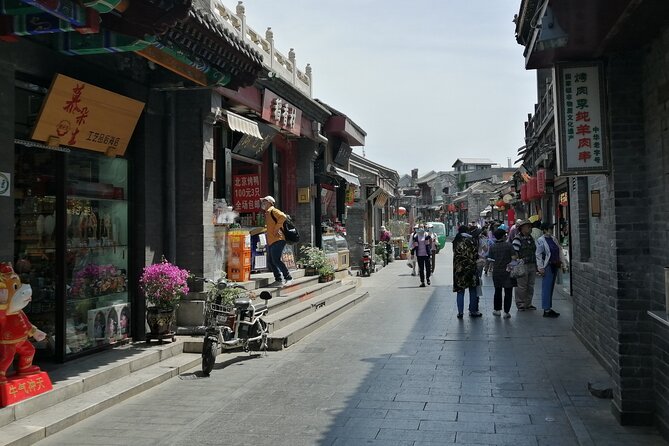
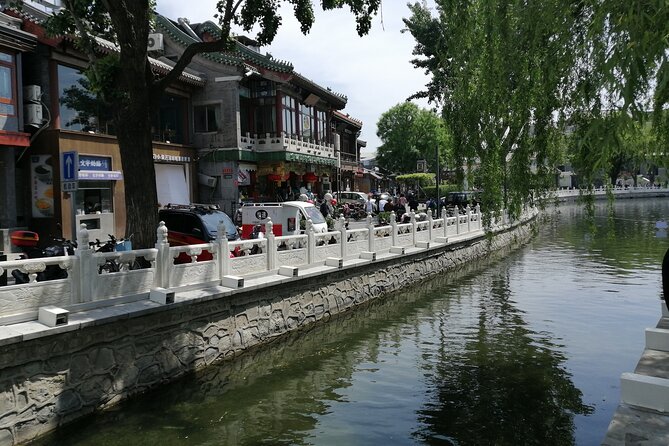
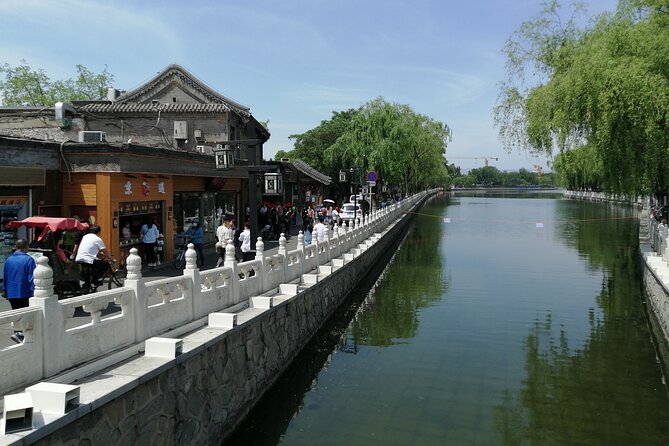
Toward the later part of the walk, the route includes a narrow channel joining Qianhai Lake and Houhai Lake. Even if you’ve seen lakes on maps, walking near the water gives you a different sense of the neighborhood grid.
This is a good emotional reset in the middle of a hutong day. Courtyards and lanes can feel tight and dense. Then the water area gives you a slight change in pace, light, and open sightlines.
It’s also a helpful transition into where the walk finishes. The tour ends around Houhai, and the final area connects back toward the Drum Tower zone. So you leave the alleys with a clearer map in your head, not just a memory of “old streets.”
Price and Value: Why $30 Works for a Hutong Starter Day
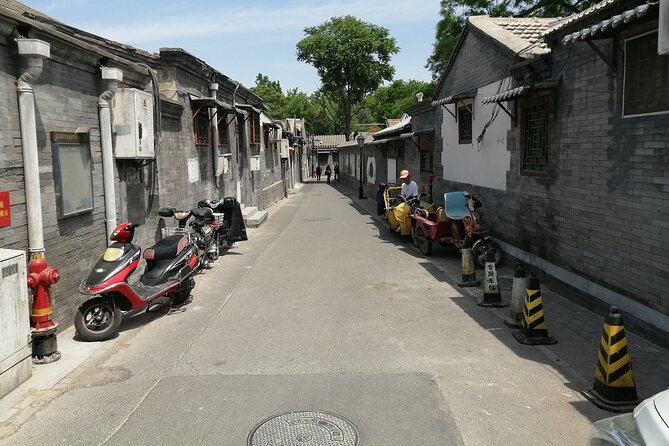
At $30 per person, this tour is priced like a true neighborhood introduction, not a museum-heavy day. The big value is that you’re paying for guidance that prevents the two common hutong problems: getting lost and missing context.
Admission tickets are not included, so think of the price as paying for the English-speaking guide and the walking route. In many historic-city tours, you pay for entry fees and spend half the time inside. Here, you’re outside, learning street-level Beijing.
Time matters too. At 1.5 to 2 hours, you can schedule this early in your trip. If you do it as a first or second day activity, you’ll recognize neighborhoods later when you’re walking on your own.
Group size also supports the price. With a max of 15 travelers, you’re more likely to get the guide’s attention during questions or when he’s pointing out details. That’s real value, especially if your Chinese is basic and you want to understand what you’re seeing.
Timing Tips for a Smooth, Stress-Free Start
Because the walk is short, timing errors are more noticeable. Here’s how to set yourself up well:
- Arrive early at the Nanluogixiang exit E / South Luogu Lane meeting area.
- Keep your route simple from the metro exit to the meeting spot. Avoid swapping streets mid-walk.
- Wear comfortable shoes. Hutongs mean uneven edges and lots of turns.
- If you need to regroup after a photo, do it before the group starts moving again, not mid-lane.
The tour is near public transportation, which helps. You’re not committing your whole day to long transfers. Still, the tour experience depends on starting together and staying together, so treat the meet-up like an appointment.
Who Should Book This Hutong Walk (and Who Might Skip It)
This tour fits best if you want:
- A guided introduction to hutongs without getting lost
- English storytelling tied to places, like the Wanrong Empress’s Mansion stop
- A small-group pace that makes questions feel possible
You might want to skip it if you’re chasing a fast-hit checklist of major attractions only. This is not that kind of tour. It’s for people who care about the lived-in side of the city, the lanes, and the way history fits into everyday space.
If you’re traveling with limited time but you still want context, this is a smart first-choice day. And if you like the idea of a calm walk where you can actually hear your guide, it’s a strong match.
Should You Book the Beijing Hutongs Walking Tour?
I think you should book this if you want hutongs without guesswork. The combination of easy meeting logistics, an English-speaking guide named Roy Li, and a story-focused route makes it a good “starter hutong day.” Add in the relaxed pace and the small group size, and it’s the kind of tour that helps your whole Beijing trip make more sense.
Just don’t treat the meeting point like a vague suggestion. Be there early at the Nanluogixiang station exit E area, and you’ll get the full benefit of the route.
If you want a short, human-scale view of Beijing that you can connect to later on your own walks, this one is a solid yes.
FAQ
Where is the meeting point for the tour?
You meet at the South Luogu Lane area near Nanluogixiang metro. The directions are for Line 8 or Line 6 Nanluoguxiang station, exit E, labeled as 南锣鼓巷南口 or 南锣鼓巷地铁站E出口.
What time does the tour start?
The start time is 10:00 am.
How long is the walking tour?
It runs about 1 hour 30 minutes to 2 hours.
What size is the group?
The tour has a maximum of 15 travelers.
Is the guide available in English?
Yes. The tour includes an English-speaking guide.
Is there a mobile ticket?
Yes, the tour uses a mobile ticket.
Is admission included?
Admission tickets are not included.
Are service animals allowed?
Yes, service animals are allowed.
What is the cancellation policy if plans change?
You can cancel for a full refund up to 24 hours in advance. If it’s canceled because the minimum number of travelers isn’t met, you’ll be offered a different date or a full refund.
More Walking Tours in Beijing



More Tours in Beijing



More Tour Reviews in Beijing
Not for you? Here's more nearby things to do in Beijing we have reviewed











Beijing Hutong & Courtyard Walks, compared.
 ★ 5.0Beijing Hutong Walking Food and Beer Tour at Hidden RestaurantsFrom $801,132 reviews
 ★ 4.7Temple Heaven, Summer Palace, Lama Temple, Hutong Bus TourFrom $58319 reviews
 ★ 5.0Temple of Heaven, Summer Palace, Lama Temple, Hutong ToursFrom $99311 reviews
 ★ 5.0Beijing Private Hutong Food Walking TourFrom $82299 reviews
 ★ 5.0The Hutong Experience by BikeFrom $150163 reviews
 ★ 5.0Hutong Culinary Walking Tour with 15+ TastingsFrom $76162 reviews
 ★ 5.0Beijing Hutong Breakfast Food TourFrom $45155 reviews
 ★ 5.0Beijing City Walk: Explore Hutongs Life and Old BeijingFrom $15146 reviews
Browse the lists this tour appears in