
Reviewed · MUSEUMS
Beijing: China National Film Museum Entry Reservation
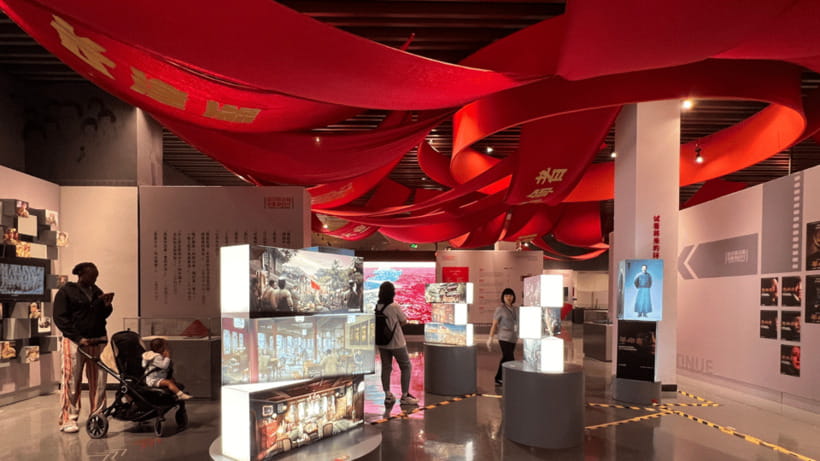
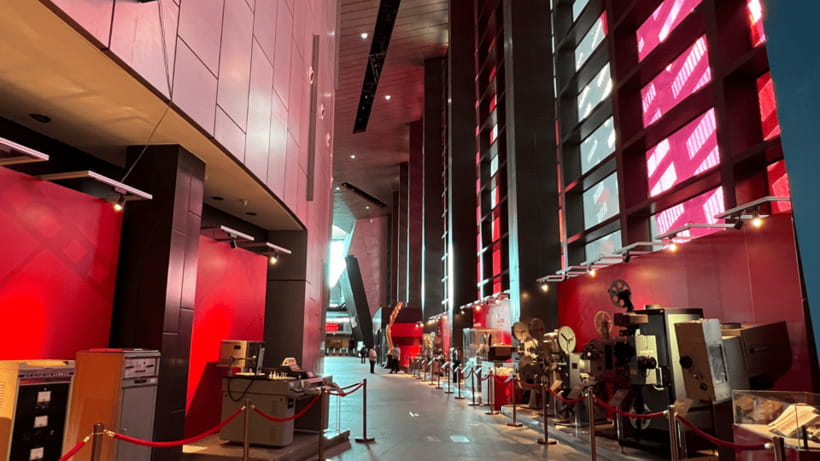
Cameras and cinema history, all in one place. The China National Film Museum is big, structured, and designed for self-guided discovery, with 21 exhibition halls and 6 movie halls in one visit. I love how the museum frames film history in stages across multiple floors, and I also like that you can enter fast using the QR code you receive. One drawback to keep in mind, the exhibits and labels are heavily in Chinese, so if you rely on text for everything, plan to use the English visual guide as your safety net.
In the galleries, you get a clear sense of how Chinese filmmaking developed over time, plus plenty of material on the people and artistic achievements behind it. If you happen to catch the cinema halls, you’ll see how the museum turns film history into an actual viewing experience. The main consideration is language: the English help helps, but it does not replace the fact that much of the information is Mandarin.
Key highlights worth planning for
- Skip the ticket line with a QR code sent to your email or WhatsApp
- Multiple floors, multiple “chapters” of film development across a century-scale exhibition
- Six movie halls including an IMAX GT hall (note that paid screenings are separate)
- 21 exhibition halls across about 13,000 square meters of gallery space
- A dinosaur-related entrance area that surprised a lot of first-time visitors
- English textual and visual guide included, but you’ll still see mostly Chinese labels on the exhibits
China National Film Museum in 2 Hours, What You Can Really See
This is a museum visit that works best if you treat it like a movie montage. Two hours is not enough to slow-walk every room, but it is enough to get oriented, pick a few floors to focus on, and leave with a solid understanding of how Chinese cinema evolved.
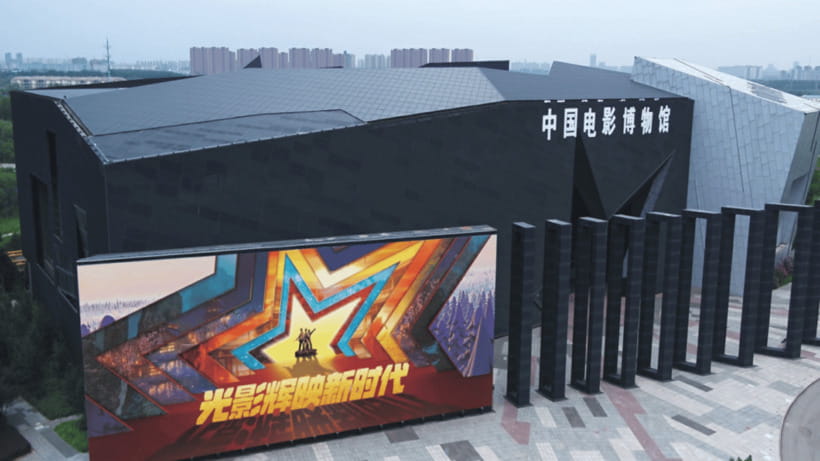
You’re looking at a site with serious scale. The museum covers about 8.7 acres, with nearly 38,000 square meters of building space. Inside, there are 21 exhibition halls (about 13,000 square meters total for exhibitions) and 6 movie halls, with one of them listed as an IMAX GT hall.
The smart way to do it is to go with the museum’s structure. The first floor sets the tone with a theme exhibition, and the higher floors lay out a long timeline of Chinese film history. If you try to “wing it” room by room for the whole visit, you’ll burn time and end up skimming.
You can also read our reviews of more museum experiences in Beijing


Entering fast with your QR code, not the app ticket
The biggest practical win here is how you enter. After you reserve, your e-ticket comes by email or WhatsApp. You use the QR code provided directly to enter the museum.
Here’s the key detail that avoids headaches: the QR code from the GetYourGuide app is not your entry ticket. You must use the QR code sent separately for admission. If you take one thing seriously before you go, make it this.
What to bring is simple: passport. Smoking is not allowed inside, so leave cigarettes and other smoking items outside your plans.
If you’re going with limited time, this is the kind of ticketing detail that can save your energy. In a museum this size, you’ll want that energy later when you’re scanning labels and choosing which exhibits to zoom into.
First floor orientation: the theme exhibition on your starting point
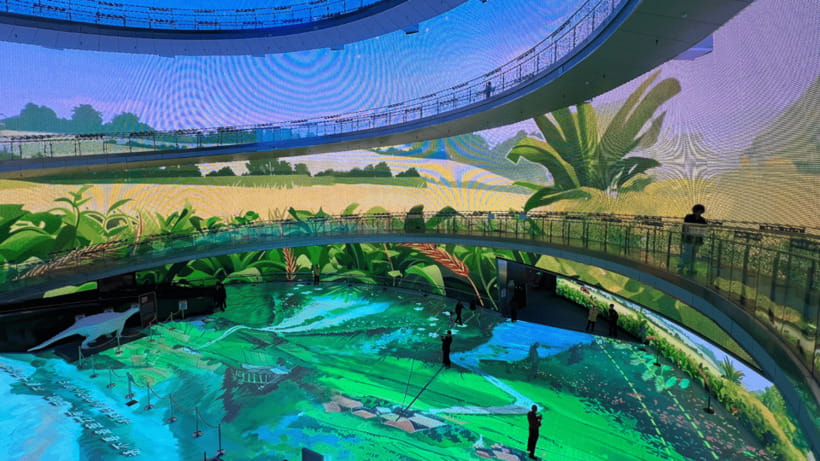
On the first floor, there’s a theme exhibition called The Theme Exhibition of A New Journey of Struggle. I like starting here because it gives you a framework before you jump into the long timeline.
You can think of the first floor as the “how to read the rest” space. Even if you don’t catch every label, the visual setup helps you understand what the museum is trying to do: connect film culture to broader historical and social moments, not just to posters and dates.
In a museum with mostly Mandarin text, that initial orientation matters. It’s also where you can get your bearings fast, because you’re not starting in the middle of a century-wide exhibit.
The big timeline exhibit: A Century of History, A Century of Glory
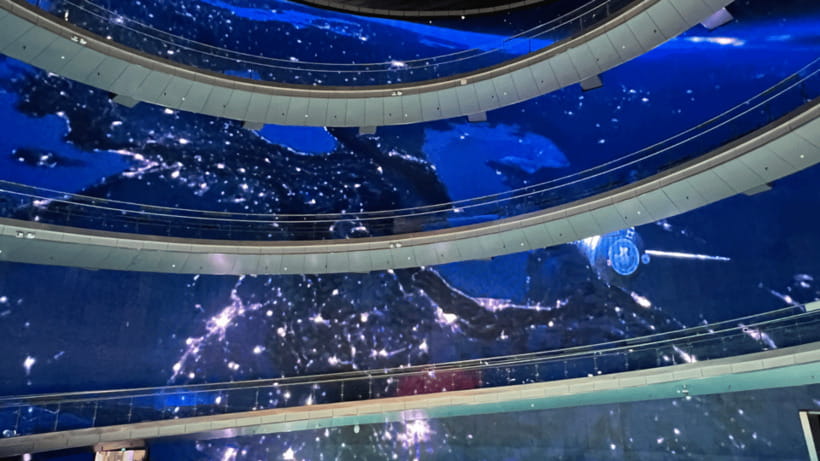
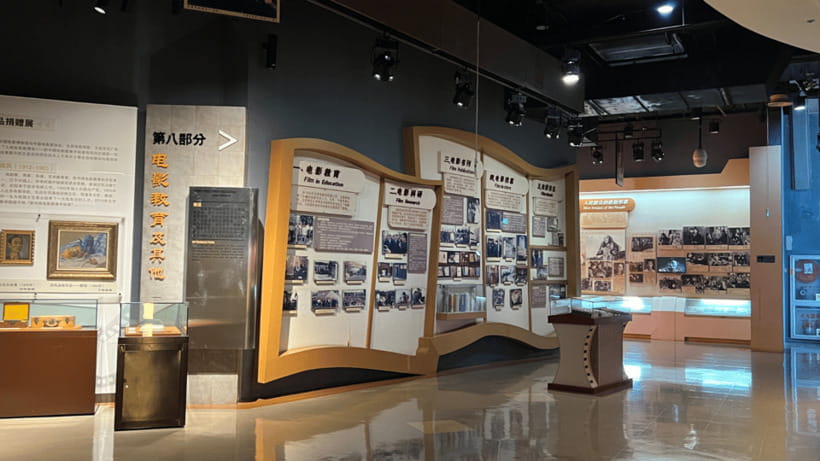
The main event is on the second, third, and fourth floors. The exhibition is titled A Century of History, A Century of Glory. This is where the museum walks you through how Chinese films developed in different periods and stages.
This multi-floor setup is valuable because it turns a complicated subject into something you can manage without a guide. Instead of trying to memorize everything, you can let each floor act like a chapter.
What you’ll find across these floors:
- The development of films over time
- Significant artistic achievements from many film-makers
- Content that explains filmmaking and includes film-making secrets
The “secrets of film making” angle is the part I’d pay attention to most. Film history can get abstract fast. When a museum includes how things are made, it connects dates and titles to real creative choices.
One more reality check from experience: if you want the details in text form, you may struggle. Some visitors found that the descriptions are only in Mandarin. That means you’ll get the best outcome if you use the included English textual and visual guide to translate key sections while you let visuals do the heavy lifting elsewhere.
The dinosaur entrance moment you will remember
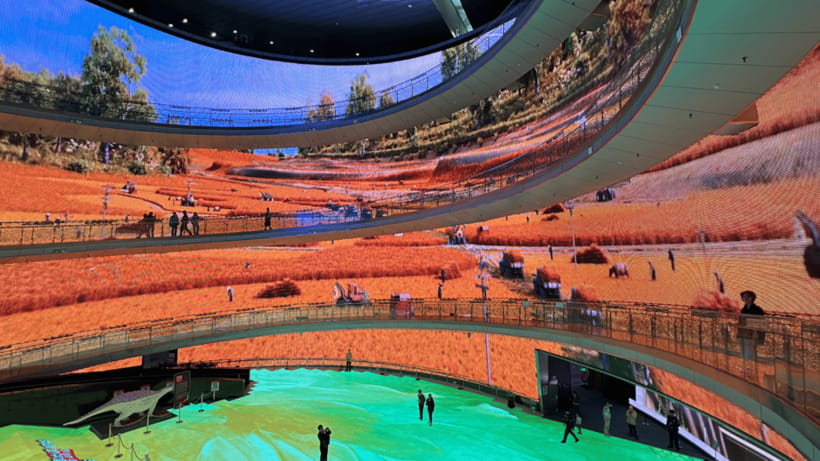
You might not expect it from a film museum, but there’s a dinosaur-related entrance area that can make your first steps feel like a surprise scene change. One of the standout comments I saw was that the dinosaur entrance was awesome.
Even if you’re not a dinosaur person, this is a good signal that the museum isn’t only about serious lecture-style exhibits. It’s using visual set pieces to hook visitors, including families and first-timers.
Why this matters: when your reading is limited by language, a memorable visual moment helps you attach context to what you’re seeing. It gives your brain something to anchor on while you move through the timeline.



Movie halls and the IMAX GT question: what is included vs not
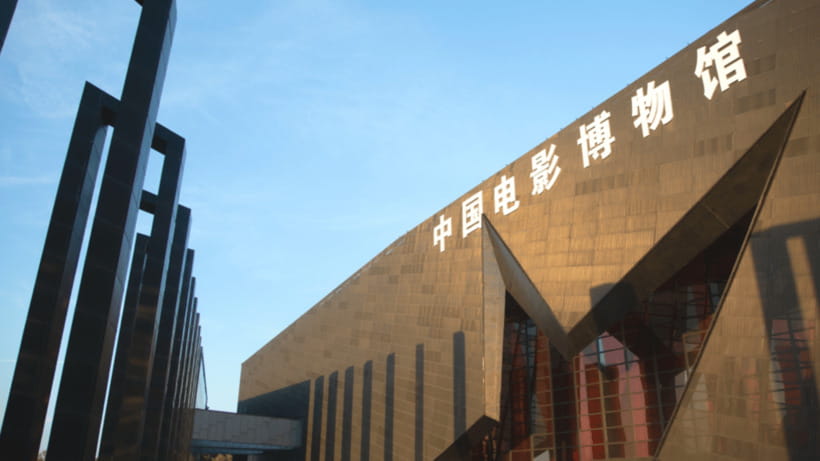
The museum has six movie halls, and one is listed as an IMAX GT hall. This is where film history becomes motion rather than still displays.
Important practical point: the reservation includes museum entry and the English textual and visual guide, but it does not include the cost of paid movie screenings. So you can plan on exploring the movie-hall spaces, but any special screenings you want to watch may require an extra ticket.
In a two-hour visit, I recommend you make a quick decision on this. If you’re pressed for time, you’ll likely get more value from spending your limited hours in the exhibition halls that walk through film history step by step. If you’re arriving with flexibility, you can check the screening options when you’re inside.
Language reality: English support helps, but Chinese labels drive the experience
Let’s talk honestly about the language situation. The ticket includes an English version of the textual and visual guide, which is a real advantage. You’re not walking in completely blind.
But several people noted that the information is mostly Chinese, and some felt it was not great for tourists because the exhibits and descriptions are Mandarin. Another point that came up is that descriptions were only in Mandarin.
So how do you make this work in your favor?
- Use the English guide to identify the biggest sections you want to understand.
- Spend less time trying to translate every line. Focus on the visuals, themes, and the timeline structure.
- Expect some content to be more “view and infer” than “read and study.”
This is the difference between a frustrating museum visit and a satisfying one in a museum with language barriers. If you treat it like a film, with scenes and themes, you’ll do better than if you treat it like a textbook.
Price and value: why $4.82 for entry can be a smart stop
At $4.82 per person, the ticket price is low enough that you can treat this as a high-value cultural stop rather than a big splurge. The museum’s size and the number of exhibition and movie halls matter here.
You’re not just paying for one small gallery. You’re getting admission to a large cultural institution with a multi-floor timeline and dedicated cinema spaces. Even if you only fully enjoy part of the museum in your two hours, the scale means you’ll still come away with a sense of the bigger story.
Also, skip-the-line entry is part of that value. When you’re in Beijing and you’re stacking sights, time is currency. Being able to enter directly using the QR code can prevent you from losing an hour to queue chaos.
One more value angle: because paid screenings are not included, you control your spending. If you don’t want to pay extra for cinemas, you can still get a full museum experience through the exhibitions.
Who this visit suits best (and who should think twice)
This reservation is a strong fit if you want:
- A self-guided cultural stop with structure (floors and themes)
- A quick way to understand Chinese cinema through exhibition halls and a timeline
- A visit that includes a little variety, from serious history sections to visual set pieces like the dinosaur entrance area
It may be less ideal if you:
- Need fully English signage everywhere and cannot use a guide at all
- Want a deeply detailed, text-heavy experience where you read every label
The museum is wheelchair accessible, so that’s a plus if mobility matters to your planning.
If you’re traveling with kids, the dinosaur moment and movie halls make it easier to keep energy up. If you’re traveling solo and enjoy themes, the multi-floor timeline format is also a good match.
Should you book this China National Film Museum entry?
If you’re spending time in Beijing and you want a museum stop that’s actually connected to the medium you see on screens, I think this is worth booking. The combination of low price, direct entry via QR code, and the included English visual/text guide creates a practical path through a big museum.
Book it if you’re happy to work with visuals and the guide instead of expecting perfect English labels. Don’t book it if you know you’ll be frustrated by Mandarin-first exhibit text and you need every detail translated.
My simple decision rule: if you’re the type who enjoys learning through scenes, posters, visuals, and timelines, you’ll enjoy this. If you want a completely English, guided-by-a-person experience, you might feel this one is too language-heavy for your taste.
FAQ
How long does the China National Film Museum entry reservation take?
The reservation is set for a 2 hour visit. You can check availability to see starting times.
How do I enter the museum with this reservation?
After you place your order, you receive an e-ticket by email or WhatsApp. Use the QR code provided to enter the museum directly. The code from the GetYourGuide app is not the entry ticket.
What do I need to bring?
You need to bring your passport.
Are movie screenings included?
Entry is included, but the cost of paid movie screenings is not included.
Is there an English guide?
Yes. The reservation includes an English version of the textual and visual guide.
What is the cancellation policy?
Free cancellation is available up to 24 hours in advance for a full refund.
More Museum Experiences in Beijing

More Tour Reviews in Beijing



Not for you? Here's more nearby things to do in Beijing we have reviewed








Museums, compared.
 ★ 4.6Tianmen Square, Forbidden City & Royal Museum ToursFrom $41,288 reviews
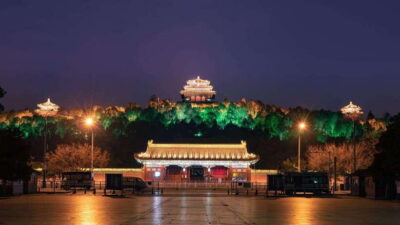 ★ 4.5Beijing:Jingshan Park (Palace Museum Garden) TicketFrom $6185 reviews
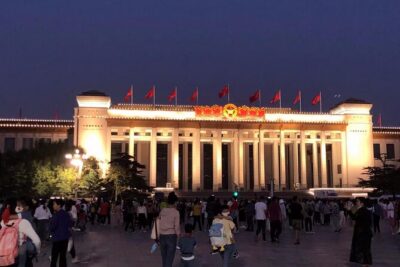 ★ 5.0Beijing Half Day: National Museum of China In-depth Tour with Subway TransferFrom $11470 reviews
 ★ 4.5Beijing’s Forbidden City with Special Viewing of Treasure Gallery and the Great Wall Ruins at BadalingFrom $19924 reviews
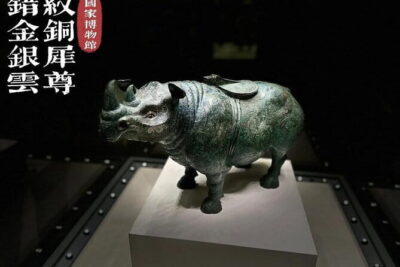 ★ 3.5China National Museum Ticket Pre-booking and Tiananmen SquareFrom $1023 reviews
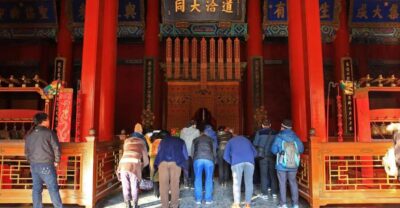 ★ 5.0Lama Temple, Confucius Temple and Guozijian MuseumFrom $8023 reviews
 ★ 5.04-Hour Private Tour: Lama Temple, Confucius Temple, Guozijian Museum with Dim SumFrom $9721 reviews
 ★ 4.7JingShan park (palace museum garden) entry ticketFrom $618 reviews
Browse the lists this tour appears in