
Reviewed · TEMPLE OF HEAVEN EXPERIENCES
Temple of Heaven Private Tour with Extra Scenic Spots Added On
Temple of Heaven feels like Beijing on pause. This private walking tour takes you through the UNESCO altar complex used by Ming and Qing emperors, then slows down in the surrounding park to watch morning exercises. I like the focused route that hits the key ceremonial landmarks without rushing, and I also like the chance to understand what you’re seeing, not just where to stand. One thing to consider: it’s a short, 1 to 2 hour plan, so you’ll want to keep your own extra exploring brief if you’re trying to cover everything in a single day.
You’ll meet your guide at the planned spot, usually with pickup options, and then move through the grounds in a smooth loop. Expect comfortable walking, indoor stops only where the complex allows, and a vibe that mixes imperial architecture with everyday Beijing routines.
Key takeaways before you go
- Private guide time: you can ask questions as you walk, not in a crowded group.
- Emperor-level symbolism: Danbi Bridge, Hall of Prayer for Good Harvests, and the Circular Mound Altar are explained in plain terms.
- Hands-on landmark flow: the route connects major points like the bridge, Echo Wall, and Imperial Vault of Heaven.
- Morning park atmosphere: you’ll see older residents practicing exercises and martial arts in the surrounding grounds.
- Admission built in: entrance tickets are included when you choose the tour package.
- Pace that fits tight schedules: the tour runs about 1 to 2 hours, ideal when you want Temple of Heaven but not a whole day.
Why this private Temple of Heaven walk makes sense
The Temple of Heaven is one of those places where big monuments can feel distant, unless someone helps you read the rules behind the design. This tour is built for that. You walk the imperial altar complex, then you spend time in the park where locals gather early. The result is a two-part experience: sacred architecture on one side, Beijing’s daily rhythm on the other.
I especially like that the route is organized around the ceremonial logic of the complex. You’re not just hopping between photos. You’re moving along the same kinds of paths people once used for prayer and ritual, like the main approach along the Danbi Bridge. That makes the place feel less like a museum and more like a working spiritual map.
There’s also a practical payoff. The tour is private, so you can keep your own pace. If you want photos, you can stop without breaking away from the group. If you want to move quickly, you can do that too.
You can also read our reviews of more private tours in Beijing
Price and time: what $60 covers (and why it’s decent value)
At $60 per person, the big value is not the price alone. It’s what’s paired with it: a professional guide, entrance fees for the selected package, and pickup options depending on which meeting plan you choose. For a UNESCO site that can take most people half a day or more when you’re figuring it out on your own, paying for a guided, time-bound route can feel very efficient.
The tour duration is listed as 1 to 2 hours. That’s short enough to fit between other Beijing stops, but long enough to get past the “look and go” stage. You’ll cover several landmarks and learn the meaning behind them, plus you’ll get time to watch the morning exercise scene in the park.
Possible drawback: because it’s timed tightly, you won’t get a slow, wander-everywhere experience. If you love architectural detail and want to linger in every corner, you may end up wanting extra self-guided time right after the tour.
Meeting points, pickup options, and how to avoid confusion
The simplest plan is to meet your guide at the Temple of Heaven area. The start point listed is the Temple of Heaven ticket office at 天坛公园售票处. The tour also notes that you might meet at your hotel lobby for some package types.
There are a few moving parts, but you can manage them:
- Confirm whether your package uses hotel lobby pickup or a gate meeting point.
- If you’re walking to or from the meeting spot using public transport, plan for a bit of extra time, since Beijing mornings can move quickly.
- Wear comfortable shoes because this is a walking experience around an extensive complex.
If you prefer less logistics and more certainty, the meeting-point option near the ticket area can be the easiest. It means fewer variables before you arrive at the imperial gates and start walking.
The route: from the Temple of Heaven grounds to the ceremonial core
Your tour starts as you enter the broad Temple of Heaven grounds and move through the leafy park. This matters because it sets expectations. You’ll see how the complex functions as both a historical site and a public space for early-morning life.
Then you shift toward the showpiece buildings and pathways:
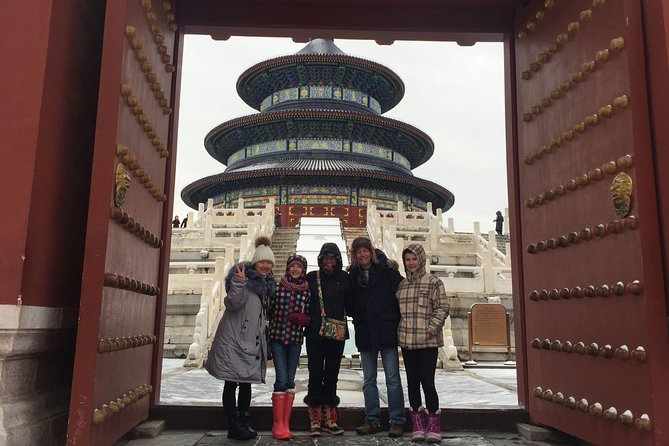
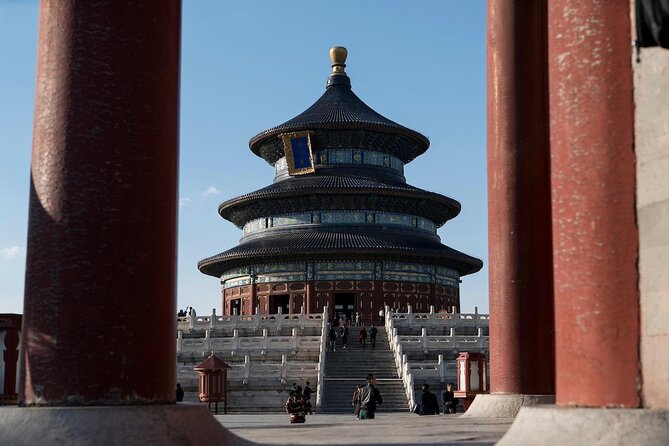
- the Hall of Prayer for Good Harvests
- the Danbi Bridge
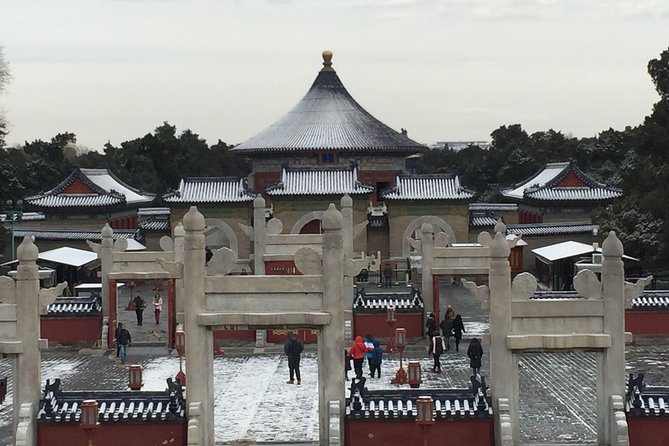
- the Imperial Vault of Heaven and the Echo Wall
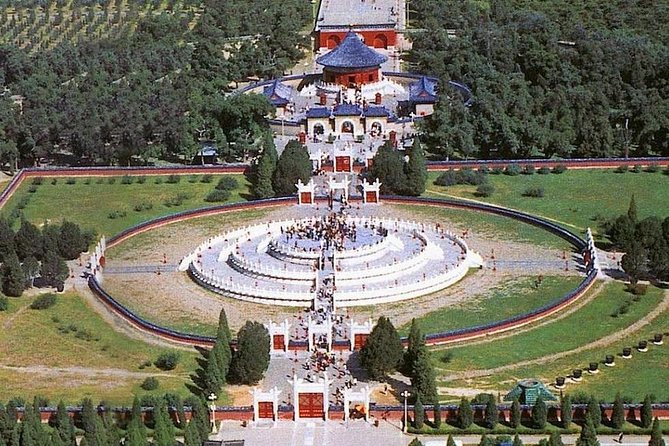
- the Circular Mound Altar, the final sacred stop
The flow is sensible. It mirrors how you’d naturally progress once you understand the site’s layout and the ceremonial purpose of each area.
Hall of Prayer for Good Harvests: why the building design is the star
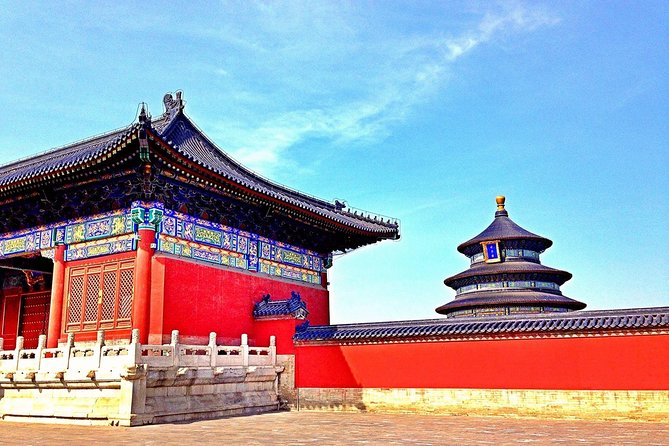
This is the stop that usually makes people pause. The Hall of Prayer for Good Harvests is a 15th-century circular wooden structure, described as built without a single nail. The building’s appearance is tied to the ritual idea of heaven and order, and the tour gives you enough context to see those choices rather than just admire the surface.
You’ll spend time here to look around, then connect it to the emperor’s purpose. The theme is bountiful harvests, and the guide explains how the prayers worked, at least in story form, so you can understand why emperors would come to this exact location.
A practical tip: inside and around the hall, you’ll often want to step slightly aside for photos, so you’re not stuck in the busiest view line. With a private guide, you can time your shots while you’re still moving through the key areas.


Danbi Bridge: the raised walkway and the emperor-only rule
Next you walk along the Danbi Bridge, a raised walkway that’s described as 360 meters long. The key detail here is the exclusivity. Commoners and officials were forbidden to step on it, which turns a simple bridge into a lesson in hierarchy.
Why I like this stop: it makes the scale feel real. You can walk the same kind of route an emperor would have associated with access and ritual. That’s when the complex stops being abstract.
It’s also a short segment, listed as about 10 minutes. So even if you’re not a slow traveler, you’re not stuck. You get the meaning without losing the rest of your schedule.
Imperial Vault of Heaven and the Echo Wall: tablets, echo, and ceremony
The tour then focuses on the Imperial Vault of Heaven area, including the Echo Wall. Here’s what makes it more than another impressive building.
The Imperial Vault of Heaven is described as having been used to store ceremonial tablets of Heaven and imperial ancestors. Those tablets were moved from the Hall of Prayer when not in use. That detail helps you visualize the system behind the rituals: a place for prayer, and a place for keeping what’s used in prayer.
The Echo Wall adds a sensory angle. Even if you don’t test it yourself, the fact that it’s part of this complex means the design includes sound and effect. It’s another reminder that the emperors treated the setting as part of the ceremony, not just a backdrop.
This is also where you’ll likely notice the harmony of the surroundings. The buildings and walls are positioned so you naturally get pulled into the same viewing lines again and again.
Circular Mound Altar: the winter solstice focus
The final major stop is the Circular Mound Altar, described as the most sacred spot in the whole complex. It’s linked to winter solstice rituals where emperors worshipped the god of heaven, in imperial religion.
If you’ve been reading about China’s imperial traditions, this is the part that ties it all together. The earlier stops feel like steps in a ritual system. The Circular Mound Altar feels like the climax.
You’ll spend enough time here to see the altar area and absorb the story. The tour’s time at this stop is listed as about 30 minutes, which is helpful because this is the place where people usually want to take their time, even on a short tour.
The park time: morning exercises with Beijing’s older residents
One of the best parts of this tour is the park segment. You’re not only touring architecture. You’re watching real morning life.
The tour highlights older citizens performing exercises, dances, and martial arts. You’ll learn some context about retirement and daily life while you observe. Even if you don’t speak the same language, watching people train in their routine makes the whole city feel more human.
This is also why I think the tour earns its name as more than a monument hop. The park gives your eyes a break from bright painted walls and ceremonial geometry. It’s also a nice cultural contrast to the emperor-focused symbolism of the altar structures.
What the guides do well, and why it matters for your photos
The most praised part of the experience is how smoothly the guides connect history to what you’re seeing on the ground. English-speaking guides have been described as friendly, enthusiastic, and able to explain the Temple of Heaven and China in general.
Names that have come up include:
- Ye Qing, praised for strong English and for adding extra advice about nearby places to visit.
- Jimmy, described as enthusiastic and great company, with a relaxed pace.
- Qing, noted for making a 2-hour plan feel flexible and well matched to the schedule.
You don’t have to pick a guide in advance to benefit from this. The takeaway for you is the type of tour you’re booking: one where the guide’s job is to translate the space into understandable meaning, not just read a list of facts.
For your photos, this kind of guide makes a difference. Instead of aiming randomly, you’re more likely to notice the exact angles and relationships between features like the bridge approach, the hall, and the altar area.
What you should do after the tour ends
The tour concludes when your guide leaves you at the South Gate. That’s a helpful endpoint because it gives you a clear “done” point without trapping you in the complex until closing time.
Before you wander off, I’d do a quick mental checklist:
- Take any final shots you care about most, especially around the altar area.
- Decide if you want more time in the park, or if you’d rather use the rest of your day for nearby sights.
- If your day plan is tight, use the end at South Gate as your signal to move on.
Even on a short tour, you’ll come away with a clearer sense of what each landmark was for, which helps when you see the complex again later on your own.
Who this tour is best for
This private Temple of Heaven walking tour works especially well if:
- You want a time-efficient way to cover the main ceremonial landmarks.
- You prefer a guide who can explain symbolism and ritual meaning in a practical, story-based way.
- You like the idea of mixing heritage sights with everyday morning park culture.
- You’re traveling with a spouse, friend, or small group and want flexibility in pacing.
It’s also a strong choice for first-time Beijing visitors who might otherwise feel overwhelmed by a large site. The tour keeps you oriented, so you don’t spend the first hour just finding your bearings.
If your travel style is ultra-slow, and you want to spend half a day inside and out without stopping, you might feel the timing is too tight. In that case, consider using this tour as the structured part of your day, then follow with self-paced time afterward.
Should you book it? My decision guide
I’d book this tour if you want the Temple of Heaven to make sense quickly. The inclusion of entrance tickets plus a guide who can tie the main buildings together means you’ll get more value than you would by simply buying tickets and wandering.
You should also consider booking if:
- You care about architecture but also want the “why,” not just the “what.”
- You’re excited to see Beijing’s morning exercise scene in the park.
- You want a private experience with a relaxed schedule in about 1 to 2 hours.
The only real reason not to book is if you’re planning a long, slow deep walk and you don’t mind figuring things out on your own. Otherwise, this is a smart, focused way to experience one of Beijing’s most distinctive sites.
FAQ
How long is the Temple of Heaven private tour?
The tour is listed as about 1 to 2 hours.
Is hotel pickup included?
Hotel pickup is included for the package options that offer it, depending on where you meet your guide.
Where do I meet the guide?
The start point is listed as 天坛公园售票处 (Temple of Heaven ticket office). Some packages may meet at an East Gate or at your hotel lobby.
What are the main stops during the tour?
The tour includes the Temple of Heaven complex and key landmarks such as the Hall of Prayer for Good Harvests, Danbi Bridge, Echo Wall, Imperial Vault of Heaven, and the Circular Mound Altar.
Are entrance fees included?
Entrance fees and admission tickets are included for the sites in your selected package.
Is this a private tour?
Yes. It’s described as a private tour or private activity, with only your group participating.
Are mobile tickets provided?
Mobile ticket is listed as a feature of this experience.
More Private Tours in Beijing
More Tours in Beijing
More Tour Reviews in Beijing
Not for you? Here's more nearby things to do in Beijing we have reviewed


Temple of Heaven Experiences, compared.
 ★ 4.6The Temple of Heaven or Summer Palace Entry TicketFrom $71,286 reviews
 ★ 4.0Beijing Classic Full-Day Tour including the Forbidden City, Tiananmen Square, Summer Palace and Temple of HeavenFrom $99610 reviews
 ★ 5.0Temple of Heaven TicketFrom $8482 reviews
 ★ 5.0Temple Heaven, Lama Temple, Summer Palace & Peking Duck Bus TourFrom $56377 reviews
 ★ 4.7Temple Heaven, Summer Palace, Lama Temple, Hutong Bus TourFrom $58319 reviews
 ★ 4.6Entry to Temple of Heaven ParkFrom $7314 reviews
 ★ 5.0Temple of Heaven, Summer Palace, Lama Temple, Hutong ToursFrom $99311 reviews
★ 4.9Temple of Heaven TicketFrom $8271 reviews
★ 5.0Temple of Heaven, Summer Palace, Lama Temple, Hutong ToursFrom $99311 reviews
★ 4.9Temple of Heaven TicketFrom $8271 reviews
Browse the lists this tour appears in