
Reviewed · MING TOMBS & SPIRIT WAY TRIPS
Ming Tombs Admission Ticket
Ming emperors under your feet. This Ming Tombs admission ticket hits two things I love right away: the underground palaces and the long walk along the Sacred Way with lifelike stone carvings. The main drawback is simple, the tombs are spread out on site, so you will want a realistic plan for moving between stops without wasting daylight.
For one day, you’ll visit the final resting place of 13 Ming Dynasty emperors near Beijing, in Changping District at the southern foot of Tianshou Mountain. The ticket is best for people who want a self-paced cultural visit with major sights included, and it’s good value at $19 per person when you compare what you get versus paying individual admissions.
Key points before you go
- QR-code entry keeps the experience straightforward, with tickets functioning as a quick scan for admission.
- Sacred Way + major tombs are included (depending on your option), so you are not stuck seeing just one site.
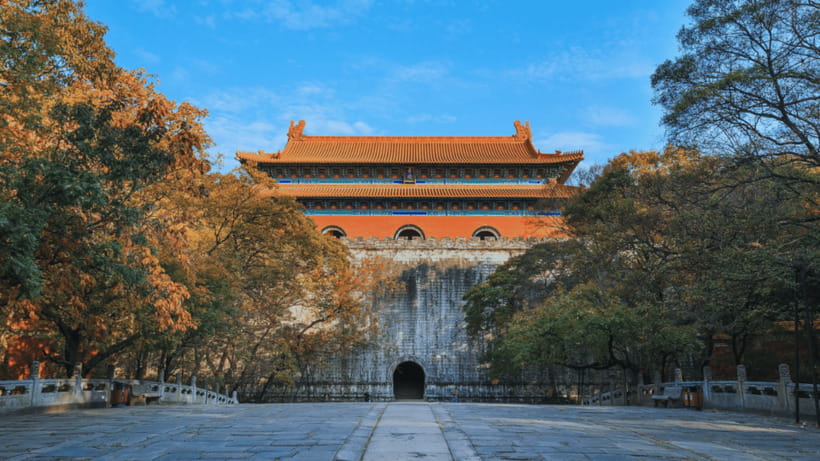
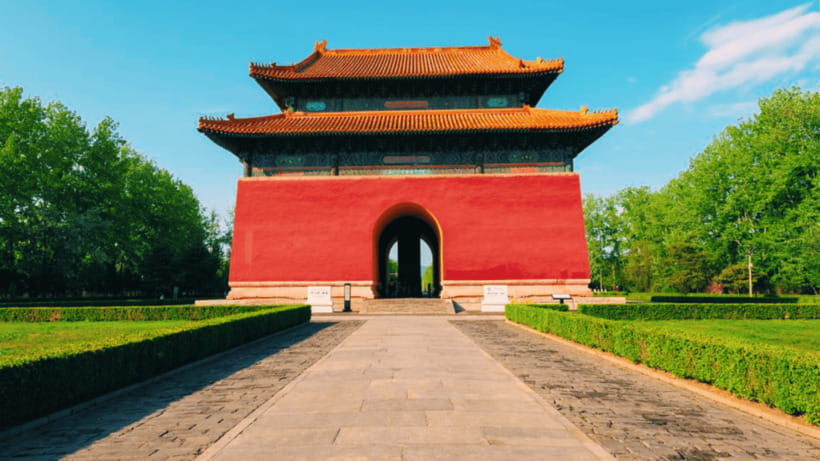
- Changling (Emperor Yongle) is the showpiece, including the Hall of Eminent Favor with its double-eaved roof and golden nanmu pillars.
- Dingling (Emperor Wanli) offers the rare chance to see an underground palace opened to the public.
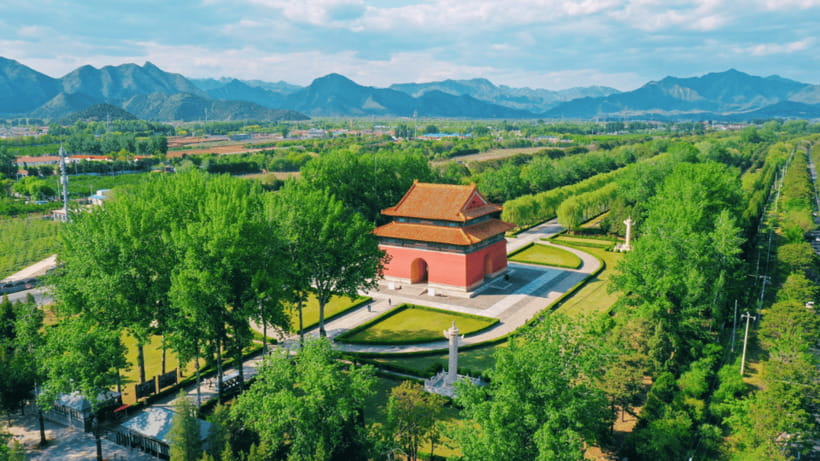
- Zhaoling (Emperor Muzong) adds a restored imperial view that helps you understand how these complexes worked as designed spaces.
- Plan transport on site, since tomb locations are far enough apart that you may need paid electric carts or local help.
Ming Tombs in Beijing: what this ticket actually gets you
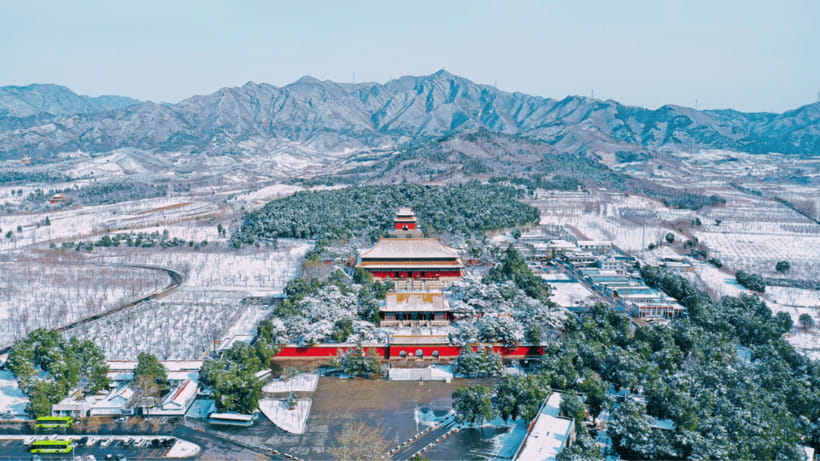
This is a one-day admission ticket for the Ming Tombs complex north of Beijing. You are going to the mausoleum area for 13 emperors of the Ming Dynasty, covering some of the most important named tombs that make the whole site feel like a planned imperial landscape rather than a random collection of graves.
What matters for your expectations is that the ticket is not just a pass for one tomb gate. Depending on your chosen option, it can include the combination of Dingling + Changling + Zhaoling + the Sacred Way, along with admission to the relevant historical spots and cultural exhibits on site.
If you like architecture that shows power, this place delivers. You will see monumental structures, carefully placed courtyards, and the kind of stonework meant to impress even if you knew nothing about Ming court life. And because the site is tied to mountains and long outdoor routes, you also get that practical outdoors element, walking from one major area to the next.
A few more Beijing tours and experiences worth a look



Price and value at $19 for a full-day Ming walk
At $19 per person for a full day, this ticket is priced like a straightforward entry product, not a packaged private tour. That can be good news if you like deciding your own pace, taking photos when you want, and spending time where you’re actually curious.
Here’s the value logic I use: the Ming Tombs complex is big, and you are paying to enter multiple major components. The ticket includes admissions to tombs and historical sites, plus access to exhibits. That’s a lot of grounds for one day, especially when your alternative would be trying to piece together separate admissions across different areas.
One extra cost to expect is movement within the complex. The information specifically notes that electric cart usage requires an additional fee. So even if the ticket itself is affordable, you should mentally budget a little extra for transport, or plan your walking time tightly if you are fit and comfortable.
Entering with QR code, and the passport name-match rule
The entry method is simple: you use a QR code to get in. This is one of the biggest practical advantages, because it reduces friction at the gate and helps you avoid the slow, paperwork-heavy feeling that can happen with some ticketing systems.
But here is the part that can seriously trip you up. Booking requires you to send your full name exactly as it appears on your passport, plus your passport number. If that information is not received on time, the booking can be canceled and a cancellation fee may apply. Also, tickets are non-refundable once sold, so selecting the correct date and time matters, because the ticket is valid only on the booked date.
So do this before you book:
- Check your passport spelling carefully.
- Pick the correct date and time slot you plan to use.
- Keep your passport with you on the day.
On top of that, don’t bring anything restricted. Pets are not allowed, and the ticket rules also mention no weapons or sharp objects, no alcohol and drugs, and no explosive substances. If you travel with anything that could be considered sharp or regulated, leave it at your hotel.
Walking the Sacred Way: stone statues, timing, and how to pace it
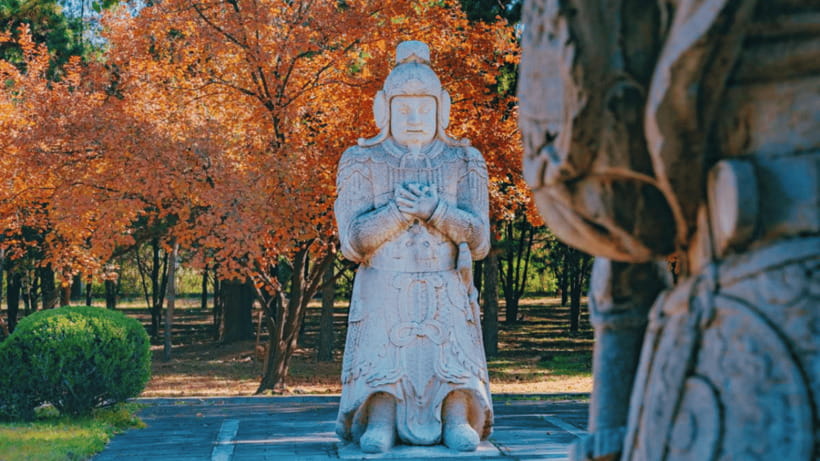
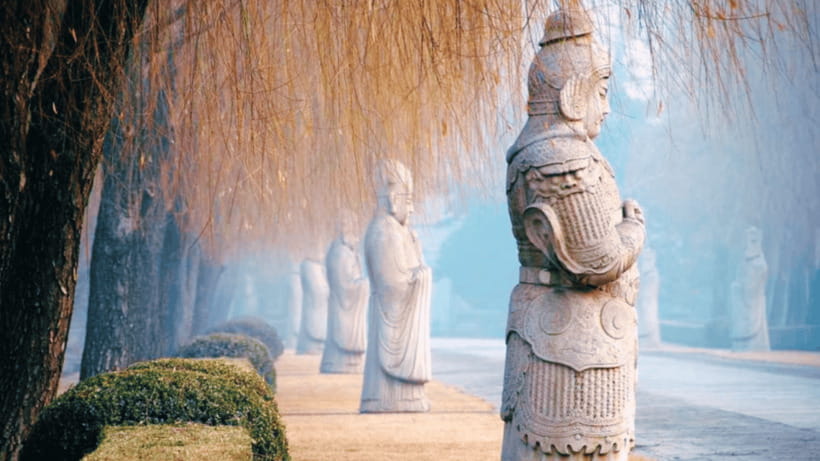
The Sacred Way is the long ceremonial path that connects major areas of the Ming Tombs. It is lined with stone statues and detailed carvings, and it matters because it sets the tone of the whole visit. You are not just walking from stop to stop. You are following the intended approach route that people in the past would recognize as the official processional line.
When I’m planning my time on the Sacred Way, I focus on pacing in two steps:
- Walk it once at a normal speed to get the flow and scale.
- Then slow down in the spots that pull you in, usually where you can clearly see the craftsmanship and where the figures feel most lifelike.
The carvings are the kind of work you can easily rush past. If you want value, build in a few stops where you can actually look, not just take a quick picture. The Sacred Way is also a good mental warm-up for the rest of the day, because it trains your eye for what Ming craftsmanship looks like in stone.
One practical note: because the tombs are far enough apart to require transport, the Sacred Way may feel like a centerpiece you should prioritize early, before you lose energy to getting from one area to another.
Changling (Emperor Yongle): the largest tomb and the Hall of Eminent Favor
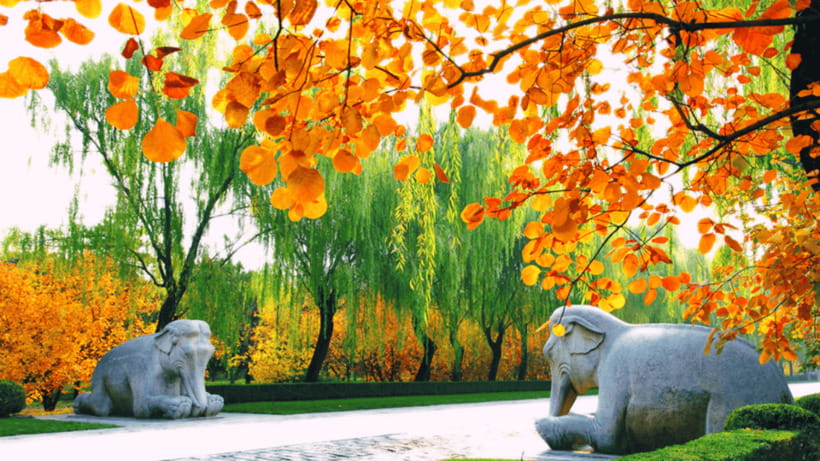
Changling, the tomb of Emperor Yongle (Zhu Di), is the largest and most impressive tomb at the Ming Tombs site. If you only have energy for one major stop, this is usually the one you want to hit. It sets the bar for what makes the Ming imperial mausoleum style feel grand.
Inside the Changling area, you’ll also come to a standout structure: the Hall of Eminent Favor. This is described as the only remaining hall of its kind at the Ming Tombs, known for a double-eaved roof and precious golden nanmu pillars. Even if you’re not an architecture person, you can still appreciate this because it is visually distinctive. Details like roof style and column material give you an instant sense of what “imperial” meant in everyday construction choices.
What I like about Changling as a first or anchor stop is that it gives you both:
- A sense of scale, because it is the largest tomb.
- A sense of craft, because elements like the hall design and notable pillars are specific and memorable.
If you are the type who likes to compare sites, use Changling to set your baseline. Then when you see Dingling’s underground palace and Zhaoling’s restored tomb area, you’ll understand the differences more clearly.




Dingling (Emperor Wanli): the underground palace you can actually enter
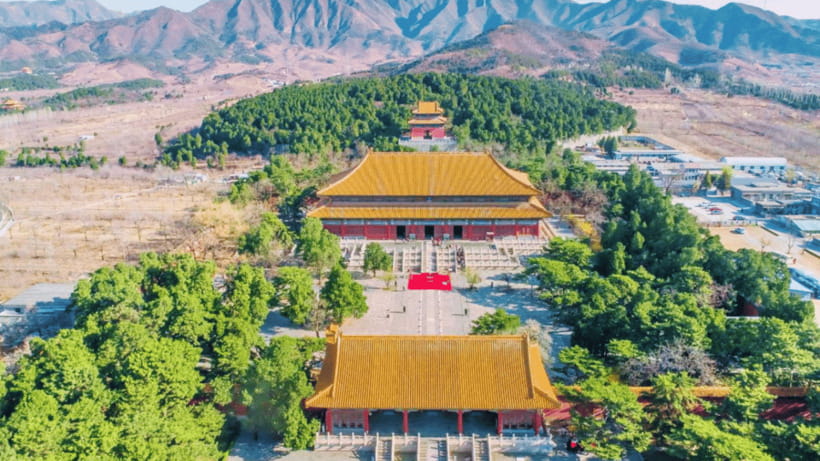
Dingling is the tomb of Emperor Wanli, and it has a special draw. It is the only underground palace opened to the public at the Ming Tombs. That single detail is a huge reason to choose this ticket if you are curious about how imperial burial design translated into built space.
An underground palace changes the atmosphere. Instead of just seeing exterior architecture, you get a different kind of experience, the enclosed feel of subterranean design. You also get a clearer sense of why these complexes were built to last and why the Ming approach wasn’t casual. The ticket includes viewing of the ancient architecture here, and the underground element is the kind of contrast that makes your day feel more than a long walk.
If you want a practical strategy, schedule Dingling when you’re most alert. Indoor sections can sometimes make people rush, and the best way to get value is to slow down enough to notice the design choices you can’t see as easily from the outside.
Zhaoling (Emperor Muzong): restoration that helps you read the complex
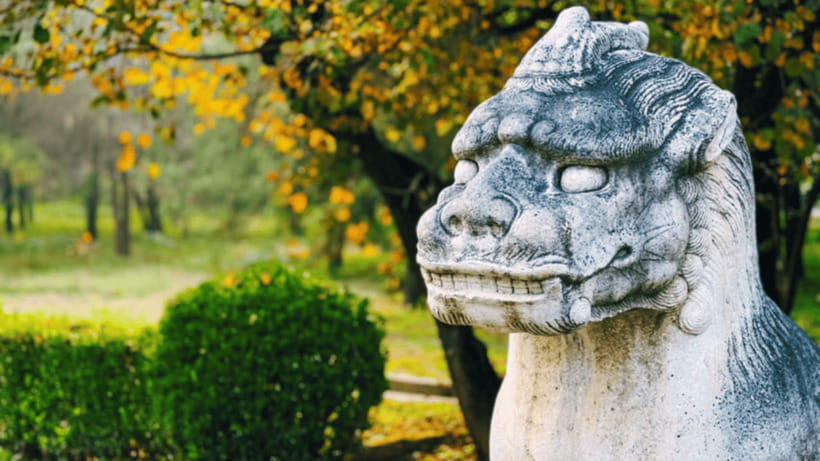
Zhaoling is the tomb of Emperor Muzong, and it is described as restored to reveal the splendor of a Ming imperial mausoleum. Restoration can be a debated word in travel, but here it’s useful because it helps you understand what the complex looked like when it was functioning as an imperial memorial space.
I like Zhaoling for a simple reason: restoration gives you context. When you walk past other structures that might look worn or partial, a restored area can help you connect dots. You get a better sense of layout, scale, and the intended look of the tomb complex, which then makes the rest of the site easier to interpret.
Also, pairing Zhaoling with the other stops gives you variety in your day:
- Changling for biggest impressions and standout hall details.
- Dingling for the rare underground palace access.
- Zhaoling for restored imperial presentation and clarity on how the complex reads as a whole.
Artifacts, architecture, and using the site like a museum
The ticket includes seeing numerous artifacts and cultural exhibits, plus viewing of ancient architecture. That means your experience is not only about monuments and tomb grounds. You can also slow down in exhibit spaces and look at objects that communicate materials, craftsmanship, and the kind of objects the Ming court valued.
When you’re there, don’t treat each stop as a checkbox. Use your time like a museum visit:
- Pause long enough to compare what you see outside versus what you see in exhibits.
- Look for craftsmanship cues, like how stonework shapes faces and figures, and how structures emphasize authority through size and repetition.
- Take note of how the site uses pathways to move you from one important area to the next.
One of the best things about the Ming Tombs is that the craftsmanship is visible. The stone statues along the Sacred Way, the monumental building forms, and the listed highlights like the golden nanmu pillars all point to a single theme: skilled labor and careful design were part of the messaging, not just the construction process.
Getting around the Ming Tombs complex: plan for distance
Here’s the logistics reality that matters most: the tombs are not right next to each other. The information and on-the-ground advice both point to the same conclusion. You will need some form of transport between different tomb areas.
Your options include:
- Walking, if you’re comfortable with a long outdoor day.
- Using an electric cart if available, but the rules say cart usage costs extra.
- Arranging local transport. One practical approach described is hiring a driver on site to connect the Sacred Way area with the other tombs covered by the ticket, then getting you back toward public transport to return to Beijing.
In other words, don’t assume you can casually stroll between every major tomb without time or effort. Pick your priorities, then choose transport that keeps you from feeling rushed.
A simple time rule: start with the Sacred Way and at least one tomb as your anchor, then let the second and third tombs fit your energy. If you try to force everything into a tight schedule, the day can turn into a fast shuffle instead of a satisfying cultural visit.
Who this Ming Tombs ticket fits best, and who should skip
This ticket is wheelchair accessible, so people with mobility needs can plan around that. It also doesn’t include a guided tour, so you should be comfortable exploring on your own using on-site signs and exhibits.
It is also important that it is not suitable for children under 18. If you’re traveling with teens, check how your group handles long outdoor walking and historical sites.
This is a good fit if you:
- Want major Ming Tombs highlights in one day.
- Like architecture, ceremonial stonework, and museum-style artifacts.
- Prefer a self-paced visit instead of a fixed group schedule.
It might be a less ideal fit if you:
- Hate logistics planning, because transport between tombs is a real factor.
- Want a fully guided experience, because the ticket does not include a guide or a tour package.
Should you book this Ming Tombs admission ticket?
Book it if you want a cost-effective way to see the Ming Tombs’ key pieces: the Sacred Way plus major emperor tombs like Changling and Dingling, including the special underground palace. At $19, it’s a solid value when you consider you’re paying for admission to multiple components, not just a single gate entry.
Skip it or be extra careful with your planning if you dislike ticket systems that require correct passport details. The name and passport number requirement is strict, and the ticket is valid only on the booked date. Also, if you know you will struggle with distance between stops, plan for electric carts or arrange local transport so you can enjoy the tombs instead of chasing them.
FAQ
Where are the Ming Tombs located?
The Ming Tombs are at the southern foot of Tianshou Mountain in Changping District, about 50 kilometers north of Beijing.
How much does the Ming Tombs admission ticket cost?
The price is listed as $19 per person.
What does the ticket include?
Depending on your option, it includes Ming Tombs stops such as Dingling and Changling and Zhaoling, plus the Sacred Way. It also includes admission to the tombs and historical sites and access to cultural and historical exhibits.
How long is the ticket valid?
The ticket is valid for 1 day, and it is valid only on the booked date.
What do I need to bring to enter?
You need to bring your passport.
What information is required to complete the booking?
You need to send your full name as it appears on your passport and your passport number. If that info is not received on time, the booking can be canceled.
Is a guided tour included with the ticket?
No. Guided tours are not included.
Are pets allowed?
No, pets are not allowed.
Can I get a refund if I cancel?
Cancellation is listed as free up to 24 hours in advance for a full refund, and tickets are non-refundable once sold.
More Tickets in Beijing


More Tour Reviews in Beijing


Not for you? Here's more nearby things to do in Beijing we have reviewed






Ming Tombs & Spirit Way Trips, compared.
 ★ 4.5Great Wall of China at Badaling and Ming Tombs Day Tour from BeijingFrom $87731 reviews
 ★ 5.0Mutianyu Great Wall and Ming Tombs Private TourFrom $117114 reviews
 ★ 5.0Private Beijing Day Trip: Mutianyu Great Wall and Ming TombsFrom $176114 reviews
★ 4.9Mutianyu Great Wall and Ming Tombs Private TourFrom $16895 reviews
★ 5.0Private Beijing Day Trip: Mutianyu Great Wall and Ming TombsFrom $176114 reviews
★ 4.9Mutianyu Great Wall and Ming Tombs Private TourFrom $16895 reviews
 ★ 5.0Mutianyu + Ming Tombs or Summer Palace Private Day TourFrom $22093 reviews
 ★ 5.0Juyongguan Great Wall, Sacred Way & Ming Tombs TripFrom $6664 reviews
 ★ 4.0Private Tour: Ming Tombs and Great Wall at Mutianyu from BeijingFrom $13955 reviews
 ★ 5.0Private Tour to Mutianyu Great Wall and Ming TombsFrom $11042 reviews
Browse the lists this tour appears in