
Reviewed · FORBIDDEN CITY & TIANANMEN VISITS
Beijing:Forbidden City–Reveal Secrets Behind Red Walls
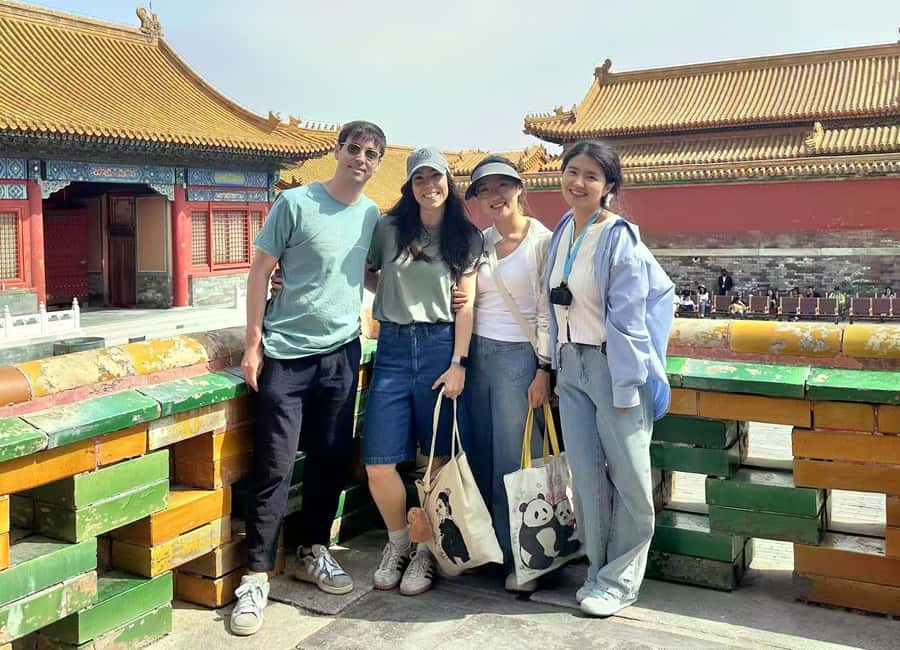
Midday red walls, clear stories. This Beijing Forbidden City experience turns major palace stops into a 4D-style lesson on imperial symbolism and court-life ideas, with an interactive format and edited photo and video memories for everyone. I especially like the way the guides keep you looking at specific details instead of just lecturing, and I like that the route stays focused on the classic central-axis highlights. One heads-up, the tour is timed and structured, so if you want total freedom to wander at your own pace, you may feel slightly herded.
You also get practical value for the price: entry to the Forbidden City is included, and you can choose a small-group decoder, a private decoder, or ticket-only. I’d consider one drawback upfront too: options A and B require an illustrated handbook during the trip, so bring your best “follow-along” mindset.
Forbidden City Decoder: what makes this tour different

This isn’t a stop-and-go checklist with generic facts. The Forbidden City experience is built around the idea of identity inside the architecture, using a mix of history, cultural practice, and symbolism tied to how the palace was designed and used. You’ll hear a 1420 to 1912 timeline through key turning points, and you’ll connect it to concepts like Yin-Yang balance and Five Elements theory.
What I like most is the rhythm. You get moments of guided explanation, then you’re pointed toward things to observe and figure out yourself as part of a game-style approach. That design makes the place feel less overwhelming, especially when you’re surrounded by huge halls and heavy stone details that can blur together.
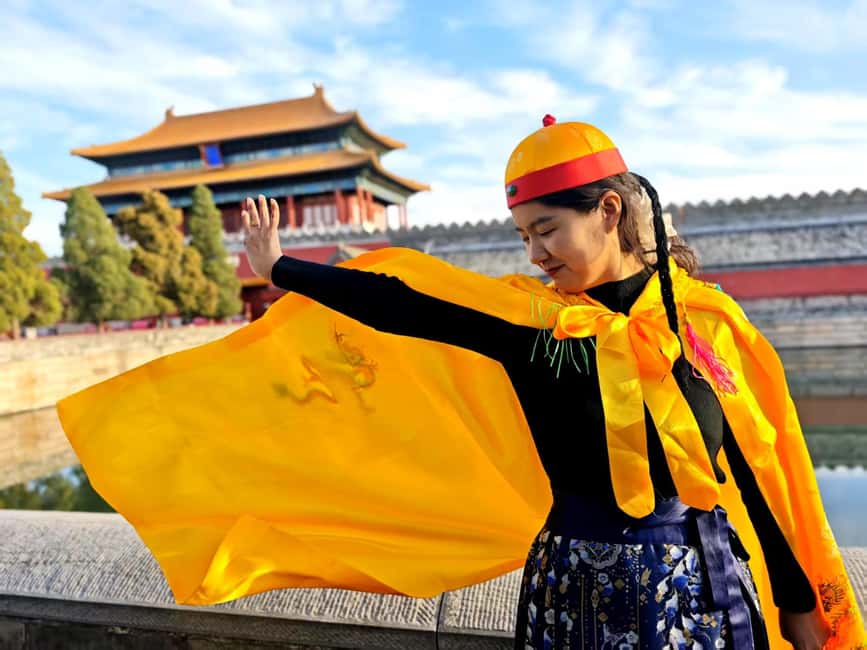
There’s also a memory package. The team prepares edited photos/videos during your visit, so you come away with more than your own phone snaps. In past tours, Coco has handled the “memories side” with an eye for photogenic angles and even filmed the whole walk with a bodycam style setup, while Molly has led the history portion and stayed patient with lots of questions.
Key takeaways before you book
- Central-axis focus: You walk through the core ceremony route instead of trying to cover every corner of the palace.
- Interactive learning style: Explanations alternate with observation tasks so the facts stick.
- Two-guide setup in practice: Molly leads history questions smoothly, while Coco concentrates on photo and video capture.
- 3 package choices: Small-group decoder, private decoder, or ticket-only for DIY exploration.
- Edited memories included: You get cleaned-up photos/videos, not just raw images from your camera roll.
You can also read our reviews of more city tours in Beijing


Choosing the right option, Small-Group Decoder vs Private vs Ticket Only
The biggest decision is how much guided storytelling you want.
Option A: Forbidden City Decoder Small-Group
This is the best match if you want a structured route with interaction, without paying for a fully private guide. It runs about 3.5 to 4 hours, meets at Donghua Gate, and starts either 8:30 or 12:30. The illustrated handbook is part of the experience, and the focus stays on iconic sites along the central axis.
Option B: Forbidden City Decoder Private tour
If you want flexibility in pacing and route choices, this one is built for it. It’s still central-axis focused, but you can request customized routing and timing, and it runs about 4 to 4.5 hours. Same meeting point and same handbook requirement.
Option C: Ticket Only
This includes the Forbidden City entry but skips the attraction storyteller. Pick this if you already have a strong plan for what to see, or if you prefer a guide you hire separately. It is also the simplest option if you just want the ticket handled.
If you’re torn, I’d think about how you handle big historical sites. If you like your brain “fed” with context while you walk, A or B will likely feel worth it. If you like to self-navigate with your own reading, C can work.
Meeting at Donghuamen and the route that keeps your bearings
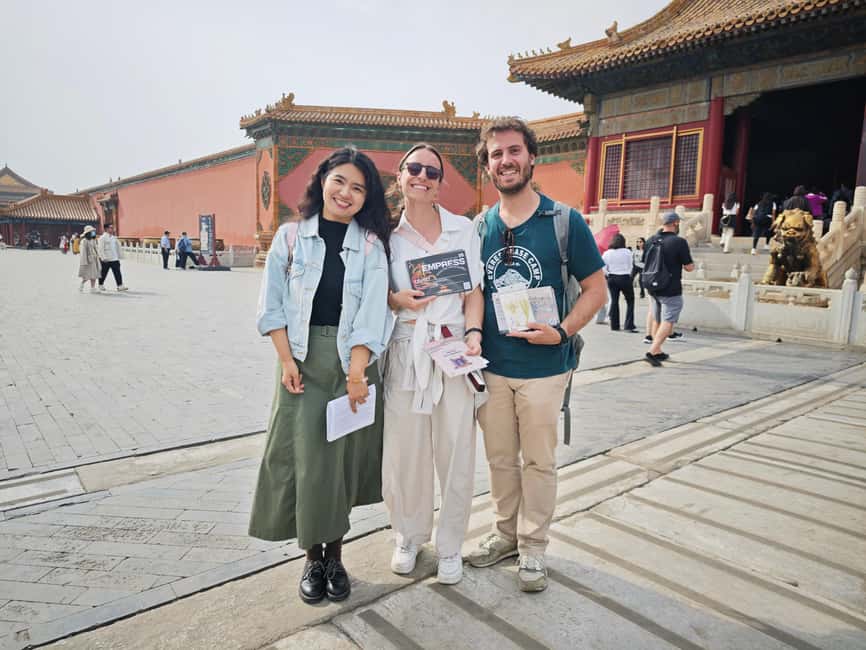
Your meeting point can vary depending on what you booked, with starting locations listed as 午门, Donghuamen Street, and 东华门. For the decoder-style options, you meet at Donghua Gate and start at 8:30 or 12:30.
Then you move through a classic order that helps you understand palace layout. You begin with gates and ceremony space, then shift into the main halls, and later move into residential and garden areas that show a different side of imperial life. The finish is at 神武门, which is a nice way to end without feeling like you’re doubling back the entire time.
One practical benefit of this structure: when the Forbidden City feels crowded or confusing, a fixed route helps you get your bearings fast. You spend less energy figuring out where to go next, and more energy understanding what you’re looking at.
Starting Gate to the Ceremony Zone: where power becomes design

The tour begins on the ceremony side with major threshold spaces.
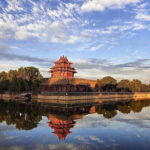
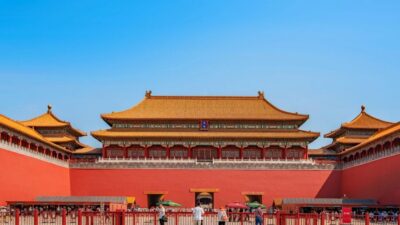
Meridian Gate
You get a guided orientation and then walk through the approach area. The Meridian Gate moment matters because it sets the tone: this is not just a collection of buildings. It’s a designed system where gates and walls reflect authority and hierarchy.



Gate of Supreme Harmony
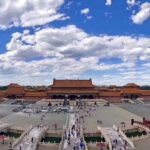
This stop is shorter, but it frames what comes next. Think of it as the portal into the heart of court ceremonies.
Hall of Supreme Harmony
This is one of the big anchors. You’ll get guided storytelling and sightseeing time here, which helps you understand why this hall is central to how power was performed. If you’ve ever felt “what am I looking at here?” in major monuments, this is the kind of stop where explanation makes a noticeable difference.
Hall of Central Harmony
This hall is a quick but meaningful contrast to the Supreme Harmony space. Even with limited time, having a guide point out differences helps you see the palace as a hierarchy of functions, not just giant rooms.
Hall of Preserving Harmony
You’ll get guided time and sightseeing here too, plus a scheduled break window that lets you reset before moving deeper. This pacing choice matters. The Forbidden City can fatigue you fast, even if you’re not walking that long.
Consideration: security checks at site entry can take time during peak periods, and that waiting time is separate from ticket lines. Plan for that reality so your 4-hour experience feels enjoyable instead of rushed.
The ceremony halls and the “Yin-Yang plus Five Elements” lens
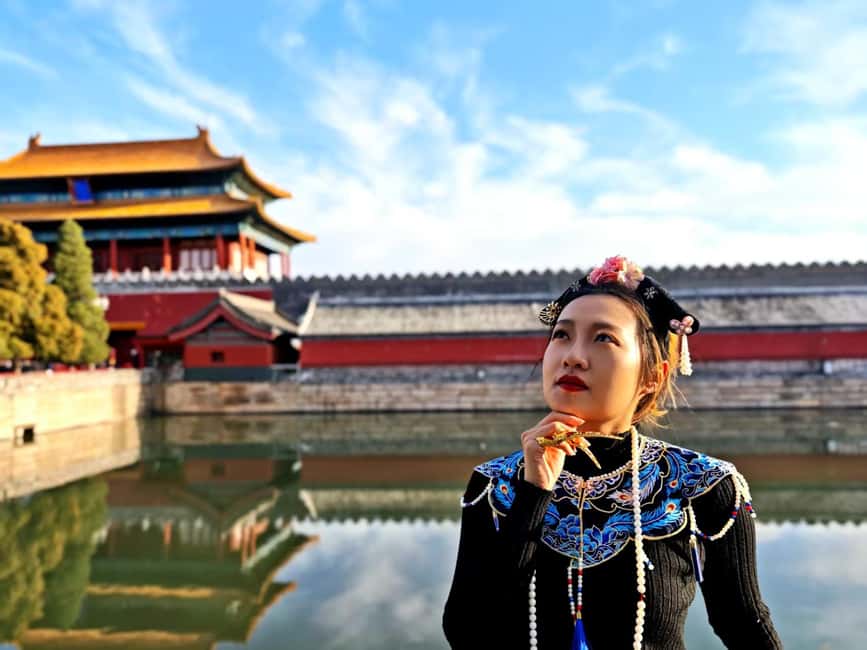
The heart of the decoder approach is how it connects architecture to ideas. Instead of just naming buildings, you get context for why the palace was shaped the way it was, using philosophy themes like Yin-Yang balance and Five Elements theory.
At the ceremony halls, you’ll hear the significance of how spaces relate to each other along the central axis. This is one reason the route is so specific. If you jump randomly around the Forbidden City, it’s easy to miss the “logic” that makes the design feel intentional.
You also get the history timeline through pivotal moments between 1420 and 1912, which helps you place these buildings in a wider story. Without that, it’s common to see a palace and think it’s all one era. With the timeline, the site starts to feel like a living stage with changes over time.
Break time and photo stop at Preserving Harmony
There’s a break and a photo stop around here, plus free time. It’s not a long sit-down break, but it’s timed well. You’ll likely be grateful for a pause after a concentrated cluster of halls.
Palace of Heavenly Purity and Hall of Union: where the story turns inward
After the main ceremony focus, the tour shifts into palace spaces that feel more controlled and personal.
Palace of Heavenly Purity
Guided time and sightseeing here run about 40 minutes. This is where the guided storytelling can make the space feel less like a museum room and more like an imperial concept. You’ll connect symbolism and court-life themes, based on the tour’s philosophy and cultural context.
Hall of Union
This one is shorter, around 10 minutes, but it acts like a bridge. It helps you transition from big public ceremony logic to a different kind of order.
Palace of Earthly Tranquility
This stop includes guided sightseeing around 20 minutes, and it’s also where the tour slows down for a formal refresh.
Tea ceremony and dessert at Earthly Tranquility
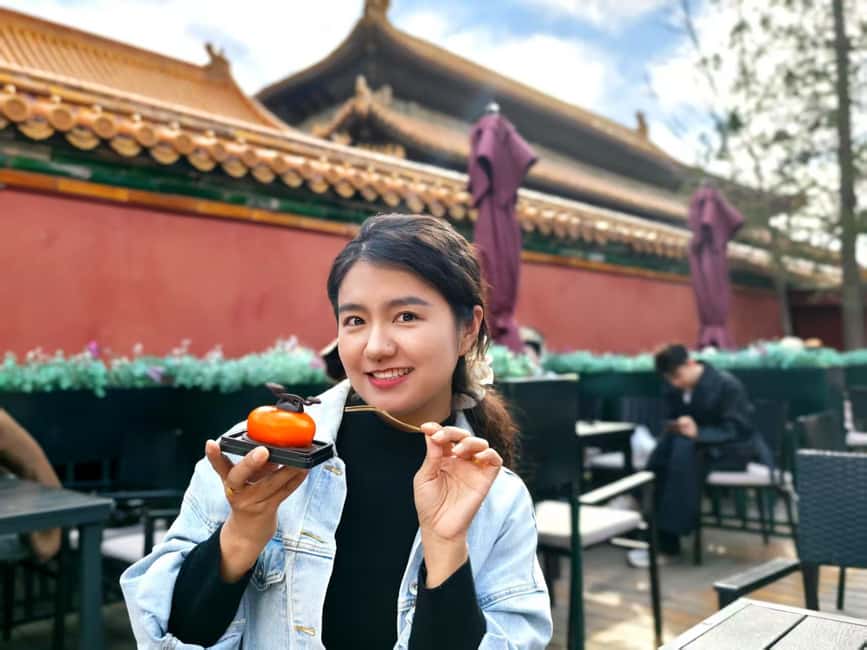
This is a standout part of the schedule because it gives your brain a reset while still keeping you in “imperial context mode.” There’s a break period with tea and dessert, plus a tea ceremony element and food tasting that runs about 1 hour.
I like this because it makes the Forbidden City visit feel like more than walking and reading. You get a sensory break that matches the cultural themes the guide is explaining, including ancient religion and sacrificial culture context mentioned as part of the tour design.
Practical note: drinks and snacks are listed as not included, so don’t assume you get unlimited extras. But the tea ceremony and food tasting portion is built into the experience, and that is usually enough to keep you comfortable for the final stretch.
Imperial Garden and the walk toward Divine Prowess and Shenwu Gate
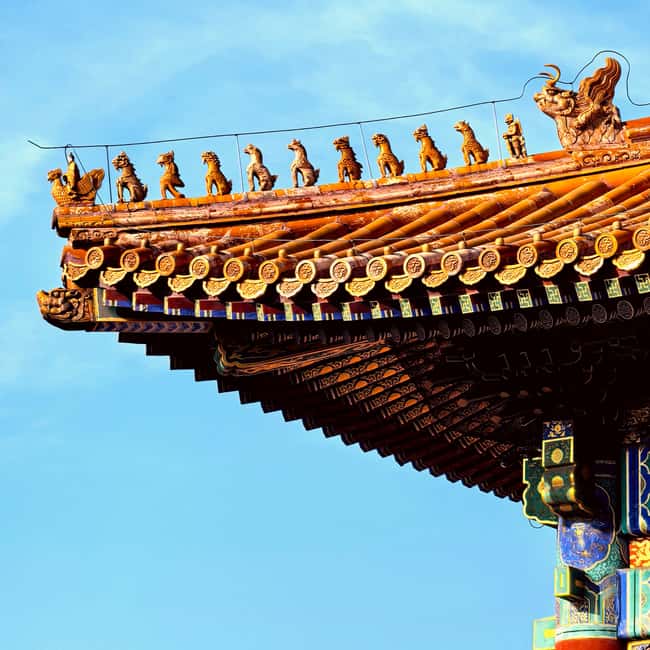
After the tea break, the tour heads back toward lighter movement.
Imperial Garden
You get about 15 minutes of guided sightseeing, plus a photo stop and a short free window around 10 minutes. Gardens in palace complexes often feel like a “breather space,” and here it helps you see how imperial life extended beyond ceremony halls.
Gate of Divine Prowess
This is a shorter guided stop, about 10 minutes. Gates here work as landmarks that help you understand orientation and the final approach.
Finish at Shenwu Gate
You end at 神武门. Ending on a gate like this helps you wrap your visit with a clear endpoint instead of leaving you to guess which direction to head next.
What’s included, and what you’ll still want to plan for
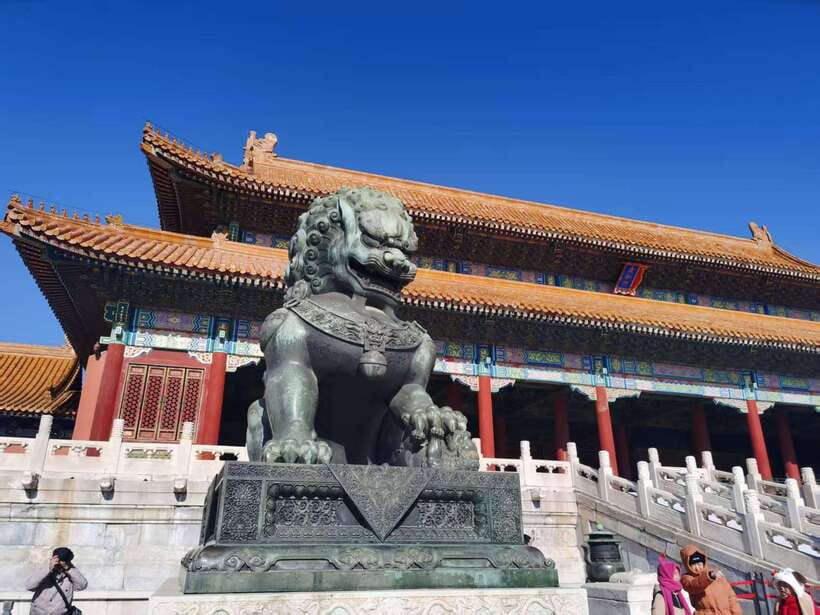
Here’s what the tour includes, based on the provided details.
Included
- English and Chinese-speaking guide
- Entry to the Forbidden City
- Edited photos
Not included
- Drinks and snacks
- Clock and jewelry museum entry ticket
That last item matters if you had your heart set on that specific museum inside the larger area. Since it is not included, you’d need to arrange it separately if it’s a must-do for your trip.
Also, you’ll need a passport or ID card for entry. Keep it accessible, because you’ll be asked for it at the sights entry.
Price and value: how $10 makes sense here
At about $10 per person, this tour’s value comes from three things.
First, entry to the Forbidden City is included. That turns the price into something closer to a guide service fee rather than a pure ticket add-on.
Second, you’re getting structured time. A 4-hour guided route is long enough to cover meaningful highlights but short enough that it won’t swallow your whole day. That balance matters in Beijing, where you’re often juggling several top sights.
Third, the memory component is part of the deal. Edited photos and guided photo positioning reduce your stress. You don’t have to chase perfect angles between crowds and architecture blocks. In practice, the guide team has used Coco in particular for capturing those moments and keeping video memory consistent, while Molly is the history lead who stays upbeat even when you ask lots of questions.
Is $10 cheap? Yes. Is it full service? It’s not trying to be a luxury private vehicle and a meal plan. But for a central-axis, guided, interactive Forbidden City visit with entry and edited memories, it’s strong value.
Practical tips so your 4 hours feel smooth
The Forbidden City can be a test of patience if you show up unprepared. These are the key things to plan around.
- Bring your passport or ID card for entry. Don’t leave it in a hotel safe.
- Expect mandatory security checks at entry points. Waiting time can be high during peak seasons, and it is separate from the ticket line.
- Tours typically run during rainy or snowy days unless heavy weather forces closures by the government.
- The tour is not suitable for wheelchair users, and people over 95 years are listed as not suitable. If that applies to you, look for an alternative format that’s designed around mobility.
- Avoid bringing weapons or sharp objects, and skip alcohol and drugs. Pets are not allowed, but assistance dogs are allowed.
If you’re planning your day, it helps to think about energy. The route is central-axis focused, but you’ll still be walking through stone courtyards and standing for explanations. Comfortable shoes are not optional.
Who should book this Forbidden City tour (and who should skip it)
This works best if you:
- Want a guide to explain why the buildings matter, not just what they are called
- Like interactive formats, games, and observation tasks that help facts stick
- Prefer a focused route over trying to cover everything alone
- Value photo and video memory support, not just your own phone shots
You might skip it if you:
- Want maximum unstructured freedom to browse slowly at your own rhythm
- Don’t want to use an illustrated handbook (required for options A and B)
- Plan to spend extra time at the clock and jewelry museum, since that ticket is not included
Should you book the Forbidden City Decoder?
I’d book it if you’re aiming for a high-impact first Forbidden City visit and you want the stories to make sense while you walk. The combination of entry, a structured central-axis route, English/Chinese guidance, and edited photos plus the interactive game style is a smart value package for a 4-hour slot.
If you’re already a palace-design nerd who can self-teach with your own guidebook, the ticket-only option can still make sense. But if you want the site to feel readable and connected, the decoder format is the clear pick.
In short: if you want your Forbidden City visit to leave you with understanding, not just photos, this is a strong call.
FAQ
How long is the Forbidden City experience?
The experience is about 4 hours. Option A is listed as 3.5 to 4 hours, and Option B is listed as 4 to 4.5 hours.
What is included in the tour price?
Entry to the Forbidden City is included, plus an English or Chinese-speaking guide and edited photos. Drinks and snacks are not included.
Do I need a handbook?
For Option A (Small-Group) and Option B (Private tour), an illustrated handbook is needed during the trip.
What are my start time options?
Start times are listed as 8:30 and 12:30 for the decoder options.
Where do I meet the guide?
Meeting points can vary by option. Starting locations listed include 午门, Donghuamen Street, and 东华门. The decoder options meet at Donghua Gate.
What do I need to bring for entry?
You should bring your passport or ID card, since it is required for sights entry.
Is the tour suitable for wheelchair users or very elderly travelers?
No. The experience is listed as not suitable for wheelchair users, and people over 95 years.
More City Tours in Beijing
More Tour Reviews in Beijing

Not for you? Here's more nearby things to do in Beijing we have reviewed




Forbidden City & Tiananmen Visits, compared.
 ★ 4.8Forbidden City Tour(Group/Private)-Tickets IncludedFrom $47,974 reviews
 ★ 4.8T-Square & Forbidden City Group or Private TourFrom $174,446 reviews
 ★ 5.0All-Inclusive Tour: Tiananmen Square, Forbidden City, Great WallFrom $1282,873 reviews
 ★ 5.04-Hour Small Group Tour to Forbidden City with Entry TicketsFrom $151,863 reviews
 ★ 4.5Tiananmen Square Registration Service(Ticket)From $31,704 reviews
 ★ 5.0Beijing Full Day Tours: Tiananmen Sq, Forbidden City, Great WallFrom $991,634 reviews
 ★ 4.6Tianmen Square, Forbidden City & Royal Museum ToursFrom $41,288 reviews
 ★ 5.0Beijing Forbidden City Ticket Booking (Optional: guide service)From $91,263 reviews
Browse the lists this tour appears in