
Reviewed · TICKETS
Beijing: Zhongshan Park Entrance Ticket
A peaceful altar park, in the heart of Beijing. This Zhongshan Park entrance ticket is interesting because you walk through an imperial temple-garden complex that was once the Shejitan Altar of Land and Grain, then later became a public park. I especially like the scale of the sacrifice buildings in the middle of a green neighborhood, and I also like the practical payoff of skip-the-line entry. The main drawback to watch for is admin details: if your passport name or numbers do not match the QR correctly, access control can slow you down.
This is a true self-guided experience. There is no tour guide and no hotel pickup or drop-off, so you meet at the Zhongshan Park Entrance Gate and go at your own pace.
You do get a 1-day valid ticket, and the park layout gives you plenty of chances to stop, look up, and read the space around you. Just be ready to handle your e-ticket QR carefully, because you must send passport info and an email or WhatsApp address so the QR code images can reach you.
Key things to know before you go
- Imperial altar roots: Zhongshan Park began as the Shejitan, built in 1421 for Ming and Qing emperors’ sacrifices.
- Skip-the-line entry: your QR ticket is meant to get you through faster at the gate.
- Entrance-only: no guided tour, no hotel pickup, and no meals are included.
- Passport required: bring your passport for identity matching at entry.
- Not just temples: there are scenic corners like Yu Garden for goldfish viewing and a long-running teahouse.
- Accessible: wheelchair access is listed for this ticket.
Zhongshan Park Entrance Ticket: what you’re really buying
You are not buying a guided tour package here. You are buying one thing: admission to Zhongshan Park, with a QR code that is designed for faster entry. That distinction matters, because the park itself is where the value is.
If you like going slow, wandering, and choosing your own “what do I want to see next” moments, this works well. You can focus on the parts you care about most, like the altar structures and ceremonial architecture, then add the quieter stops like the tea area when you feel like taking a break.
If you are the type who needs someone to translate details and explain every building, you may feel under-supported. The ticket does not include a tour guide, so you’ll rely on your own reading and simple observation. The good news is that the park is readable in a practical way. Even without a guide, the layout and building functions make sense.
A few more Beijing tours and experiences worth a look

Where Zhongshan Park fits in central Beijing
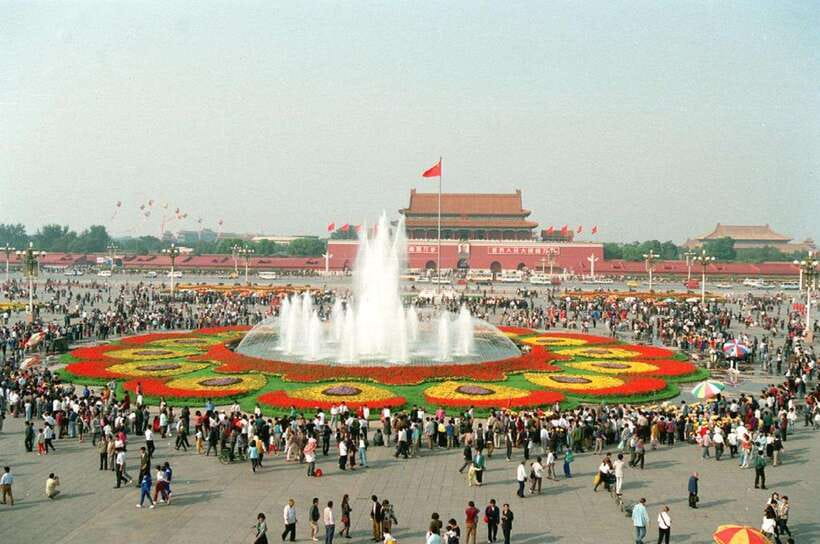
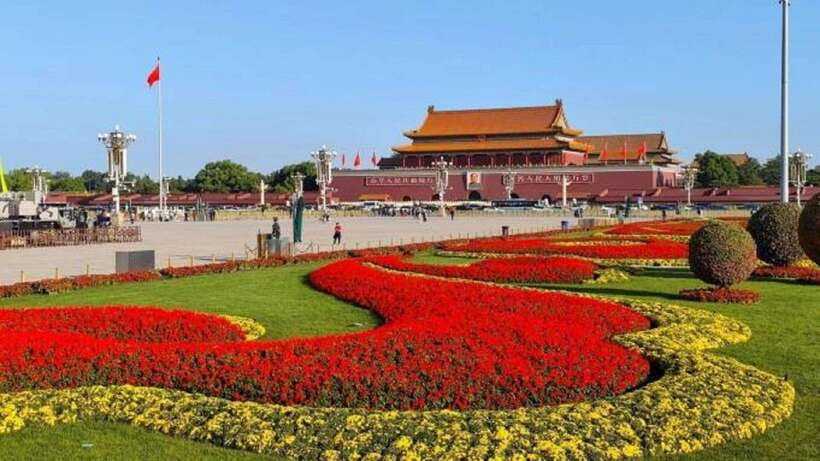
Zhongshan Park sits in the center of Beijing, west of Tian’anmen Square. That location makes it an easy add-on to a day built around major sights, without forcing you into complicated transit plans.
The park covers 23.8 hectares, which is big enough to feel like a real walk, but not so huge that you feel lost forever. The atmosphere is also different from many “checkpoint” attractions. This is a temple and altar garden setting, so your time feels less like a sprint and more like a stroll with landmarks.
You can also use the park as a mental reset. After time around big civic architecture, stepping into a space that once served imperial rituals, then became a public garden, gives your day some emotional variety. Even if you only see a few key areas, the shift in mood is worth it.
From Shejitan to Zhongshan Park: the story under your feet

This park is not just pretty. It has a clear ceremonial purpose in its design and major buildings.
Originally, the site was the Shejitan, also known as the Altar of Land and Grain. Records place its construction at 1421, and it followed a system described as left ancestral temple and right altar. In plain terms, that means this was a core imperial space for state-level meaning, not a casual garden.
During the Ming and Qing dynasties, emperors offered sacrifices to the gods of earth and agriculture. The point was symbolism: imperial power tied to national agricultural success. That theme is helpful while you walk, because it gives context to why the altar structures are so monumental and why the park focuses on ritual architecture rather than only scenic views.
In 1913, it was converted into a public park called Central Park. In 1928, it was renamed Zhongshan Park to honor Sun Yat-sen. So you’re walking across a site that shifted from emperor-only ritual space to shared public recreation.
Ticket logistics that can make or break your entry time
Since this is an entrance ticket with QR entry, the logistics are the main “gotcha.” Plan to book at least one day in advance. Then, after booking, you need to provide each visitor’s full name, passport number, and contact details.
The QR is sent electronically, and images cannot be received via messages. That means you need a valid address, such as an email, so you can actually receive the QR code images. WhatsApp is also mentioned as a receiving option, as long as you provide the correct contact.
Bring your passport. Even if you have the QR code, passport matching is part of the entry process. I like that it’s straightforward, but it also means you should double-check that the passport details you sent match exactly what is on your passport.
One practical caution from real-world entry experience: if the voucher details do not line up with what gate staff expect, you might end up spending extra time at the access control point trying to sort it out. The fix is boring but effective, send correct info the first time, and keep your passport ready in hand.
Entering through the Zhongshan Park Entrance Gate and picking your route
Your meeting point is the Zhongshan Park Entrance Gate. From there, you can treat the park like a self-guided loop, choosing a route based on what you want most.
Here’s a simple way to plan it without overthinking. Start with the central ceremonial buildings first, because those are your anchor sights. Then shift toward the more relaxing corners, like the goldfish viewing area and the teahouse.
That order helps because it keeps your energy level high for the main architecture. Once you’ve seen the altar complex elements, you’ll have better context for what you notice later. The park feels more cohesive when you understand the ceremonial function before you move into the recreational details.
Also, if you are trying to beat crowd flow, think about when you arrive. The ticket is meant to skip the line, but it does not remove all human traffic. You still need a little patience for gates and checks.

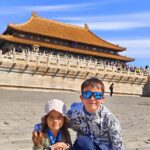
The Five-Color Soil Altar and the sacrifice buildings
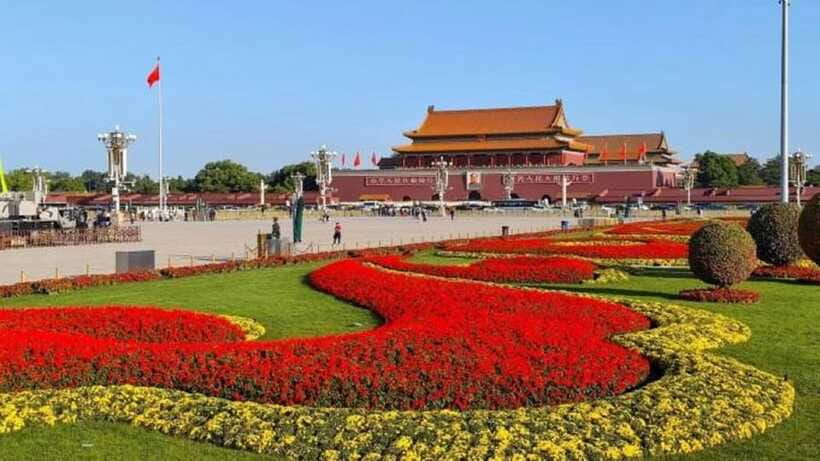
The most “this is why the park is famous” area includes several ancient structures tied to ritual function. As you explore, look out for the Five-color Soil Altar, the Sacrificial Kitchen, the Sacrificial Storehouse, and the Animal Sacrifice Pavilion.
Why these matter: they are not random old buildings. They are arranged to support the story of imperial sacrifice rituals. Even if you do not read every sign, you can sense how the space is designed for ceremony.
The Five-color Soil Altar is a standout because it connects directly to the idea of earth and agriculture. The term “soil altar” is not just poetic. It’s pointing you to the relationship between ritual, land, and food production, which is exactly the theme behind the Shejitan origin.
The Sacrificial Kitchen and Sacrificial Storehouse add the practical side. Rituals require preparation and resources, and these buildings reflect that logic. Then the Animal Sacrifice Pavilion gives you a final ritual link to the broader ceremonial purpose of the complex.
This is a place where looking slowly pays off. Instead of rushing from one photo spot to another, pause long enough to notice the monumental feel, the way buildings hold attention, and the fact that this is a former state ritual site now sitting inside a public park.
Yu Garden goldfish watching: a calmer counterpoint
After the heavy ceremonial architecture, Yu Garden offers a different kind of payoff. Yu Garden is described as a scenic spot where visitors can watch precious goldfish.
This is the kind of stop that works well when you want to reduce the “museum pace” and shift back into everyday enjoyment. Watching fish gives your eyes a rest from stone surfaces and large structures. It also adds variety to your route, so your day does not become only altar after altar.
If you like parks that let you take micro-breaks, Yu Garden is a good mid-visit goal. I’d place it after you cover the main buildings, because it feels like the park’s way of giving you permission to slow down.
Also, goldfish viewing is a simple, low-stress activity. You do not need translation skills to enjoy it, and it is easy to fit into a longer walk without committing a huge chunk of time.
Laijin Yuxuan teahouse in the eastern park area
Another memorable stop is the century-old teahouse, Laijin Yuxuan, located in the east of the park. A historic teahouse is more than a snack stop. It’s a chance to experience how the park functions as a lived-in place, not just an attraction.
Think of it as a transition point. After you’ve walked the ceremonial core, a tea break lets you absorb what you saw and then return with fresh eyes. Even if your tea itself is not the main event, the act of pausing in a traditional teahouse setting creates a more complete park visit.
If you are traveling with people who need breaks, this is also a friendly meeting point. You can tell everyone to regroup around the teahouse area without everyone feeling like they are missing a critical sight.
A practical one-day approach for independent explorers
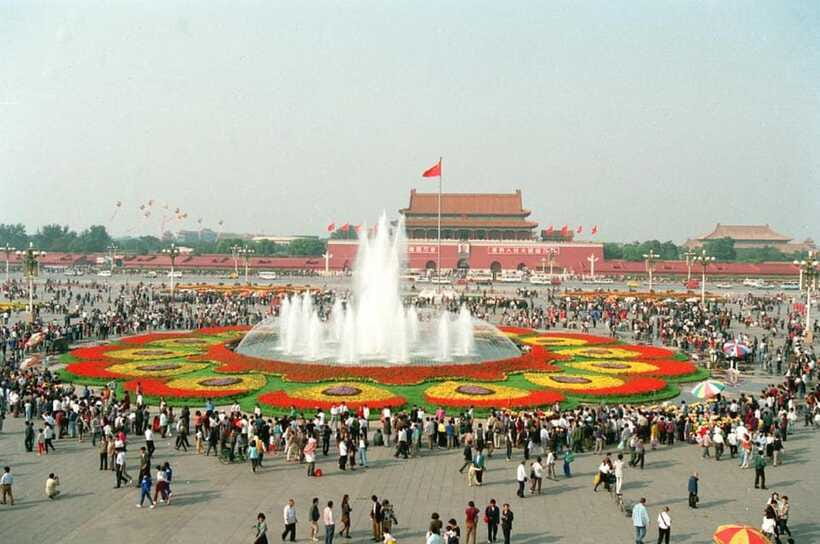
This is a 1-day valid entrance ticket, and the park supports an easy self-guided visit. Since there is no scheduled guided itinerary included, you should build your own order of operations around what you want most.
A realistic plan is to:
1) Arrive at the Zhongshan Park Entrance Gate and enter.
2) Focus on the ceremonial buildings and altar-related structures first.
3) Shift toward the calmer scenic spot, including Yu Garden for goldfish viewing.
4) Finish with Laijin Yuxuan in the east when you want a pause.
If you are combining Zhongshan Park with other central sights, the “west of Tian’anmen Square” location is your friend. You can anchor your day around central Beijing, then let the park act like a softer intermission between big landmarks.
Also, because meals are not included, plan to bring water or plan to buy snacks as you go. At minimum, bring what you need to avoid turning your walk into a fatigue problem.
Price and value: is $12 worth an entrance-only ticket?
At about $12 per person, you are paying for one simple thing, admission to Zhongshan Park. There is no guided tour, no hotel pickup and drop-off, and no meals. That sounds basic, but it can be good value if you want independence and you care more about access than explanations.
Here’s the value logic I’d use. If you would visit the park anyway, the ticket cost is essentially your price for convenience and an organized entry process with QR. The skip-the-ticket-line feature also helps, even though it does not eliminate all gate checks.
Where the price might feel less attractive is if you want a full-service experience with narration and translation. Since no tour guide is included, you’d be paying for entrance access only, and your enjoyment will depend on how you like to explore on your own.
In other words, this is not a “see everything in one package” deal. It is a “you’re in the park faster, now enjoy it” deal.
Who this Zhongshan Park ticket suits best
This ticket fits best if you:
- Prefer self-guided sightseeing over structured tours
- Like historical architecture, ritual spaces, and ceremonial design
- Want a break from nonstop landmarks while still doing something meaningful
- Travel light enough to manage passport and entry paperwork smoothly
It may not be ideal if you:
- Want a guide to explain the significance of specific buildings as you walk
- Expect hotel pickup or a fully planned route with timing and transport support
- Are likely to misplace emails or WhatsApp details, since QR delivery depends on accurate contact information
Wheelchair accessibility is listed, so it should work for visitors using mobility support, but you still should plan your movement for a large park space (23.8 hectares is not tiny).
Should you book this Zhongshan Park entrance ticket?
Yes, book it if you want a straightforward, independent way into a park that has real ceremonial roots and clear physical landmarks. The value is strongest when you arrive prepared with accurate passport details and you treat the visit as a self-guided walk through an imperial altar complex turned public garden.
Skip the booking if you want a guided explanation, because this ticket does not include a tour guide. Also, if your travel setup is chaotic and you might not carefully provide your full name, passport number, and a working email or WhatsApp, you could end up losing time at access control.
If you are organized, this is a solid, low-friction entry plan into a uniquely Beijing mix of altar architecture, scenic pockets, goldfish watching, and a historic teahouse.
FAQ
Do I get a guided tour with this Zhongshan Park ticket?
No. This is only an admission ticket. It does not include a tour guide.
Is hotel pickup or drop-off included?
No. Hotel pickup and drop-off are not included.
Where do I go for the meeting point?
You meet at the Zhongshan Park Entrance Gate.
What do I need to bring to enter?
Please bring your passport.
How do I receive the ticket QR code?
After booking, you must send your details (full name, passport number, and contact details). You also need to provide a valid email or WhatsApp address so the electronic ticket QR code images can be sent to you.
Is the ticket valid for more than one day?
No. It is valid for 1 day.
Is wheelchair access available?
Wheelchair accessibility is listed for this ticket.
How far in advance do I need to book?
You must book at least one day in advance.
More Tickets in Beijing
More Tour Reviews in Beijing

Not for you? Here's more nearby things to do in Beijing we have reviewed



Tickets, compared.
 ★ 4.8Forbidden City Tour(Group/Private)-Tickets IncludedFrom $47,974 reviews
 ★ 5.0Mutianyu Great Wall Daily Tour with Ticket & LunchFrom $183,056 reviews
 ★ 5.04-Hour Small Group Tour to Forbidden City with Entry TicketsFrom $151,863 reviews
 ★ 4.5Tiananmen Square Registration Service(Ticket)From $31,704 reviews
 ★ 4.6The Temple of Heaven or Summer Palace Entry TicketFrom $71,286 reviews
 ★ 5.0Beijing Forbidden City Ticket Booking (Optional: guide service)From $91,263 reviews
 ★ 4.9Mutianyu Gt Wall Trip, Depart 8-10am Bus w/ TicketsFrom $181,256 reviews
 ★ 5.0Forbidden City&T-Square Small GroupTours w/ ticket(Eng/Esp Guide)From $11995 reviews