
Reviewed · TEMPLE OF HEAVEN EXPERIENCES
Beijing: Temple of Heaven Park Ticket with guide(optional)
A quiet walk through power and belief. The Temple of Heaven Park gives you that rare mix of big, symbolic architecture and calm paths with ancient cypress trees. I love that the route focuses on the real ceremony spaces, especially the Hall of Prayer for Good Harvests, while also explaining the old idea of a round heaven and square earth. The other thing I really liked is how practical the timing is, with clear park and attraction hours you can plan around.
One possible drawback to keep in mind: your booking may include only the park, not every inner attraction. The fix is simple, but you need to confirm what’s included before you go, since some entry areas can cost extra.
Key things you’ll notice
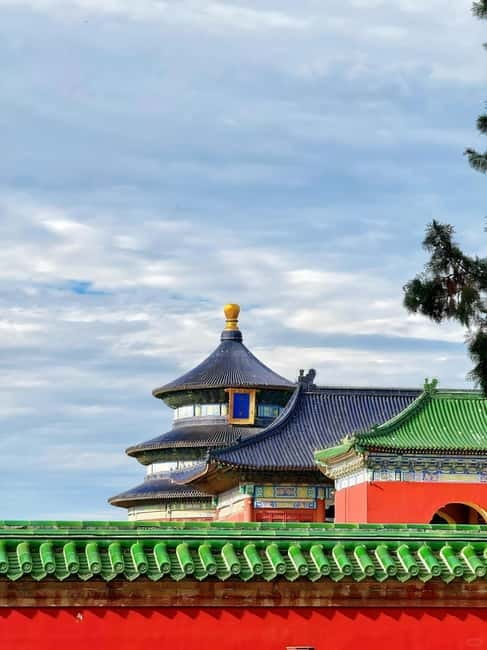
- Iconic Hall of Prayer for Good Harvests and the ceremony logic behind it
- Serene park pacing, with lots of walking time and space to breathe
- Round heaven, square earth concepts shown through the layout
- The inner sites check-in focus, like the Circular Mound and Palace areas
- Small group size (up to 10) for a smoother visit
- QR code confusion risk, because the QR code is not the actual ticket
Temple of Heaven Park, the “ceremony city” you can still enjoy slowly
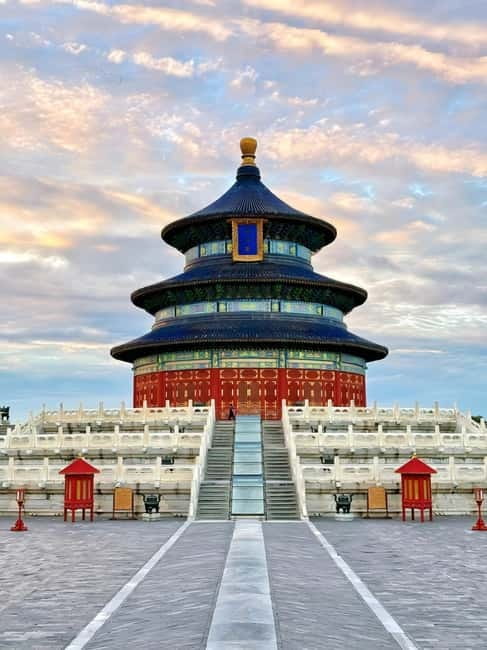
Beijing’s Temple of Heaven is famous for a reason. Even if you know nothing about imperial ritual, you can feel the order in the place. This is not a random cluster of buildings. It’s a carefully planned complex where the layout itself is part of the message. You’ll see it immediately once you start moving through the grounds: walls, altars, paths, and buildings that all point you toward the main ceremony spaces.
The park is huge, 273 hectares, and it’s divided into two main zones: the Inner Altar and Outer Altar. The north side is circular and the south side is square, which reflects the ancient Chinese belief in a round heaven and square earth. You can treat this as a photo stop, or you can treat it as a guided “how the emperor thought” lesson. With a guide optional and a small group size, you’ll usually get the second experience.
And because it’s a working park, it doesn’t feel like you’re trapped in a museum hallway. You can slow down, notice the cypress trees, and breathe between the main sights. That matters, because Temple of Heaven is one of those places where being rushed ruins the effect.
A few more Beijing tours and experiences worth a look

What your ticket actually covers, and why it matters
This is the part I want you to get right early. The activity price is $39 per person, and it includes Temple of Heaven Park tickets plus an information service fee. But what you can enter beyond the park gates depends on timing.
Here’s the rule to remember:
- If you buy the booking before 16:30, it’s described as a combined ticket (with an exception on Monday) that includes entry of the attractions inside the park.
- Other times are described as basic tickets, which can mean you’re paying extra at the site for certain attraction entries.
So, if you care about seeing specific inner buildings and spaces, don’t assume every booking includes everything. Check what you’ll be able to enter on the day you plan to go. It’s the difference between a smooth visit and a frustrating detour at the ticket desk.
Also, don’t trust the GetYourGuide QR code to be the actual ticket. The QR code is not the ticket itself. The real entry steps depend on what’s in your confirmation email or messaging. You’ll need your details ready, especially because name and passport number are essential.
Getting there: metro choices that save time
Getting to the Temple of Heaven area is straightforward if you pick the right metro stop. You have two options listed:
- Metro Line 5, get off at Temple of Heaven East Gate
- Metro Line 8, get off at TianQiao
Both are workable. My practical advice: choose the stop that makes your onward walk the most direct from where you’re staying, then give yourself a little buffer for street crossing and crowds around the gates. If you’re traveling during a busy local period or when schedules are unusual, plan to arrive a bit earlier.
The small-group format, what it feels like on the ground
This is designed as a small group experience, limited to 10 participants. That size tends to make a difference at Temple of Heaven, where you don’t just stand and look. You move between ceremonial spaces, and you want your group to stay together without feeling like a herd.
You can also choose a live English guide optional. Even when you’re comfortable reading on your phone, a guide can help you connect the symbolism to what you’re seeing right in front of you. Without that, Temple of Heaven can still be beautiful, but it’s easier to treat it like a scenic walk. With the guide, it turns into a story.
Accessibility is also mentioned as wheelchair accessible, so if mobility is a factor, you should still be able to plan around the route.
Your on-the-ground stops: the meaning behind the main sites
Your check-in focus is on several key ceremony-related spots. The overall plan centers on the iconic Hall of Prayer and the surrounding ritual architecture.
Below is what to expect from each site, and what to watch for while you’re there.
You can also read our reviews of more guided tours in Beijing



The Hall of Prayer for Good Harvests, the big reason people come
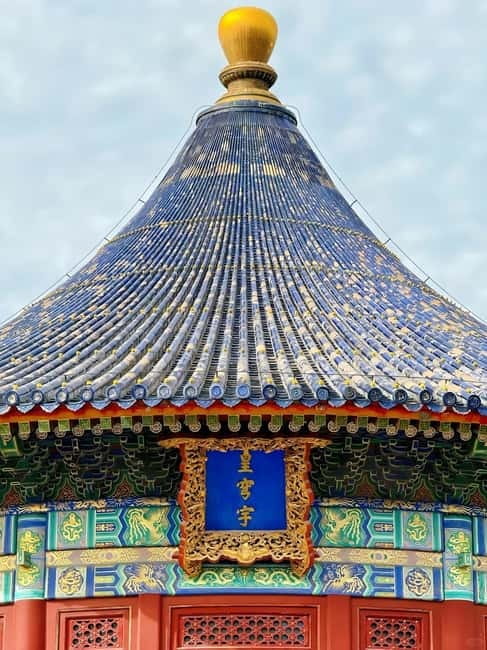
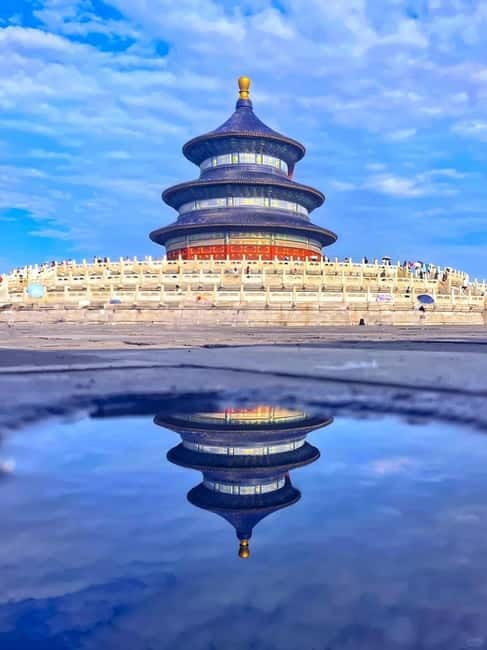
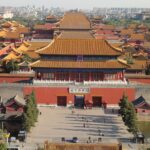
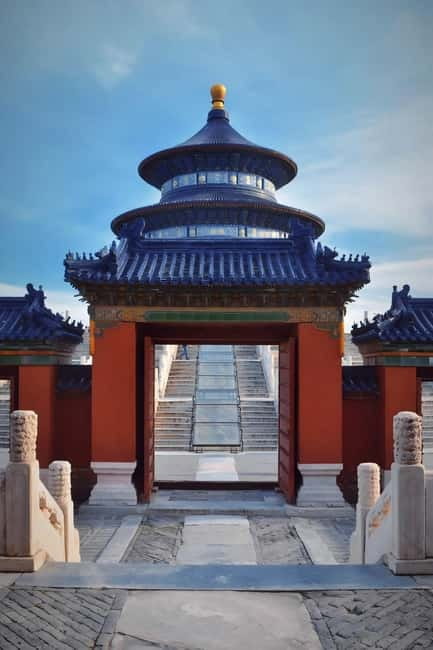
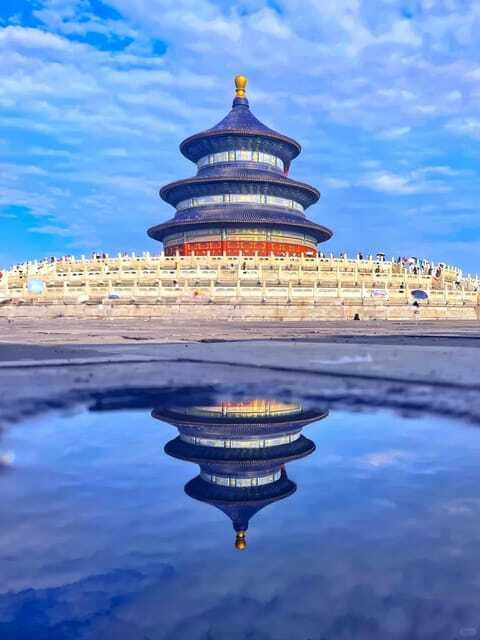
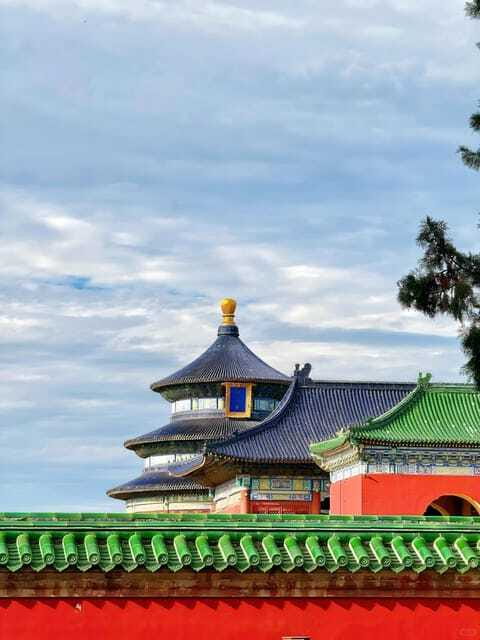
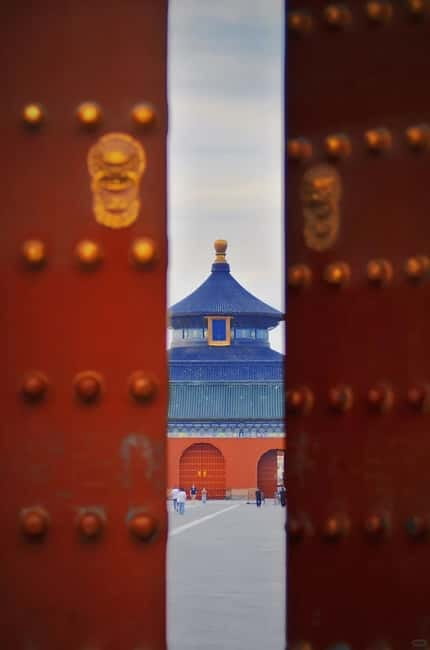
This is the showpiece: the Hall of Prayer for Good Harvests. When you first see it, you’ll get why it’s used as a symbol of Beijing. The building sits in a meaningful setting, not just as a standalone monument. From the layout to the way you approach, you’re being guided toward the idea of imperial communication with heaven.
What I like about focusing on this hall as the center of the visit is that it turns architecture into something you can understand. You’re not just looking at a roofline. You’re seeing the intended stage for ceremonies tied to farming and harvest prayers.
The drawback, if you’re photo-hunting, is that you’ll share the view with other people. That’s normal here. Your best move is to take a wide establishing shot, then pause to look at details while your group keeps moving.
The Altar of Prayer for Good Harvests and the ceremony logic
Closely connected to the hall is the Altar of Prayer for Good Harvests (listed for spring prayers). This is where the idea of worship is grounded. Even if you don’t remember every term, you’ll understand the point: this site was designed for a specific type of ritual tied to seasonal belief.
For me, the value is in the explanation. The altar is not just a platform. It’s part of the system that links the building and the environment into one coherent whole.
The Circular Mound Altar and the winter solstice angle
Next up is the Circular Mound Altar, associated with worship on the Winter Solstice. The “circular” part matters because it ties directly to the larger worldview built into the Temple of Heaven complex.
If you’re the type of traveler who likes structure, this is a satisfying stop because it shows the theme in a physical way. It’s also a nice contrast to the hall, since one emphasizes architecture you can walk up to while the other emphasizes a more symbolic spatial idea.
The Palace of Abstinence, the emperor’s waiting room before ceremonies
The Palace of Abstinence is listed as a stop where the emperor stayed before ceremonies. That detail changes how you view the place. It’s not only about public ritual spaces. It’s also about the private preparation and timing that comes right before the moment of worship.
Even if you don’t get a full narrative during the visit, you can think of this as the emotional hinge. The ceremony moment is about heaven, but the human side is in the waiting.
The Divine Music Office, rehearsals you don’t usually picture
The Divine Music Office is described as the place where ceremonial music and rituals were rehearsed. This is the stop that often surprises people, because they picture altars and halls, not practice rooms.
If you’re into performance or sound, this is one of the more interesting angles. You’ll likely get a clearer picture of how complicated ritual is when you’re told that the music was rehearsed, not improvised.
Time on the grounds, and why your season matters
Your visit timing is spelled out by season. In the colder part of the year, park opening is earlier and attraction times shift too.
From the provided schedule:
- 11.01 to 3.31 (second year): park 6:30 to 21:00, attractions in the park 8:00 to 16:30
- 4.01 to 10.31: park 6:00 to 21:00, attractions in the park 8:00 to 17:30
This matters because your experience time is listed as 3 to 8 hours. Some people will treat it like a half-day. Others will use the park time to linger. If attractions close earlier in your season, you’ll want to keep your focus on the inner sites so you don’t end up spending your best daylight at the outer edges.
How long should you plan for, 3 hours or 8?
The itinerary includes a guided tour labeled at 3 hours, but the overall duration is flexible up to 8 hours. That’s a big range, and here’s how to interpret it for your planning.
- If you want the core story and the main ceremony spaces, plan around the 3-hour guided portion and then decide if you have energy to keep exploring.
- If you like taking breaks, watching locals in the park, and photographing calmly, aim closer to a longer visit.
A practical hint: if you arrive with low energy, you’ll still enjoy Temple of Heaven most when you don’t overstuff your day. Pair it with something nearby rather than forcing a sprint to another far site right after.
What to bring, and the one detail that can ruin your entry
Bring your passport. Your name and passport number are essential for ticket handling, and that ties back to the QR code note. The QR code is not the ticket itself, so you want your identity details ready and accurate.
Also keep your day clean and simple. Alcohol and drugs are listed as not allowed, and fireworks are not allowed. That might sound obvious, but it’s worth remembering if you bought something on the way.
If you’re stuck at the ticket desk: how to avoid the common problem
Two of the key issues you want to protect yourself from are:
1) Not receiving tickets in the form you expect, then having to buy on-site.
2) Finding out your ticket only covers the park, and the inner attractions cost extra.
The good news is the activity explicitly says tickets can be bought on-site if you let the team help you, and the service-fee is included for that option.
My advice: before you show up, check your email or WhatsApp message for what the confirmation says you should use. Then, have a calm plan. If you hit a snag, ask for help early rather than waiting until you’re standing at a closed gate.
Price value: is $39 worth it?
At $39 per person, you’re paying for:
- Temple of Heaven Park tickets
- An information service fee
- Plus the option of a live English guide depending on what you chose
If your ticket purchase includes the inner attractions, the value becomes strong because you reduce your risk of missing key buildings and you save time negotiating entry.
If your booking is basic and you end up paying extra for attractions, the total cost climbs, and the deal becomes less attractive. That’s why the “before 16:30 combined tickets” detail is so important.
Think of this tour as a “time and entry simplifier” more than a miracle worker. If you confirm what’s included and align your visit to the attraction hours, it’s easy to feel like you got your money’s worth.
Who this is best for
This fits you well if:
- You want a guided walkthrough of key sites, not just random wandering
- You like symbolic architecture and want the meaning explained
- You prefer small group movement, up to 10 people
- You can use English support and want practical help with entry
It might be less ideal if:
- You’re trying to minimize walking time, since Temple of Heaven is a large grounds experience
- You’re very sensitive to ticket inclusion details and hate any chance of “extra fee at the site”
What I’d do differently, to make your day smoother
Here’s my no-drama checklist based on the common pain points:
- Verify what your ticket includes for inner attractions, not only the park gate
- Arrive a bit before the main attraction window so you don’t feel rushed
- Keep your passport handy and double-check that the name and passport details match the booking
- Plan your metro route ahead using Line 5 or Line 8 stops listed above
- If you can, choose a pace that leaves breathing room for the park atmosphere and cypress-lined paths
One more note from experience with this kind of China sightseeing planning: entry gates and transport patterns can change when there are local events. You’ll be happier if you keep an eye on the suggested gate and don’t assume it will be exactly where you guessed.
Should you book this Temple of Heaven tour?
Book it if you want a straightforward, English-friendly way to cover the Temple of Heaven’s main ceremony spaces with a small group and you’re willing to double-check ticket inclusion.
Skip or rethink it if:
- You hate any ticket uncertainty and want to handle everything yourself with no service help
- You are going on a day that you suspect could affect access timing, and you’re not willing to adjust
If you book carefully, align with the attraction hours for your dates, and confirm whether inner attractions are included, this is one of the better ways to make Temple of Heaven feel like more than a pretty park.
FAQ
Do I need a passport for this activity?
Yes. Your name and passport number are essential for ticket handling.
Is the QR code from GetYourGuide the actual ticket?
No. The QR code is not the actual ticket, so you should check your email or WhatsApp for the correct entry information.
What is included in the price?
It includes Temple of Heaven Park tickets and an information service fee.
Is food included?
No. Food is not included.
How long is the experience?
The duration is listed as 3 to 8 hours, depending on the starting time and your pace through the park.
Is a guide included, or is it optional?
A live English guide is optional (English language is listed). Your specific selection depends on what you booked.
How big is the group?
It’s a small group limited to 10 participants.
Where should I go by metro?
One option is Metro Line 5 to Temple of Heaven East Gate. Another is Metro Line 8 to TianQiao.
Which sites are the check-in stops?
The listed check-in sites are the Altar of Prayer for Good Harvests, the Circular Mound Altar, the Palace of Abstinence, the Divine Music Office, and the Hall of Prayer.
What are the park and attraction hours?
For 11.01 to 3.31, the park runs 6:30 to 21:00 and attractions run 8:00 to 16:30. For 4.01 to 10.31, the park runs 6:00 to 21:00 and attractions run 8:00 to 17:30.
Is the attraction entry always included with the ticket?
Not always. Bookings bought before 16:30 are described as combined tickets that include entry of attractions (except Monday). Other times are described as basic tickets.
More Guided Tours in Beijing
More Tickets in Beijing


More Tour Reviews in Beijing

Not for you? Here's more nearby things to do in Beijing we have reviewed



Temple of Heaven Experiences, compared.
 ★ 4.6The Temple of Heaven or Summer Palace Entry TicketFrom $71,286 reviews
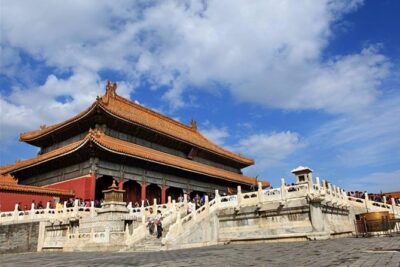 ★ 4.0Beijing Classic Full-Day Tour including the Forbidden City, Tiananmen Square, Summer Palace and Temple of HeavenFrom $99610 reviews
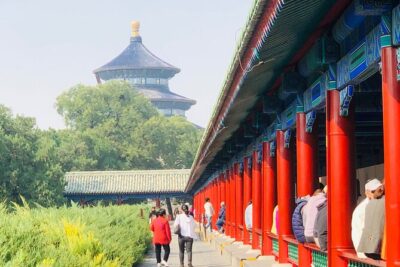 ★ 5.0Temple of Heaven TicketFrom $8482 reviews
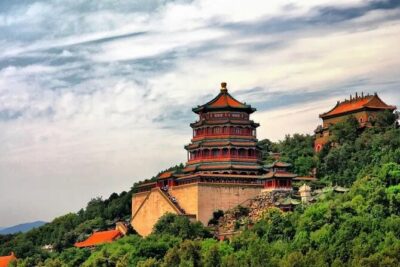 ★ 5.0Temple Heaven, Lama Temple, Summer Palace & Peking Duck Bus TourFrom $56377 reviews
 ★ 4.7Temple Heaven, Summer Palace, Lama Temple, Hutong Bus TourFrom $58319 reviews
 ★ 4.6Entry to Temple of Heaven ParkFrom $7314 reviews
 ★ 5.0Temple of Heaven, Summer Palace, Lama Temple, Hutong ToursFrom $99311 reviews
★ 4.9Temple of Heaven TicketFrom $8271 reviews
★ 5.0Temple of Heaven, Summer Palace, Lama Temple, Hutong ToursFrom $99311 reviews
★ 4.9Temple of Heaven TicketFrom $8271 reviews
Browse the lists this tour appears in