
Two wheels make Beijing click. This Central Axis ride is built around the Dragon’s Backbone feng shui idea, so you travel in a straight line through the empire’s big set pieces. I love how it links Tian’anmen Square with the Forbidden City entrance details, and I also love the added hutong side streets for everyday life. The one watch-out is bike fit, since one review noted the bicycles can run small.
You also get a clear, practical geography lesson. The tour runs along the 7.8 km axial line that designers used for order and power, starting at the Bell and Drum Towers in the north and pushing south toward the Imperial Palace area and Yongdingmen Gate. In three hours, that structure turns a pile of famous landmarks into one flowing route.
One more thing to know: tickets are not included. You’ll be seeing the key sights and architecture from the route, but if you want to go inside, you should plan to pay separately on your own.
Key highlights that make this ride worth it
- Dragon’s Backbone Central Axis routing keeps the landmarks logically connected, from north towers down toward the imperial palace area
- Tian’anmen Square and the Mao portrait gate give you the most recognizable Beijing photo moments, set in their full urban context
- Forbidden City formal entrance and corner turrets look different on a bike, because you can shift position and keep moving
- Hutongs and ancient commercial streets add texture beyond the official monuments
- Jing-hang Canal scenery shows Beijing’s long-distance waterways and the shops and temples beside them
Why the Beijing Central Axis is the smartest way to tour the city
Beijing’s Central Axis is not just a road. It is a planned axial line that strings together the empire’s most important architecture, the kind of city design meant to communicate order and authority. The tour uses this idea in a fun way, so you’re not jumping randomly between sights.
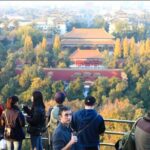
You’ll ride along the official “dragon” line described in local feng shui terms. The Central Axis itself measures 7.8 km, running from the Bell and Drum Towers area in the north down through points like Wanning Bridge and Jingshan Hill, then toward the Imperial Palace and Yongdingmen Gate in the south.
I like routes like this because they do the thinking for you. You can understand what you’re seeing without memorizing a map, since the city’s big buildings are aligned on purpose.
You can also read our reviews of more cycling tours in Beijing
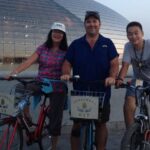
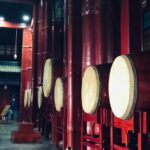
Getting there: Ci Qi Kou Station Line 5 Exit D meeting point
Your meeting point is at Exit D of Ci Qi Kou station on Line 5. If you’re using a taxi app, you can set the destination as Exit D of Ci Qi Kou station of Line 5.
When you get in the car, show the driver 磁器口地铁站D出口. Your guide will meet you at the meeting point, and the tour includes pickup service from there.
This matters because central Beijing can be a maze. A precise meeting spot helps you start smoothly, especially when you want to spend your limited 3 hours actually riding.
Bikes, pace, and what “small group” really means here
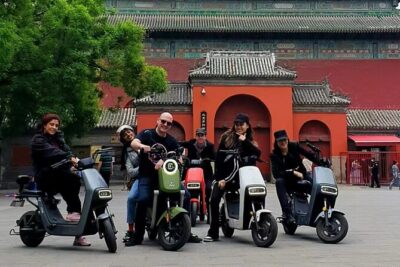
This is a small-group tour limited to 8 participants. That’s a sweet spot for a bike experience, because the group stays manageable at intersections and slows down when you’re looking at architecture.
You get a shared bike per person, plus mineral water. The ride is described as biking around 20 km, which is substantial for 3 hours, so the pace is active rather than stroll-and-snack.
One practical note from a real review: the bikes may feel small for some riders. When you meet your guide, take a moment to check your comfort and reach, because it is easier to adjust at the start than after you’re already rolling.
Tian’anmen Square and the Tian’anmen Gate with Mao portrait
The tour’s north-central starting payoff is Tian’anmen Square. This is the iconic place in China that instantly anchors your sense of scale, because the surrounding government buildings frame it like a stage.
From there, you reach the Tian’anmen Gate area, where the Mao portrait is displayed. You’ll also see the surrounding major buildings along the same formal line, including the parliament building and the National Museum.
What I like here is the way the view works as you move. From a bike, you can spot how the buildings relate to the axis, instead of only seeing them from one fixed spot.
Forbidden City gateways: corner turrets, moat, and formal entrances
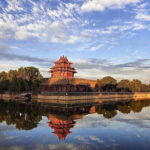
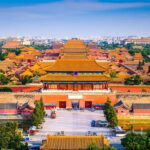
A big part of this experience is the Forbidden City’s huge formal entrance and its dramatic edge details. You’ll see the city moat and the corner turrets that give the complex that fortress feel.
Even if you do not buy tickets to enter, the exterior architecture is the point. When you ride, you get angles that feel more like “understanding the layout” than “taking one photo and leaving.”
This section is also where the Central Axis concept really clicks. You can trace how the imperial space was designed to be approached in a structured way, with sightlines and symmetry guiding you.
You can also read our reviews of more private tours in Beijing
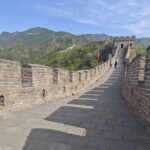

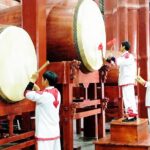
Drum and Bell Towers: timekeeping architecture on the north end
As you move along the northern part of the route, you reach the Drum and Bell Towers area. The tour calls them the time announcer twin towers in ancient Beijing, which fits the idea that the city was run with visible, public signals.
There’s also an option included in the broader tour description that may involve climbing the Drum Tower for an overlook. That kind of viewpoint can help you connect the city blocks to the axial line you’ve been following.
If you’re the type who likes “put the city in context” moments, this stop delivers. Towers are useful like that, even when you’re not going inside a museum.
Hutongs off the axis: local life and hidden streets
One of the most enjoyable parts of the ride is the chance to leave the main line and cut into the hutongs, the older neighborhoods where ordinary people live. The tour is explicit about finding side hutongs connected with the central way.
These areas are where Beijing feels less like a set of monuments and more like daily life. The guide also focuses on hidden, special hutongs rather than the most obvious thoroughfares.
There’s even a second option described that leans harder into hutong life, local markets, and local families. That approach is especially good if you want to mix architecture with human-scale street scenes, not just grand buildings.
Ancient commercial streets and where the city trades instead of worships
Along the route, you’ll also pass ancient commercial streets in Beijing. This is a nice balance point because it reminds you that imperial planning was only part of the city.
You get to see the kind of streets where commerce happened alongside the ceremonial spaces. On foot or from a tour bus, commercial streets can blend together, but biking keeps you alert to the rhythm of blocks as you move.
It also helps with pacing. When the big sights feel overwhelming, commercial streets provide a mental reset without breaking the flow of the day.
Jing-hang Canal: a scenic detour with temples and shops
The ride includes a stop at the Jing-hang canal. The tour describes it as the longest manmade canal in the world, and that alone makes it worth your attention.
What you see matters too. The description includes temples and stores beside the canal, so you get the sense of a working corridor rather than a postcard-only viewpoint.
I like including a waterway on a Central Axis route. It broadens Beijing beyond gates, squares, and formal architecture, and it gives you a different kind of historical texture.
How ticketing affects your expectations
Tickets for any tourist sights are not included. That means the tour is best thought of as a guided biking sightseeing route, with major architecture viewed along the way rather than a full admissions-based circuit.
If you want to go inside something you see, you’ll need to plan that separately. The upside is you avoid losing time waiting in lines, and you can keep the day moving with the group.
If you prefer structured time inside specific attractions, you might find a ticketed version of a tour better suited. If you prefer “see the city and learn the layout,” this format fits well.
Price and value: is $67 per person fair for 3 hours?
At $67 per person for 3 hours, this tour is positioned as a value option that bundles the key essentials. You get an English-speaking guide, bike rental, mineral water, and pickup service from the meeting point, with a small group of up to 8.
The practical value is in what you avoid. Without a guide and bike setup, it is harder to connect distant central landmarks in a clean route. This tour uses the Central Axis idea to reduce guesswork, which is a real time-saver in central Beijing.
Is it a bargain in every sense? Not always. You are paying for guidance and bike logistics, and tickets are extra. Still, if your priority is smart routing plus multiple major landmarks in one go, the pricing feels reasonable.
Guides: why Amber and Jacky made a difference
The reviews are consistent about the guide experience. One review praised Amber for being fantastic, with great communication skills and a fun approach, and also mentioned she was accommodating when the group was late due to switching another tour. Another review thanked Jacky for a great tour and said the bike and guide helped them find interesting areas they would not easily spot on their own.
That matters because bike touring is not only about “where” you go. It is about how safely and smoothly you move between stops, and how clearly someone can explain what you are looking at.
So if you care about getting context while you ride, the guide quality is one of the best reasons to book this specific tour.
Who should book this Central Axis biking tour
This tour is a strong fit if you want a structured, efficient route through Beijing’s biggest formal landmarks. It’s also a good choice if you like understanding the city’s layout, because the Central Axis concept gives you a framework.
It may also suit you if you want a mix of monuments and everyday streets. The hutongs, local markets idea, and canal stop add variety so the day does not feel like one long highlight parade.
If you are very sensitive about bike sizing, take a moment at the start to confirm your fit. One review flagged that the bikes can run small, and you will enjoy the day more if you feel comfortable on the seat right away.
Should you book it
I would book this tour if your goal is to see the Beijing Central Axis story in one guided biking session. You’ll get the headline moments at Tian’anmen and the Forbidden City entrance details, plus supporting scenes in hutongs and along the Jing-hang canal.
Skip it if you want a slow, in-depth museum day with lots of indoor admissions. Tickets are not included, so your time inside major attractions depends on what you choose to add on your own.
FAQ
How long is the Beijing Private Biking Tour Along Central Axis?
The tour duration is 3 hours.
What’s included in the tour price?
It includes an English-speaking guide, pickup service from the meeting point, a shared bike per person, and mineral water.
Are tickets to major sights included?
No. Tickets for any tourist sights are not included.
Where do I meet the guide?
The meeting point is at Exit D of Ci Qi Kou station on Line 5.
How big is the group?
The tour is limited to 8 participants.
Is the tour wheelchair accessible?
Yes, the tour is wheelchair accessible.
More Cycling Tours in Beijing
More Tours in Beijing

More Tour Reviews in Beijing
Not for you? Here's more nearby things to do in Beijing we have reviewed


Cycling Tours, compared.
 ★ 5.0The Hutong Experience by BikeFrom $150163 reviews
 ★ 4.5Beijing Highlights-Private Beijing Bike TourFrom $10021 reviews
 ★ 5.04-Hour Private Beijing Hutong Bike Tour with Dumpling LunchFrom $19913 reviews
 ★ 5.0Modern Beijing Discovery by BikeFrom $8913 reviews
Old Beijing Hutongs Biking AdventureFrom $2698 reviews
Beijing Bike Forbidden City Tiananmen Square Group Tour 2 HoursFrom $697 reviews
★ 5.0Modern Beijing Discovery by BikeFrom $8913 reviews
Old Beijing Hutongs Biking AdventureFrom $2698 reviews
Beijing Bike Forbidden City Tiananmen Square Group Tour 2 HoursFrom $697 reviews
 ★ 5.0Imperial Beijing Central Axis Journey by bikeFrom $1683 reviews
Browse the lists this tour appears in