
Reviewed · TOURS
10 Days Enchanting Tour
Beijing to Shanghai in one itinerary is a solid plan. I love the way this route connects top sights across four cities by high-speed train, and I love that guided, ticketed experiences handle the heavy lifting for you. One possible drawback is the pace, because you will move often and spend several hours each day in transit.
What stands out to me is the service focus behind the scenes. In the strongest feedback, the tour consultant Tia and the guide Jason are credited with smooth coordination, quick responses, and keeping things running from airport pickup through hotel check-ins. If you need help with details like diet needs, that kind of proactive attention can make the whole trip feel easier.
Key Highlights You’ll Care About
- High-speed train hops that reduce long overland days between major cities
- Great Wall at Badaling plus major Beijing landmarks packed into one organized flow
- Terracotta Warriors paired with Huaqing Hot Springs area scenery via Lishan Beacon
- West Lake and tea-country Longjing for a real change of pace in Hangzhou
- Shanghai mix of old and new with the Bund, river cruise, and skyline views at Oriental Pearl Tower
- Service that gets praised, including support from Tia and Jason in past trip notes
Value and Pace: Four Cities in 10 Days
This tour is priced at $1,588.00 per person for about 10 days covering Beijing, Xi’an, Hangzhou, and Shanghai. That can sound steep until you price it out the realistic way: you are not just paying for sightseeing, you are also paying for logistics that are tough to DIY across multiple cities. The package includes 4-star hotels, guided experiences, airport pickup, and an organized schedule that threads together big icons efficiently.
The other value piece is meals. You get breakfast 9 times, plus lunch 7 times and dinner 7 times. Even if you are the type who usually skips packaged lunches, having planned meals reduces decision fatigue when you are touring all day.
Now the pace. The schedule is full. Day 2 is basically Beijing’s imperial center and a shopping street in one go. Day 3 adds Great Wall climbing time plus Olympic Park. By the time you reach Xi’an and Shanghai, you are still stacking major stops daily. If you like slow mornings, this will feel busy. If you want a guided path through the classics, it is a strong fit.
You can also read our reviews of more tours and experiences in Beijing.
Entering Beijing’s Imperial Core: Temple of Heaven, Tiananmen Square, Forbidden City, Wangfujing
Beijing is where this itinerary flexes its big-ticket organizing power. On Day 2, you start with the Temple of Heaven, then move to Tiananmen Square, and finish at the Palace Museum (Forbidden City). The tour keeps each piece to a manageable chunk, about an hour each for several stops, so you do not feel stuck in one museum for the entire day.
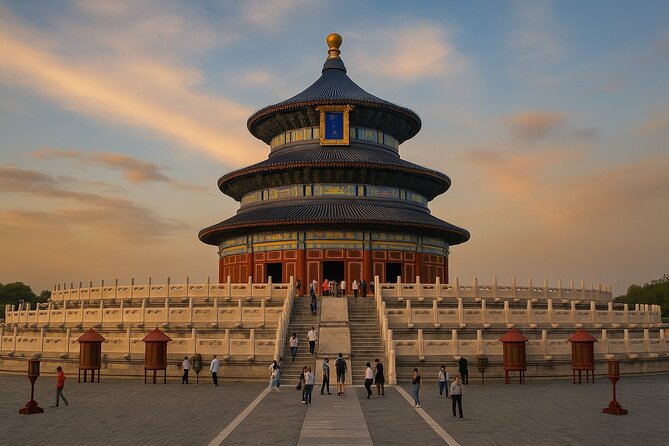
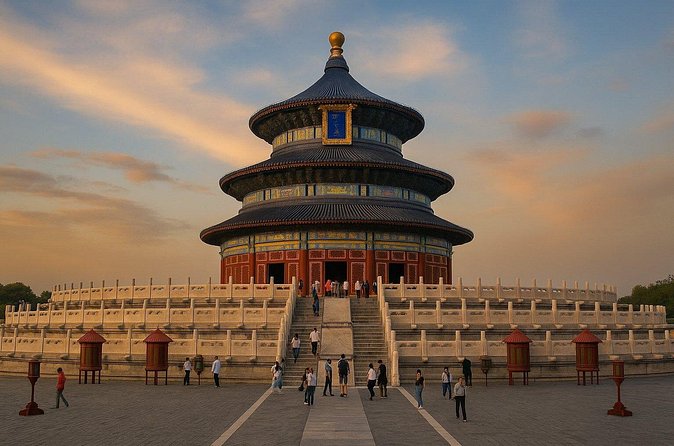
Temple of Heaven (included)
This site rewards calm attention. The buildings and layout are symbolic, tied to ancient cosmology, and you will often see locals practicing tai chi in the open areas. I like starting here because it sets a mood before the megasites. You get Ming-era architecture and the sense that this place was designed for ceremonial thinking, not just photo stops.
Tiananmen Square (included)
Tiananmen is huge, and the scale can feel like a shock after quieter areas. The tour time is about an hour, which is enough to take in the main views around the square and major landmarks nearby such as the Great Hall of the People and Mao’s Mausoleum.
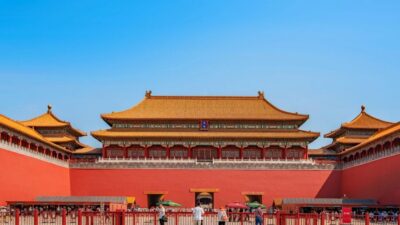
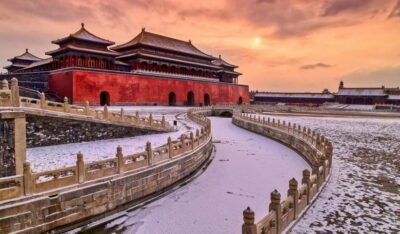
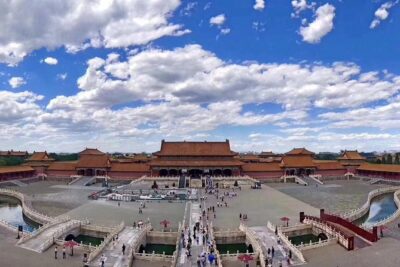
Forbidden City / Palace Museum (included)
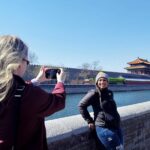
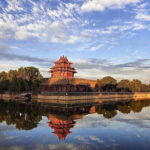
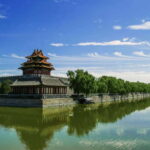
The Forbidden City is the kind of place where you either plan well or you end up bouncing from hall to hall. Here, you get about an hour. That means you should focus on the highlights that matter most to you, like the grand courtyards, major halls, and the sense of imperial order. Bring your curiosity, because the architecture is the story.
Wangfujing Street (included)
After temples and palaces, Wangfujing is a change in texture. It is a major street for shopping and eating, with everything from storefronts to food stalls. This is a good place to reset your energy, grab a snack, and people-watch without another long guided lecture.
Practical tip: Beijing days can get crowded fast. Wear comfortable shoes and keep your plan simple. Decide that you will enjoy the big set pieces first, then wander a bit at the end.
Great Wall at Badaling and Olympic Park: Beijing’s Two Styles
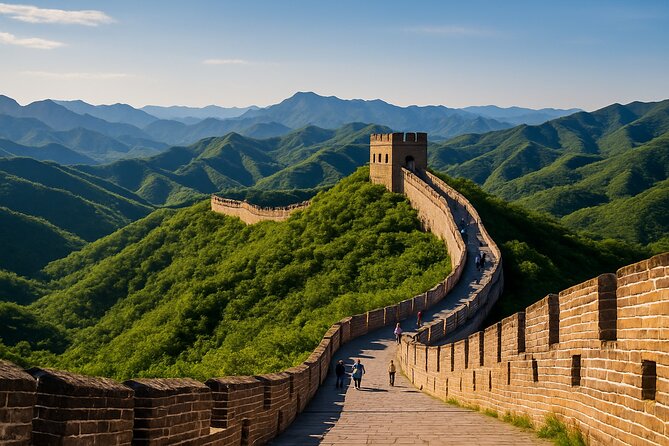
Day 3 is classic Beijing: the Great Wall at Badaling, then Olympic Park. It is a smart pairing because it gives you both drama and modern architecture in one day.
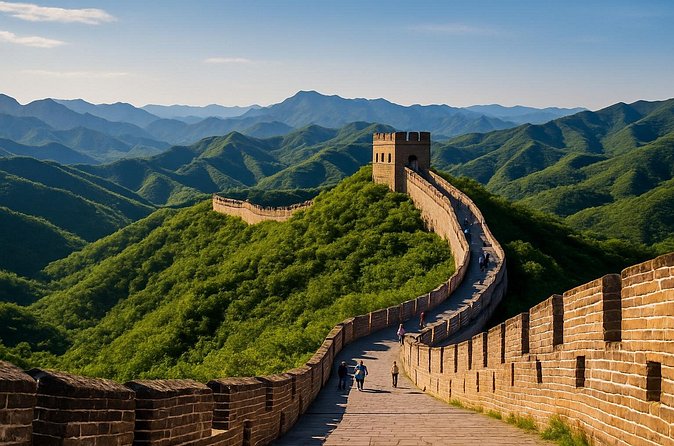
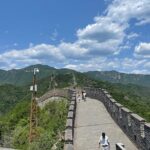
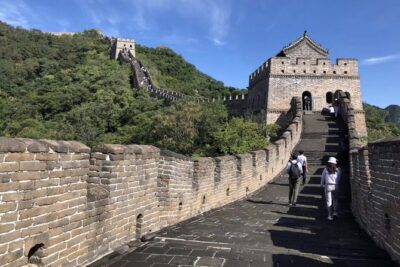
Great Wall at Badaling (about 3 hours, included)
Badaling is one of the most accessible Great Wall sections, which is exactly why so many first-timers choose it. Three hours usually means you can walk enough to feel the effort and still have time to take photos without turning it into a sufferfest.
If you can, treat the climb like a workout with breaks. Bring water, expect stairs and uneven stone, and plan for some waiting time because this is a top attraction.
Olympic Park (about 1 hour, included)
Olympic Park is where Beijing shows off its modern ambition. You will see landmarks like the Bird’s Nest Stadium and the Water Cube. Even if you are not a sports fan, it is worth the short stop because it gives you a clean visual contrast after centuries of palace and temple architecture.
Bullet Train to Xi’an: Terracotta Warriors and Lishan Beacon
The itinerary makes a clean break between eras. Day 4 includes high-speed train travel from Beijing to Xi’an, described as about 5 to 6 hours. On arrival, you meet your local guide and transfer to the hotel for check-in, then you have the rest of the day for something easy.
The value here is that the route keeps you from losing a whole day to slow travel. That is one reason this tour works well for people who want multiple regions in one trip.
Xi’an Day 5: Terracotta Warriors (included) plus Lishan Beacon area (included)
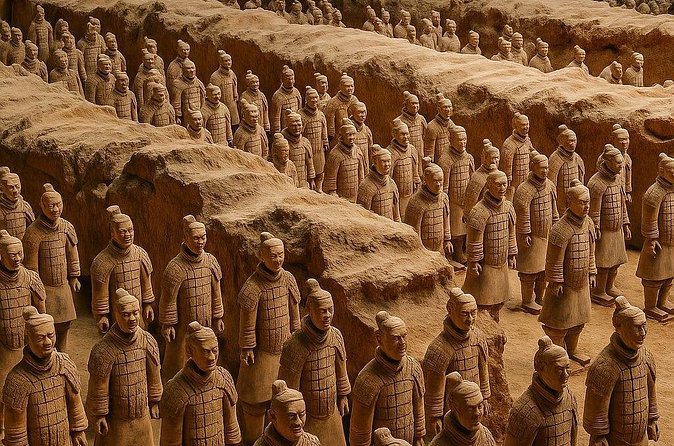
Terracotta Warriors (about 2 hours, included)
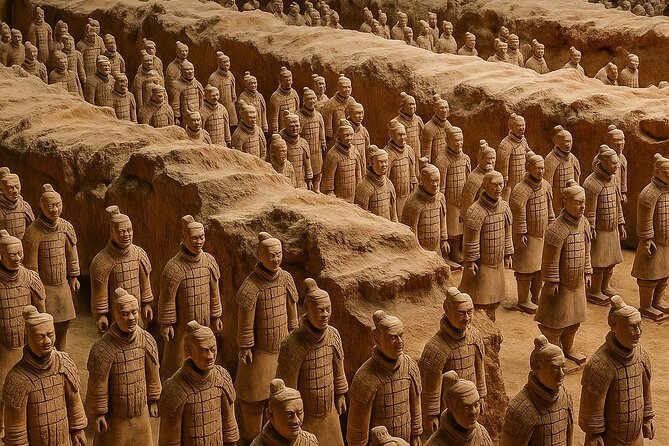
This is the main event, and for good reason. You are seeing an underground army of thousands of life-sized soldiers, and what makes it memorable is the detail: many figures have distinct facial features and uniform variations. Two hours is the right amount if you want to see enough to feel the scale without rushing through every single detail.
Lishan Beacon (about 2 hours, included)
Lishan Beacon brings a different kind of interest, linked to the Qin Dynasty, with natural scenery and the Huaqing Hot Springs area. You also get panoramic views from a hilltop viewpoint. I like this pairing because it prevents Xi’an from being only history museum mode. It adds scenery and a sense of where these stories connect to geography.
If you are sensitive to hills, wear shoes you can grip. Some viewpoints are steeper than they look.
Xi’an City Wall, Bell and Drum Towers, and the Muslim Quarter Food Walk
Day 6 is when Xi’an turns from major monuments into daily-city atmosphere. It is loaded, but it is also varied.
Xi’an City Wall and tower views
Xi’an City Wall (about 1 hour, included)
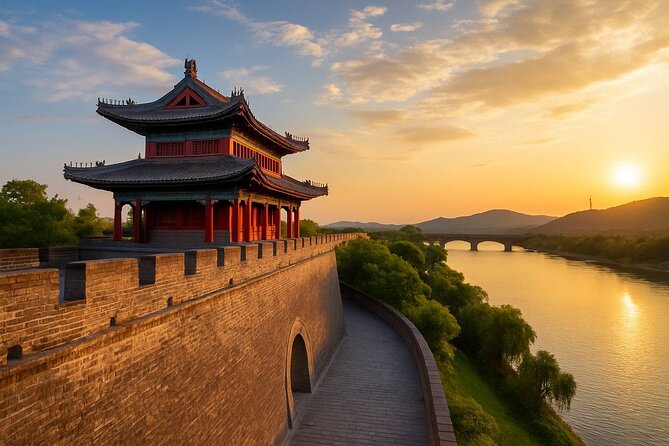
The City Wall is one of the best-preserved in China, and it circles the city on a roughly 14-kilometer loop. The tour framing suggests you can explore by walking or biking, which matters because you can match the activity level to your energy.
Xi’an Bell Tower (about 1 hour, included)
You get Ming Dynasty architecture and the chance to climb. The payoff is the view over the city. You also get the bronze bells as part of the experience.
Drum Tower (Gulou) (about 1 hour, included)
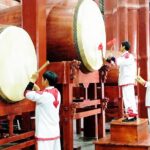
Like the Bell Tower, it offers both architecture and atmosphere. You can step inside to see drums and hear or catch traditional performances when scheduled. The upper deck gives you broad city views and a look toward the Muslim Quarter area.
Muslim Quarter and Grand Tang Ever Bright City
Muslim Quarter (about 1 hour, included)
This is your food-and-streets segment. The focus is on tasting local favorites such as lamb skewers and roujiamo. I like that this stop is short, because it gives you the main tastes and sights without turning it into an all-day food festival.
Grand Tang Dynasty Ever Bright City (about 1 hour, free entry)
This is a pedestrian zone designed around Tang Dynasty themed lights and performances. Even if you do not care about costumes, it is a fun way to end the day on spectacle rather than more museum rooms.
One consideration: Day 6 is the most intense day in Xi’an. If you know you get tired from steps and climbs, plan your energy carefully. Choose a slower pace in the tower climbs, and do not try to maximize every single photo angle.
Hangzhou’s West Lake and Hefang Street: A Calm Shift After Xi’an
Hangzhou is where this itinerary slows down, at least compared with the nonstop big-city feel of Beijing and Xi’an.
Day 7 includes a high-speed train ride to Hangzhou, about 7 hours, and then the sightseeing portion begins. That train block is long, but it is the kind of long day you can tolerate because you are not dealing with traffic and transfers.
West Lake (included)
West Lake (Xi Hu) is UNESCO listed, known for its blend of gentle hills, pagodas, and temples. The tour stop is about 1 hour, which means you will get the classic look and a sense of why people come here for atmosphere rather than only for structures.
Hefang Street (included)
Hefang Street is a pedestrian street linked to the Southern Song period, with preserved architecture dating back to Ming and Qing times. It is busy, so it is not a quiet escape, but it is a great place for an evening walk, a snack, and a sense of Hangzhou street life.
If you want a calmer feel, try to move at your own pace during the hour, especially around the edges of the walking areas, where you can breathe and take photos.
Longjing Tea Fields to Shanghai: From Tea Terraces to the Skyline
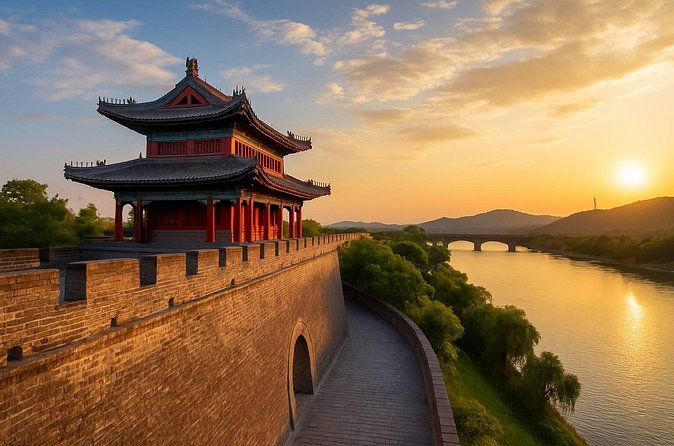
Day 8 starts with countryside flavor and ends with Shanghai views.
Longjing tea fields (included)
The Longjing tea fields near West Lake are where Longjing (Dragon Well) tea comes from. The stop focuses on terraced plantations and the scenic hills west of West Lake. This is one of those moments where you feel the itinerary switch gears from city monuments to working landscapes and tradition.
This stop is about 1 hour, so it is more of a taste of tea-country than a full farming day. Still, the feel matters: it adds a mental reset.
Oriental Pearl Tower (free entry)
Then you roll into Shanghai and head to Oriental Pearl Tower, a major Lujiazui landmark. The tower is described as 468 meters tall, with the futuristic design of 11 spheres.
This is a good stop if you want a fast, iconic skyline marker without making the day about ticketed attractions only.
Huangpu River cruise (included)
Your day ends with a Huangpu River cruise, about 1 hour, which is timed for skyline views. The cruise runs between the Bund side of historic buildings and the Pudong side of modern towers, with reflections on the water once the lights kick in.
For this day, the best advice is simple: treat the cruise as your big reward. Even if earlier segments felt like too much, the river view is the payoff.
Shanghai With Character: Wukang Road, Sinan Mansions, Nanjing Road, Chenghuang Miao, The Bund
Day 9 is packed, but it is built to show Shanghai as a layered city.
French Concession stroll: Wukang Road (included)
Wukang Road is tree-lined and known for historic mansions and street-level charm. It is a pleasant change from major shopping corridors. Use this time to walk slowly and look at building details.
Sinan Mansions (included)
The Sinan Mansions are restored garden villas from the 1920s era. The tour also notes they connect to notable historical figures like Zhou Enlai and Mei Lanfang. This stop is mainly architectural and atmospheric, and it works well right after Wukang Road because the area style matches.
Nanjing Road shopping corridor (included)
Nanjing Lu (Nanjing Road) is Shanghai’s famous shopping boulevard, about 5.5 kilometers. It spans East and West sections and links visually toward other landmarks like Jing’an Temple. The stop time is about an hour, so think of it as a way to get oriented and experience the scale, not to shop for a full day.
Chenghuang Miao and the Old City temple area (free entry)
Chenghuang Miao (Yuyuan Garden area) centers on the Shanghai Temple of the Town God. It is a Taoist temple with ornate architecture, and it is described as dating back to the Ming Dynasty. This is a cultural counterpoint to all the shopping and skyscraper views.
The Bund (free entry)
You finish at The Bund, the iconic waterfront promenade along the Huangpu River. The contrast is what makes it work: colonial-era buildings on one side, Pudong’s skyline on the other. Even if you have seen skyline photos before, the live scale feels different, and the promenade is easy to enjoy without rushing.
Departure Day at Pudong International Airport
Day 10 is simpler. After breakfast, you get time for yourself and then transfer to Pudong International Airport. The itinerary lists about 1 hour for the airport portion plus free time before departure.
This is a good day for practical decisions: grab last snacks, pick up small items if you want them, and avoid buying big souvenirs right at the end unless you know how you will carry them.
What to Expect as a Practical Traveler
Here is how I would approach a trip like this so it feels smooth instead of frantic.
Plan for walking and stair time
Badaling involves climbs. Towers in Xi’an are also climb-adjacent. Even the “short” stops can mean stairs and standing. Wear shoes that you already trust on uneven ground.
Keep your camera energy realistic
You do not need to take a photo of everything. Decide in advance what you care about most in each city. Then let the rest be a memory made by your eyes, not by your camera storage.
Use the guide time for questions
The service praise that comes up for Tia and Jason is not just about friendliness. It is about responsiveness and making sure you understand what you are walking into. If you want dietary accommodations or have mobility issues, ask early in the process.
Make room in the evenings
The schedule includes evenings built into city pacing, like Wangfujing and Grand Tang Ever Bright City. Even when you feel full, these evening stops are where you get the flavor of each place without needing extra ticket planning.
Should You Book This Beijing, Xi’an, Hangzhou, and Shanghai Tour?
Book it if:
- You want a first-time-friendly route that hits major highlights in four cities.
- You like having guided planning and admissions handled for many key stops.
- You value the included meals and the way this route uses high-speed trains to save time.
Skip or consider a different option if:
- You want lots of downtime or a slower pace. This itinerary is packed, not laid-back.
- You prefer one city deeply over visiting many cities quickly.
- You are very sensitive to crowds at top-name sights like the Forbidden City and the Great Wall.
My take: for the price, the value comes from the combined package. You are buying reduced hassle, consistent guidance, and a logical route that moves you between China’s major eras and styles. If you are the type who likes classic landmarks plus a few scenery breaks like Longjing tea fields, this tour fits your travel personality. If you want a quiet, free-form trip, the tight schedule may feel like work.
FAQ
How long is the tour?
It is listed as 10 days approximately.
What is the price per person?
The price is $1,588.00 per person.
Where does the tour start, and when?
The meeting point is Capital Airport Shunyi, Beijing 101300 China, with a start time of 8:00 am.
Is pickup offered?
Yes, pickup is offered.
What meals are included?
Breakfast is included 9 times, lunch is included 7 times, and dinner is included 7 times.
How do you travel between the cities?
The tour uses high-speed trains between major legs, including Beijing to Xi’an and then to Hangzhou.
What hotels and guides are part of the package?
The overview states you stay in 4-star hotels and have guided experiences throughout.
Do I need a paper ticket?
No, the tour includes mobile tickets.
How far in advance is this tour usually booked?
On average, it is booked 21 days in advance.
What is the cancellation deadline for a full refund?
You can cancel up to 6 days in advance for a full refund. To get a full refund, you must cancel at least 6 full days before the experience start time.
More Tours in Beijing
More Tour Reviews in Beijing
Not for you? Here's more nearby things to do in Beijing we have reviewed


Tours, compared.
 ★ 4.9From Beijing: Mutianyu Great Wall Tours with OptionsFrom $199,216 reviews
 ★ 4.8Forbidden City Tour(Group/Private)-Tickets IncludedFrom $47,974 reviews
 ★ 4.8T-Square & Forbidden City Group or Private TourFrom $174,446 reviews
 ★ 5.0Mutianyu Great Wall Daily Tour with Ticket & LunchFrom $183,056 reviews
 ★ 5.0All-Inclusive Tour: Tiananmen Square, Forbidden City, Great WallFrom $1282,873 reviews
 ★ 5.0MuBus: Mutianyu Great Wall ENG/ESP/RUS Guided Bus TourFrom $202,361 reviews
 ★ 5.04-Hour Small Group Tour to Forbidden City with Entry TicketsFrom $151,863 reviews
 ★ 5.0Beijing Full Day Tours: Tiananmen Sq, Forbidden City, Great WallFrom $991,634 reviews